
- Популярные видео
- Авто
- Видео-блоги
- ДТП, аварии
- Для маленьких
- Еда, напитки
- Животные
- Закон и право
- Знаменитости
- Игры
- Искусство
- Комедии
- Красота, мода
- Кулинария, рецепты
- Люди
- Мото
- Музыка
- Мультфильмы
- Наука, технологии
- Новости
- Образование
- Политика
- Праздники
- Приколы
- Природа
- Происшествия
- Путешествия
- Развлечения
- Ржач
- Семья
- Сериалы
- Спорт
- Стиль жизни
- ТВ передачи
- Танцы
- Технологии
- Товары
- Ужасы
- Фильмы
- Шоу-бизнес
- Юмор
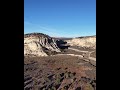
View over Potash Ponds from Dead Horse Point SP near Moab
The Electric Blue Deserts: Understanding Moab’s Potash Ponds
If you fly over the red rock country of Moab, Utah, or stand at the Dead Horse Point overlook, your eyes will likely be drawn away from the natural canyons by an unexpected sight: a cluster of brilliant, electric-blue ponds sitting amidst the desert landscape.
These are the Moab Potash Ponds, officially known as the Intrepid Potash-Moab Mine. Far from being a natural phenomenon or a toxic waste site, these pools are part of a highly efficient mining operation designed to harvest potash—a vital group of potassium-bearing minerals used globally as agricultural fertilizer.
What is Potash and Why is it There?
About 300 million years ago, during the Pennsylvanian period, the area we now call the Paradox Basin was covered by an ancient ocean. As the sea repeatedly filled and evaporated, it left behind massive, thick layers of salt and minerals.
Over millions of years, these deposits were buried thousands of feet beneath heavy layers of rock, forming what geologists call the Paradox Formation. Deep within these ancient salt beds lies sylvite, a mineral composed of potassium chloride ($KCl$), which is the primary ingredient in potash fertilizer. Because plants need potassium to regulate water and grow strong roots, potash is essential for global food production.
How the Mining Process Works
Traditional underground mining at the Moab site began in the early 1960s, but it proved difficult and dangerous due to the high temperatures and shifting nature of deep salt beds. In 1970, the operation transitioned to solution mining, a much safer and more efficient method that relies on solar energy.
The entire process functions as a massive, multi-step recycling loop:
1.Solution Injection: Deep Underground.
Fresh water is pumped from the nearby Colorado River down into injection wells drilled nearly 4,000 feet (about 1,200 meters) below the surface into the ancient salt beds.
2.Creating the Brine: Dissolving Minerals.
The water dissolves the underground salt and potash, creating a highly concentrated saltwater solution called brine.
3.Pumping to the Surface: Filling the Ponds.
This heavy brine is pumped back to the surface and spread across a network of 23 lined evaporation ponds spanning roughly 400 acres.
4.Solar Evaporation: Harvesting the Crystals.
The intense Utah sun evaporates the water over the course of several months. As the water disappears, the potash and salt crystallize out of the solution, settling on the bottom of the ponds to be scraped up by heavy machinery.
Why are the Ponds So Bright Blue?
The most famous feature of the Moab potash ponds is their vibrant, almost neon-blue color. This is not the natural color of the brine, nor is it caused by algae.
The mining company artificially adds a dark blue dye (similar to food coloring) to the water.
The Science of the Dye: Dark colors absorb more sunlight than clear water. By dyeing the water a deep blue, the ponds absorb significantly more solar energy and heat up faster. This accelerates the evaporation process, shortening the time it takes to harvest the potash from about 300 days down to a much faster cycle.
As the summer progresses, you can actually watch the color of the ponds change. When a pond is freshly filled with brine, it is a deep, dark blue. As the water evaporates and the white salt crystals begin to precipitate (settle out), the water turns a lighter, milky teal color. When the water is completely gone, only a brilliant white bed of salt remains.
Environmental and Economic Impact
The Moab potash facility produces between 70,000 and 100,000 tons of potash annually. Because the operation uses solar energy to drive the evaporation process, its carbon footprint for extraction is remarkably low compared to conventional mining.
While the striking visual contrast between the industrial blue ponds and the surrounding red rocks has drawn some criticism from wilderness preservationists, the ponds have also become an iconic, surreal landmark. They are frequently photographed by tourists and satellite imagery enthusiasts alike, standing as a unique intersection of ancient geology, modern agriculture, and industrial art.
Видео View over Potash Ponds from Dead Horse Point SP near Moab канала unikUTAH
If you fly over the red rock country of Moab, Utah, or stand at the Dead Horse Point overlook, your eyes will likely be drawn away from the natural canyons by an unexpected sight: a cluster of brilliant, electric-blue ponds sitting amidst the desert landscape.
These are the Moab Potash Ponds, officially known as the Intrepid Potash-Moab Mine. Far from being a natural phenomenon or a toxic waste site, these pools are part of a highly efficient mining operation designed to harvest potash—a vital group of potassium-bearing minerals used globally as agricultural fertilizer.
What is Potash and Why is it There?
About 300 million years ago, during the Pennsylvanian period, the area we now call the Paradox Basin was covered by an ancient ocean. As the sea repeatedly filled and evaporated, it left behind massive, thick layers of salt and minerals.
Over millions of years, these deposits were buried thousands of feet beneath heavy layers of rock, forming what geologists call the Paradox Formation. Deep within these ancient salt beds lies sylvite, a mineral composed of potassium chloride ($KCl$), which is the primary ingredient in potash fertilizer. Because plants need potassium to regulate water and grow strong roots, potash is essential for global food production.
How the Mining Process Works
Traditional underground mining at the Moab site began in the early 1960s, but it proved difficult and dangerous due to the high temperatures and shifting nature of deep salt beds. In 1970, the operation transitioned to solution mining, a much safer and more efficient method that relies on solar energy.
The entire process functions as a massive, multi-step recycling loop:
1.Solution Injection: Deep Underground.
Fresh water is pumped from the nearby Colorado River down into injection wells drilled nearly 4,000 feet (about 1,200 meters) below the surface into the ancient salt beds.
2.Creating the Brine: Dissolving Minerals.
The water dissolves the underground salt and potash, creating a highly concentrated saltwater solution called brine.
3.Pumping to the Surface: Filling the Ponds.
This heavy brine is pumped back to the surface and spread across a network of 23 lined evaporation ponds spanning roughly 400 acres.
4.Solar Evaporation: Harvesting the Crystals.
The intense Utah sun evaporates the water over the course of several months. As the water disappears, the potash and salt crystallize out of the solution, settling on the bottom of the ponds to be scraped up by heavy machinery.
Why are the Ponds So Bright Blue?
The most famous feature of the Moab potash ponds is their vibrant, almost neon-blue color. This is not the natural color of the brine, nor is it caused by algae.
The mining company artificially adds a dark blue dye (similar to food coloring) to the water.
The Science of the Dye: Dark colors absorb more sunlight than clear water. By dyeing the water a deep blue, the ponds absorb significantly more solar energy and heat up faster. This accelerates the evaporation process, shortening the time it takes to harvest the potash from about 300 days down to a much faster cycle.
As the summer progresses, you can actually watch the color of the ponds change. When a pond is freshly filled with brine, it is a deep, dark blue. As the water evaporates and the white salt crystals begin to precipitate (settle out), the water turns a lighter, milky teal color. When the water is completely gone, only a brilliant white bed of salt remains.
Environmental and Economic Impact
The Moab potash facility produces between 70,000 and 100,000 tons of potash annually. Because the operation uses solar energy to drive the evaporation process, its carbon footprint for extraction is remarkably low compared to conventional mining.
While the striking visual contrast between the industrial blue ponds and the surrounding red rocks has drawn some criticism from wilderness preservationists, the ponds have also become an iconic, surreal landmark. They are frequently photographed by tourists and satellite imagery enthusiasts alike, standing as a unique intersection of ancient geology, modern agriculture, and industrial art.
Видео View over Potash Ponds from Dead Horse Point SP near Moab канала unikUTAH
Комментарии отсутствуют
Информация о видео
25 мая 2026 г. 13:24:51
00:00:05
Другие видео канала
 To Monument Valley from Kayenta in Winter
 Long Canyon Road Jiffy near Moab
 UT-128 Illustrated Wall Cliff Jiffy along Colorado River near Moab
 Capital Gorge Jiffy in Capitol Reef NP near Torrey
 Balanced Rocks Jiffy in Lee's Ferry by SR-89A
 Burr Trail Road Jiffy in Grand Staircase Escalante
 The Fallen Rock Jiffy in Long Canyon Road near Moab
 Castle Valley near Fisher Towers & Moab along UT-128
 Fisher Towers by UT-128 near Moab
 Landscape Arch welcoming Father Christmas Jiffy near Moab
 UT-279 Wall Street Climbing Place Jiffy on Potash Road near Moab
 UT-24 Suspended Time Spot Jiffy between Hanksville & Torrey
 Canyonlands Panorama View Jiffy near Moab
 Bryce Canyon Light Brown After Rain #2
 Hoodoo White Rocks & Toadstool Hoodoos on AZ-89 in Grand Staircase Escalante
 UT-95 Bicentennial Highway Jiffy
 UT-24 Striped Fluted Cliff Jiffy between Hanksville & Torrey
 Bryce Canyon in Light Brown Color After Rain
 UT-24 Epic Place between Capitol Reef and Loa
 Colorado River Jiffy along UT-128 near Moab
 Johnson Canyon on AZ-89 near Kanab
