
- Популярные видео
- Авто
- Видео-блоги
- ДТП, аварии
- Для маленьких
- Еда, напитки
- Животные
- Закон и право
- Знаменитости
- Игры
- Искусство
- Комедии
- Красота, мода
- Кулинария, рецепты
- Люди
- Мото
- Музыка
- Мультфильмы
- Наука, технологии
- Новости
- Образование
- Политика
- Праздники
- Приколы
- Природа
- Происшествия
- Путешествия
- Развлечения
- Ржач
- Семья
- Сериалы
- Спорт
- Стиль жизни
- ТВ передачи
- Танцы
- Технологии
- Товары
- Ужасы
- Фильмы
- Шоу-бизнес
- Юмор
Physics-Informed World Models: Combining PMAX, JEPA, and Energy-Based Reasoning, PINN, EBM, KONA 1.0
The intersection of deep learning and the physical sciences has reached a critical bottleneck. While standard generative architectures and traditional Physics-Informed Neural Networks (PINNs) have demonstrated early promise, their reliance on grid-level reconstruction and the dense backpropagation of physical residuals fundamentally limits their scalability, stability, and temporal extrapolation. To overcome these barriers, this discussion proposes a paradigm shift away from generative modeling and toward energy-based latent prediction, synthesizing decades of representation learning into a novel, unified physical world model: SCORE-PMAX (Stochastic Constraint-Optimized Representation Energy-based Predictability Maximization).
This architecture represents a full-circle return to the foundational principles of Predictability Maximization (PMAX) introduced in 1992, which originally established that intelligent systems should learn by predicting abstract, statistically independent latent variables rather than reconstructing raw sensory inputs. While modern Joint-Embedding Predictive Architectures (JEPAs) successfully adopted this latent-prediction philosophy, they became heavily reliant on fragile architectural heuristics, such as Exponential Moving Average (EMA) teacher networks, to prevent representation collapse. By integrating breakthroughs from the recent LeJEPA framework, SCORE-PMAX discards these heuristics in favor of explicit mathematical penalties—specifically Sketched Isotropic Gaussian Regularization (SIGReg)—to guarantee theoretically provable, non-collapsed representations of complex dynamics.
Furthermore, the SCORE-PMAX framework fundamentally transitions physical simulation from sequential, autoregressive guessing to global, non-autoregressive verification. Drawing inspiration from the KONA 1.0 Energy-Based Reasoning Model (EBRM), SCORE-PMAX evaluates entire spatiotemporal trajectories simultaneously within a continuous latent space, assigning an "energy" score based on constraint satisfaction. By injecting governing Partial Differential Equations (PDEs) as independent prior experts—a concept derived from Bayesian JEPA (BJEPA)—the physical laws act as strict energy barriers. When combined with score-guided latent diffusion samplers (D-JEPA), the system can seamlessly navigate this global energy landscape, actively denoising future states until they reach a mathematically verifiable, physically compliant configuration.
The following sections will detail how this synthesis of multimodal data assimilation (Cross-JEPA/VL-JEPA), provable latent stability (LeJEPA), and energy-based constraint satisfaction (KONA/BJEPA) establishes a robust, highly scalable standard for modeling chaotic physical reality.
Видео Physics-Informed World Models: Combining PMAX, JEPA, and Energy-Based Reasoning, PINN, EBM, KONA 1.0 канала Byte Goose AI.
This architecture represents a full-circle return to the foundational principles of Predictability Maximization (PMAX) introduced in 1992, which originally established that intelligent systems should learn by predicting abstract, statistically independent latent variables rather than reconstructing raw sensory inputs. While modern Joint-Embedding Predictive Architectures (JEPAs) successfully adopted this latent-prediction philosophy, they became heavily reliant on fragile architectural heuristics, such as Exponential Moving Average (EMA) teacher networks, to prevent representation collapse. By integrating breakthroughs from the recent LeJEPA framework, SCORE-PMAX discards these heuristics in favor of explicit mathematical penalties—specifically Sketched Isotropic Gaussian Regularization (SIGReg)—to guarantee theoretically provable, non-collapsed representations of complex dynamics.
Furthermore, the SCORE-PMAX framework fundamentally transitions physical simulation from sequential, autoregressive guessing to global, non-autoregressive verification. Drawing inspiration from the KONA 1.0 Energy-Based Reasoning Model (EBRM), SCORE-PMAX evaluates entire spatiotemporal trajectories simultaneously within a continuous latent space, assigning an "energy" score based on constraint satisfaction. By injecting governing Partial Differential Equations (PDEs) as independent prior experts—a concept derived from Bayesian JEPA (BJEPA)—the physical laws act as strict energy barriers. When combined with score-guided latent diffusion samplers (D-JEPA), the system can seamlessly navigate this global energy landscape, actively denoising future states until they reach a mathematically verifiable, physically compliant configuration.
The following sections will detail how this synthesis of multimodal data assimilation (Cross-JEPA/VL-JEPA), provable latent stability (LeJEPA), and energy-based constraint satisfaction (KONA/BJEPA) establishes a robust, highly scalable standard for modeling chaotic physical reality.
Видео Physics-Informed World Models: Combining PMAX, JEPA, and Energy-Based Reasoning, PINN, EBM, KONA 1.0 канала Byte Goose AI.
AI Deep Learning Physical Sciences SCORE-PMAX Physics-Informed Neural Networks PINNs World Models Predictability Maximization PMAX Joint-Embedding Predictive Architecture JEPA LeJEPA Energy-Based Models EBM Latent Prediction Representation Learning SIGReg Sketched Isotropic Gaussian Regularization Stochastic Constraint-Optimization Physical Simulation Partial Differential Equations PDEs KONA 1.0 BJEPA D-JEPA Non-autoregressive Modeling Computational Physics V-JEPA
Комментарии отсутствуют
Информация о видео
25 мая 2026 г. 9:55:05
00:20:18
Другие видео канала
 TOP AI STARTUPS (HIRING LIST). 30 top AI-native startups all hiring generalists
 Agentic Reinforcement Learning (RL) for Large Language Models (LLM).Markov Decision Processes (MDPs)
 Text-to-LoRA: Instant Transformer Adaptation. Supervised fine-tuning (SFT), Hyper Networks for LLMs
 "V-JEPA Learns Intuitive Physics Through Representation Prediction. Model: Vision-JEPA Architecture.
![[Transformers] LLM Transformers - The Essential LLM technical guide. Transformer Explained.](https://i.ytimg.com/vi/5UExFKL743o/default.jpg) [Transformers] LLM Transformers - The Essential LLM technical guide. Transformer Explained.
[Transformers] LLM Transformers - The Essential LLM technical guide. Transformer Explained.
 Reinforcement Learning from Human Feedback (RLHF) - Explained in 10 minutes.
 Machines that invent. Flow Matching vs. Diffusion: Mastering ODEs and SDEs in Generative Modeling
![[GLM-5.0 Model] From Vibe Coding to Agentic Engineering The Power of Scalable Reinforcement Learning](https://i.ytimg.com/vi/Yx3bLY2PBwE/default.jpg) [GLM-5.0 Model] From Vibe Coding to Agentic Engineering The Power of Scalable Reinforcement Learning
[GLM-5.0 Model] From Vibe Coding to Agentic Engineering The Power of Scalable Reinforcement Learning
 LTX-2 Explained: The New Open-Source Standard for Synchronized AI Video and Audio
![[Explainable AI] Statistical Mechanics of Explainable Artificial Intelligence. Hebbian Neural Nets.](https://i.ytimg.com/vi/NeXd55usAe0/default.jpg) [Explainable AI] Statistical Mechanics of Explainable Artificial Intelligence. Hebbian Neural Nets.
[Explainable AI] Statistical Mechanics of Explainable Artificial Intelligence. Hebbian Neural Nets.
 Geometric Deep Learning. Group Theory, Differential Geometry, and Topology. Math insights. Review.
 Modal: Serverless AI Infrastructure in Python. Generative AI infra as Code.
![[NVIDIA Cosmos] Why Real-World Foundation Models? Next AI VLM & LLM Paradigm for Physical World](https://i.ytimg.com/vi/KQFqS5p1U7U/default.jpg) [NVIDIA Cosmos] Why Real-World Foundation Models? Next AI VLM & LLM Paradigm for Physical World
[NVIDIA Cosmos] Why Real-World Foundation Models? Next AI VLM & LLM Paradigm for Physical World
![[GEPA] LLM prompt tuning: Reflective Prompt Evolution for Efficient LLM Optimization (Genetic-Pareto](https://i.ytimg.com/vi/0pP3VmIs8-E/default.jpg) [GEPA] LLM prompt tuning: Reflective Prompt Evolution for Efficient LLM Optimization (Genetic-Pareto
[GEPA] LLM prompt tuning: Reflective Prompt Evolution for Efficient LLM Optimization (Genetic-Pareto
 A Roadmap of Generative Al in Physics
 Google AI Co-Scientist vs Sakana AI: 10 Years of Research in 48–72 Hours. Compute scaling.
 HRM: A human brain-inspired replacement to Chain-of-Thought
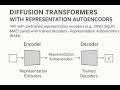 Diffusion Transformers with Representation Autoencoders VAE (e.g., DINO, SigLIP, MAE) with (RAEs)
 Kosmos AI: Reproducing and Generating Scientific Discoveries. Generative AI for Science.
 AI in Insurance 2025. Generative AI for Insurance, Agentic, LLMs, AI Forecasting cat insurance
 Sparser-Faster LLMs: Breaking the Compute Wall with ReLU and TwELL CUDA Architecture. SAE models.
