
- Популярные видео
- Авто
- Видео-блоги
- ДТП, аварии
- Для маленьких
- Еда, напитки
- Животные
- Закон и право
- Знаменитости
- Игры
- Искусство
- Комедии
- Красота, мода
- Кулинария, рецепты
- Люди
- Мото
- Музыка
- Мультфильмы
- Наука, технологии
- Новости
- Образование
- Политика
- Праздники
- Приколы
- Природа
- Происшествия
- Путешествия
- Развлечения
- Ржач
- Семья
- Сериалы
- Спорт
- Стиль жизни
- ТВ передачи
- Танцы
- Технологии
- Товары
- Ужасы
- Фильмы
- Шоу-бизнес
- Юмор
23 Prototypes to Production: How This Python Full-Stack Path Prepares You for Jobs PYTH 5.04
All the code used in this video is free and downloadable at https://industry-python.thinkific.com - Free registration required.
In this video, we step back and explain what you’ve learned so far, how it maps to real-world expectations, and how this learning path transitions from Python-only prototypes to production-grade applications.
This is a guidance video meant to help you understand why the course is structured this way and how it supports long-term job preparation.
What you’ve already learned:
How to build interactive web applications
How full-stack systems are structured (front end, back end, deployment)
How to use async Python and background processes
How to deploy real applications to the cloud using Docker
How to run applications on a public URL that employers can view
Even though this course uses a non-standard front end, the concepts are transferable. Employers care less about the specific framework and more about whether you understand:
Application architecture
Backend logic
Async programming
Deployment workflows
Tooling and collaboration
Why this course uses Flet first:
Flet allows you to build full apps using only Python
You avoid spending most of your time on UI and styling
You can focus on programming concepts, not framework overhead
It’s ideal for prototyping and learning, not production dominance
How this connects to FastAPI:
Flet is used for fast learning and prototyping
FastAPI is used for production APIs and job-ready systems
Both use:
Python
Uvicorn
Docker
Fly.io deployment
The deployment skills transfer directly between both stacks
Front end vs back end focus:
If your goal is front-end specialization, this is not a React course
If your goal is backend, full-stack, or Python roles, this path is effective
Most interviews focus more on:
Programming ability
Architecture understanding
Backend concepts
Deployment experience
What makes this pathway useful:
Beginner-friendly learning curve
Exposure to modern Python tooling:
Async / await
Uvicorn
Docker
Git & GitHub
Type hints, linters, and checkers
Portfolio-ready deployments
A clear path from prototypes → production systems
This curriculum is designed as a supplement to university coursework, helping you learn concepts that are often not covered in traditional CS programs, while giving you deployable projects you can put on your resume.
The end goal is simple:
Build real applications
Deploy them publicly
Understand the architecture
Be ready when the recruiter call comes
This is a foundation that scales—from Flet prototypes to FastAPI production systems—using the same core deployment and backend skills.
Видео 23 Prototypes to Production: How This Python Full-Stack Path Prepares You for Jobs PYTH 5.04 канала Oppkey
In this video, we step back and explain what you’ve learned so far, how it maps to real-world expectations, and how this learning path transitions from Python-only prototypes to production-grade applications.
This is a guidance video meant to help you understand why the course is structured this way and how it supports long-term job preparation.
What you’ve already learned:
How to build interactive web applications
How full-stack systems are structured (front end, back end, deployment)
How to use async Python and background processes
How to deploy real applications to the cloud using Docker
How to run applications on a public URL that employers can view
Even though this course uses a non-standard front end, the concepts are transferable. Employers care less about the specific framework and more about whether you understand:
Application architecture
Backend logic
Async programming
Deployment workflows
Tooling and collaboration
Why this course uses Flet first:
Flet allows you to build full apps using only Python
You avoid spending most of your time on UI and styling
You can focus on programming concepts, not framework overhead
It’s ideal for prototyping and learning, not production dominance
How this connects to FastAPI:
Flet is used for fast learning and prototyping
FastAPI is used for production APIs and job-ready systems
Both use:
Python
Uvicorn
Docker
Fly.io deployment
The deployment skills transfer directly between both stacks
Front end vs back end focus:
If your goal is front-end specialization, this is not a React course
If your goal is backend, full-stack, or Python roles, this path is effective
Most interviews focus more on:
Programming ability
Architecture understanding
Backend concepts
Deployment experience
What makes this pathway useful:
Beginner-friendly learning curve
Exposure to modern Python tooling:
Async / await
Uvicorn
Docker
Git & GitHub
Type hints, linters, and checkers
Portfolio-ready deployments
A clear path from prototypes → production systems
This curriculum is designed as a supplement to university coursework, helping you learn concepts that are often not covered in traditional CS programs, while giving you deployable projects you can put on your resume.
The end goal is simple:
Build real applications
Deploy them publicly
Understand the architecture
Be ready when the recruiter call comes
This is a foundation that scales—from Flet prototypes to FastAPI production systems—using the same core deployment and backend skills.
Видео 23 Prototypes to Production: How This Python Full-Stack Path Prepares You for Jobs PYTH 5.04 канала Oppkey
Комментарии отсутствуют
Информация о видео
14 декабря 2025 г. 22:17:30
00:10:27
Другие видео канала
 35 State Management in Flet Components — use_state, Buttons, and Dynamic UI Updates PYTH 8.02
 59 Deploy a Python Flet App to GitHub Pages (Free Hosting with Pyodide) - PYTH 12.01
 12 State Management and Separation of Concerns PYTH 3.02
 Beginner Python ORM with SQLAlchemy Tutorial - Part 1
 Top Skill for Entry SWE Jobs in Silicon Valley: Pull Requests Explained
 08 Flet Moving a Character with Buttons, Images, and Absolute Positioning in Flet PYTH 2.2
 Positron Notebook Editor with AI Assistance - First Look
 45 Run a Local LLM with Ollama and Python (uv + HTTP API Tutorial) PYTH 10.1
 FastAPI Fix: Strict MIME Type Error on Windows (Free Python Course)
 58.1 FastAPI + Flet Architecture: HTTP Boundaries vs Direct Python Function Calls - PYTH 11.3
 29 Why Use FastAPI with Flet? Architecture Tradeoffs Explained PYTH 7.02
 21 Uvicorn and ASGI: Real-Time Python Apps with WebSockets PYTH 5.02
 40 Hands-On Flet Tutorial: use_state for Interactive UI with Dropdowns and Objects PYTH 9.04
 55 Async Streaming LLMs in Python: Flet UI + HTTPX + Ollama Explained PYTH 10.11
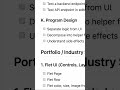 Free Python Course Built on a Checklist Aligned with University of California First Year Curriculum
 44 Using Python Dataclasses in a Flet App: Cleaner Models, Less Boilerplate - PYTH 9.08
 Best Selfie Motions For IQUISPIN!
 Computer Science Has the Highest Starting Salary in America (NACE 2026 Data)
 Deploy Beautiful Plotly Charts to GitHub Pages - Beginner Tutorial
 Flet Pie Chart Tutorial in Pure Python for UI
