
- Популярные видео
- Авто
- Видео-блоги
- ДТП, аварии
- Для маленьких
- Еда, напитки
- Животные
- Закон и право
- Знаменитости
- Игры
- Искусство
- Комедии
- Красота, мода
- Кулинария, рецепты
- Люди
- Мото
- Музыка
- Мультфильмы
- Наука, технологии
- Новости
- Образование
- Политика
- Праздники
- Приколы
- Природа
- Происшествия
- Путешествия
- Развлечения
- Ржач
- Семья
- Сериалы
- Спорт
- Стиль жизни
- ТВ передачи
- Танцы
- Технологии
- Товары
- Ужасы
- Фильмы
- Шоу-бизнес
- Юмор
DAA 30 – Knapsack: Pseudopolynomial DP, PTAS, FPTAS & Approximation Scheme | CS F364
This lecture is DAA 30 in the Design and Analysis of Algorithms (DAA) course (CS F364). It studies the Knapsack problem from the perspective of dynamic programming and approximation schemes, and develops an FPTAS for Knapsack.
The lecture begins with the standard 0/1 Knapsack problem: given items with integer sizes and values, and a knapsack of capacity B, the goal is to choose a subset of items whose total size does not exceed the capacity and whose total value is maximum. A dynamic programming algorithm is then presented using lists of pairs (t, w), where each pair records an achievable total size and total value using the first j items.
A key idea in the algorithm is the removal of dominated pairs. A pair is dominated if another pair achieves at least as much value using no more space. By retaining only nondominated pairs, the algorithm keeps the representation compact while still preserving optimal solutions. This yields a dynamic programming method with running time
O(n min(B, V)), where V is the sum of item values. The lecture explains why this is not polynomial time in the input length, but is instead a pseudopolynomial-time algorithm.
The lecture then introduces the notions of PTAS and FPTAS. After defining these approximation frameworks, it develops an FPTAS for Knapsack by scaling and rounding the item values. A suitable parameter mu is chosen in terms of epsilon and the maximum single-item value lower bound, and each value is replaced by a rounded-down scaled version. The dynamic programming algorithm is then run on the modified values.
The running time of the resulting algorithm is shown to be polynomial in both n and 1 over epsilon, and the lecture proves that the returned solution has value at least
(1 minus epsilon) times OPT. This establishes that the algorithm is indeed an FPTAS for Knapsack.
This lecture is important because it shows how pseudopolynomial dynamic programming can be transformed into a fully polynomial-time approximation scheme, a key idea in approximation algorithms.
📌 Topics Covered in This Lecture
0/1 Knapsack problem
Dynamic programming for Knapsack
Lists of achievable size-value pairs
Dominated and nondominated pairs
Removing dominated pairs
Running time O(n min(B, V))
Pseudopolynomial-time algorithms
Definition of PTAS
Definition of FPTAS
Value scaling and rounding
FPTAS for Knapsack
Approximation guarantee of 1 minus epsilon
Polynomial dependence on 1 over epsilon
🎯 Who Should Watch
Students studying Design and Analysis of Algorithms
B.Tech / BE / M.Sc. / MCA / GATE aspirants
Learners studying approximation algorithms and dynamic programming
Anyone seeking a clear understanding of Knapsack approximation schemes
🔗 Playlist
This video is part of the playlist:
Design and Analysis of Algorithms – Complete DAA Course
Видео DAA 30 – Knapsack: Pseudopolynomial DP, PTAS, FPTAS & Approximation Scheme | CS F364 канала Abhishek Mishra – Mathematics & TCS
The lecture begins with the standard 0/1 Knapsack problem: given items with integer sizes and values, and a knapsack of capacity B, the goal is to choose a subset of items whose total size does not exceed the capacity and whose total value is maximum. A dynamic programming algorithm is then presented using lists of pairs (t, w), where each pair records an achievable total size and total value using the first j items.
A key idea in the algorithm is the removal of dominated pairs. A pair is dominated if another pair achieves at least as much value using no more space. By retaining only nondominated pairs, the algorithm keeps the representation compact while still preserving optimal solutions. This yields a dynamic programming method with running time
O(n min(B, V)), where V is the sum of item values. The lecture explains why this is not polynomial time in the input length, but is instead a pseudopolynomial-time algorithm.
The lecture then introduces the notions of PTAS and FPTAS. After defining these approximation frameworks, it develops an FPTAS for Knapsack by scaling and rounding the item values. A suitable parameter mu is chosen in terms of epsilon and the maximum single-item value lower bound, and each value is replaced by a rounded-down scaled version. The dynamic programming algorithm is then run on the modified values.
The running time of the resulting algorithm is shown to be polynomial in both n and 1 over epsilon, and the lecture proves that the returned solution has value at least
(1 minus epsilon) times OPT. This establishes that the algorithm is indeed an FPTAS for Knapsack.
This lecture is important because it shows how pseudopolynomial dynamic programming can be transformed into a fully polynomial-time approximation scheme, a key idea in approximation algorithms.
📌 Topics Covered in This Lecture
0/1 Knapsack problem
Dynamic programming for Knapsack
Lists of achievable size-value pairs
Dominated and nondominated pairs
Removing dominated pairs
Running time O(n min(B, V))
Pseudopolynomial-time algorithms
Definition of PTAS
Definition of FPTAS
Value scaling and rounding
FPTAS for Knapsack
Approximation guarantee of 1 minus epsilon
Polynomial dependence on 1 over epsilon
🎯 Who Should Watch
Students studying Design and Analysis of Algorithms
B.Tech / BE / M.Sc. / MCA / GATE aspirants
Learners studying approximation algorithms and dynamic programming
Anyone seeking a clear understanding of Knapsack approximation schemes
🔗 Playlist
This video is part of the playlist:
Design and Analysis of Algorithms – Complete DAA Course
Видео DAA 30 – Knapsack: Pseudopolynomial DP, PTAS, FPTAS & Approximation Scheme | CS F364 канала Abhishek Mishra – Mathematics & TCS
Комментарии отсутствуют
Информация о видео
26 апреля 2026 г. 13:38:56
00:40:28
Другие видео канала
 DAA 22 (Part 2) – Non-Deterministic Turing Machines, NP & 2-Tape NTM for Repeated Words | CS F364
 DAA 10 (Part 1) – Optimal Caching Problem | Greedy Algorithm & Exchange Argument | CS F364
 DAA 13 (Part 2) – Matrix Chain Multiplication Algorithm, Complexity & Worked Example | CS F364
 DAA 18 (Part 2) – Ford–Fulkerson Worked Example | Maximum Flow and Minimum Cut | CS F364
 DAA 08 (Part 1) – Optimal Prefix Codes and Huffman’s Algorithm | Greedy Method | CS F364
 DAA 27 – Approximation Algorithms and 2-Approximation for Vertex Cover | CS F364
 DAA 19 (Part 1) – Bipartite Matching Using Maximum Flow | CS F364
 DAA 00 – Introduction to Design and Analysis of Algorithms | CS F364
 DAA 25 – 3SAT, 0/1 Integer Programming & Directed Hamiltonian Path | NP-Completeness | CS F364
 DAA 02 – Multiplication Algorithms | Divide and Conquer & Karatsuba | CS F364
 DAA 03 – Matrix Multiplication Algorithms | Divide and Conquer & Strassen | CS F364
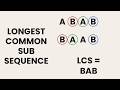 DAA 14 (Part 1) – Longest Common Subsequence (LCS): DP Formulation & Recurrence | CS F364
 DAA 36 – Divisibility, Division Algorithm and GCD as a Linear Combination | CS F364
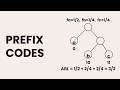 DAA 07 – Huffman Coding and Prefix Codes | Optimal Encoding Using Binary Trees | CS F364
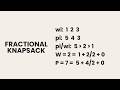 DAA 06 – Fractional Knapsack Problem | Greedy Algorithm & Proof | CS F364
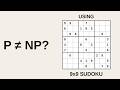 DAA 23 (Part 1) – P vs NP Intuition Using a 9x9 Sudoku Puzzle | CS F364
 DAA 19 (Part 2) – Hall’s Theorem Proof & Perfect Matchings in Bipartite Graphs | CS F364
 DAA 21 (Part 2) – Multitape Turing Machine for Palindromes & Introduction to Class P | CS F364
 DAA 21 (Part 1) – Deterministic Algorithm Explained Using Snakes & Ladders | CS F364
 DAA 08 (Part 2) – Huffman’s Algorithm: Greedy Strategy, Optimality Proof & Time Complexity | CS F364
 DAA 38 – Congruences, Residue Systems, Fermat’s Theorem and Euler’s Theorem | CS F364
