- Популярные видео
- Авто
- Видео-блоги
- ДТП, аварии
- Для маленьких
- Еда, напитки
- Животные
- Закон и право
- Знаменитости
- Игры
- Искусство
- Комедии
- Красота, мода
- Кулинария, рецепты
- Люди
- Мото
- Музыка
- Мультфильмы
- Наука, технологии
- Новости
- Образование
- Политика
- Праздники
- Приколы
- Природа
- Происшествия
- Путешествия
- Развлечения
- Ржач
- Семья
- Сериалы
- Спорт
- Стиль жизни
- ТВ передачи
- Танцы
- Технологии
- Товары
- Ужасы
- Фильмы
- Шоу-бизнес
- Юмор
Demystifying Cloud Computing Architecture!!
Welcome to this comprehensive guide on understanding how Cloud Computing Architecture actually works! In this video, we move beyond the buzzwords and break down the complex systems that power the cloud, from the devices you use to the servers in the data center.
If you’ve ever wondered how your data gets from your phone or browser to a massive server, or how companies manage millions of users simultaneously, this video is for you. We provide a clear, step-by-step breakdown using standard, industry-recognized components.
🔒 What We Will Cover:
Our journey is split into two main components: the Front-End and the Back-End (The Cloud Backend).
Part 1: The Front-End (Client Side)
This is everything you, the user, can see and interact with. We will define:
Client Devices: The laptops, tablets, smartphones, and devices where the user interaction begins.
User Interface (UI): The applications and websites designed to provide a seamless user experience.
Web Browsers: The software that connects the user devices to the application services (e.g., Chrome, Firefox, Safari).
Bonus Discussion: How the client communicates with the application through APIs.
Part 2: The Back-End (The Cloud Backend)
This is where the magic happens—the infrastructure and services that support the front-end. This section is the core of the architecture.
🌐 The Network Layer (The Connection)
How the front-end connects to the back-end, including:
Internet: The critical wide-area network linking everything together.
APIs & Gateways: How the front-end (and its clients) talk to the application services securely and efficiently. We explain API management and edge computing concepts.
🛠️ The Service Layer (The Core Applications)
This layer holds the heart of your application:
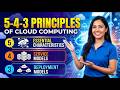
Application Services (SaaS, PaaS, IaaS): We break down how each service model (Software as a Service, Platform as a Service, and Infrastructure as a Service) is deployed and managed. We explore how application logic is run (e.g., in virtual machines or containers).
Load Balancers: Crucial for scalability. How incoming traffic is distributed across multiple servers to ensure high availability and prevent single points of failure.
🗄️ The Resource & Storage Layer (The Data & Compute)
This is where all of your information is securely stored and processed:
Compute (VMs, Containers): How raw processing power is managed and delivered using virtual machines or containers (e.g., Kubernetes).
Storage (Object, Block): The different ways cloud providers store data, explaining when to use object storage (for files and media) versus block storage (for databases).
Database (SQL, NoSQL): Comparing traditional structured databases with modern unstructured options, and how the cloud handles both (e.g., AWS RDS, DynamoDB, MongoDB).
Part 3: Management and Security (The Control Planes)
We finish by discussing the essential frameworks that hold the entire structure together.
Management Layer: How you manage, monitor, and scale all these resources from a unified console.
Security & Compliance: The strategies, tools, and best practices for securing data and managing identity and access control (IAM) in a cloud environment.
🎓 By the End of This Video...
You will have a deep, practical understanding of how a typical modern cloud application is built and operates. This knowledge is essential for anyone starting a career in cloud development, solutions architecture, or DevOps.
🔔 Make sure to:
LIKE this video if you find it helpful!
COMMENT below with your questions—we answer them all!
SUBSCRIBE for more simplified tech tutorials and industry insights.
#CloudArchitecture #CloudComputing #AWS #Azure #GoogleCloud #SystemDesign #IaaS #PaaS #SaaS #ITTraining #TechSimplified #SolutionsArchitect
Видео Demystifying Cloud Computing Architecture!! канала VIJAY SHARMA
If you’ve ever wondered how your data gets from your phone or browser to a massive server, or how companies manage millions of users simultaneously, this video is for you. We provide a clear, step-by-step breakdown using standard, industry-recognized components.
🔒 What We Will Cover:
Our journey is split into two main components: the Front-End and the Back-End (The Cloud Backend).
Part 1: The Front-End (Client Side)
This is everything you, the user, can see and interact with. We will define:
Client Devices: The laptops, tablets, smartphones, and devices where the user interaction begins.
User Interface (UI): The applications and websites designed to provide a seamless user experience.
Web Browsers: The software that connects the user devices to the application services (e.g., Chrome, Firefox, Safari).
Bonus Discussion: How the client communicates with the application through APIs.
Part 2: The Back-End (The Cloud Backend)
This is where the magic happens—the infrastructure and services that support the front-end. This section is the core of the architecture.
🌐 The Network Layer (The Connection)
How the front-end connects to the back-end, including:
Internet: The critical wide-area network linking everything together.
APIs & Gateways: How the front-end (and its clients) talk to the application services securely and efficiently. We explain API management and edge computing concepts.
🛠️ The Service Layer (The Core Applications)
This layer holds the heart of your application:
Application Services (SaaS, PaaS, IaaS): We break down how each service model (Software as a Service, Platform as a Service, and Infrastructure as a Service) is deployed and managed. We explore how application logic is run (e.g., in virtual machines or containers).
Load Balancers: Crucial for scalability. How incoming traffic is distributed across multiple servers to ensure high availability and prevent single points of failure.
🗄️ The Resource & Storage Layer (The Data & Compute)
This is where all of your information is securely stored and processed:
Compute (VMs, Containers): How raw processing power is managed and delivered using virtual machines or containers (e.g., Kubernetes).
Storage (Object, Block): The different ways cloud providers store data, explaining when to use object storage (for files and media) versus block storage (for databases).
Database (SQL, NoSQL): Comparing traditional structured databases with modern unstructured options, and how the cloud handles both (e.g., AWS RDS, DynamoDB, MongoDB).
Part 3: Management and Security (The Control Planes)
We finish by discussing the essential frameworks that hold the entire structure together.
Management Layer: How you manage, monitor, and scale all these resources from a unified console.
Security & Compliance: The strategies, tools, and best practices for securing data and managing identity and access control (IAM) in a cloud environment.
🎓 By the End of This Video...
You will have a deep, practical understanding of how a typical modern cloud application is built and operates. This knowledge is essential for anyone starting a career in cloud development, solutions architecture, or DevOps.
🔔 Make sure to:
LIKE this video if you find it helpful!
COMMENT below with your questions—we answer them all!
SUBSCRIBE for more simplified tech tutorials and industry insights.
#CloudArchitecture #CloudComputing #AWS #Azure #GoogleCloud #SystemDesign #IaaS #PaaS #SaaS #ITTraining #TechSimplified #SolutionsArchitect
Видео Demystifying Cloud Computing Architecture!! канала VIJAY SHARMA
Комментарии отсутствуют
Информация о видео
7 апреля 2026 г. 23:32:27
00:07:03
Другие видео канала