
- Популярные видео
- Авто
- Видео-блоги
- ДТП, аварии
- Для маленьких
- Еда, напитки
- Животные
- Закон и право
- Знаменитости
- Игры
- Искусство
- Комедии
- Красота, мода
- Кулинария, рецепты
- Люди
- Мото
- Музыка
- Мультфильмы
- Наука, технологии
- Новости
- Образование
- Политика
- Праздники
- Приколы
- Природа
- Происшествия
- Путешествия
- Развлечения
- Ржач
- Семья
- Сериалы
- Спорт
- Стиль жизни
- ТВ передачи
- Танцы
- Технологии
- Товары
- Ужасы
- Фильмы
- Шоу-бизнес
- Юмор
PHYSICS II JEE MAINS & ADVANCED II GURUJI-ONLINE II SANJAY SIR
Concepts, Questions, Solutions.
Dedicated #JEEMains&Advanced Channel
Subscribe today for relevant stuff useful to your preparation.
http://www.youtube.com/c/GURUJIONLINESanjaySir https://www.facebook.com/pg/SanjaySirNITian/posts/?ref=page_internal
"Cracking the exam" is all about Students have to learn for Scoring well in the Engineering Entrance Exams like #JEEAdvanced #JEEMains #OnlineTution #NEET, MET, VITEEE, SRMJEE, TANCET, KITEE, MAHCET, GUJCET, UPSEE, KCET, COMEDK, BITSAT, UPESEAT.etc.
Now your worries are over. Here you will find structured problems and solutions which no YouTube channel is giving such exhaustively. This Channel is all about :
How to score well in JEE Mains?
How to score well in JEE Advanced?
How to crack Engg entrance exams?
"Physics" is one of the Important subjects in these Exams which you hardly can ignore. The Problems in the video have been taken from the Imp text books/real question papers or have been designed based on the case study done by the dedicated team of GURUJI-ONLINE under the guidance of Sanjay Singh who is an alumnus of NIT Calicut. and are most likely going to be asked in the upcoming exams. So Students are requested to please watch the videos in full, understand the solutions thoroughly along with the concepts used. Please feel free to share your feedback or if you want any clarification Pl does ask thru comments or email.
Physics Questions and solutions for competitive exams like JEE Advanced, JEE Mains, NEET, The Videos will cover structured problems from the Physics Chapters like
PHYSICS The syllabus contains two Section- A and B, Section –
UNIT 1: PHYSICS AND MEASUREMENT
UNIT 2: KINEMATICS
UNIT 3: LAWS OF MOTION
UNIT 4: WORK, ENERGY AND POWER
UNIT5: ROTATIONAL MOTION
UNIT 6: GRAVITATION
UNIT 7: PROPERTIES OF SOLIDS AND LIQUIDS
UNIT 8: THERMODYNAMICS
UNIT 9: KINETIC THEORY OF GASES
UNIT 10: OSCILLATIONS AND WAVES
UNIT 11: ELECTROSTATICS
UNIT 12: CURRENT
UNIT 13: MAGNETIC EFFECTS OF CURRENT AND
UNIT 14: ELECTROMAGNETIC INDUCTION AND ALTERNATING
UNIT 15: ELECTROMAGNETIC WAVES
UNIT 16: OPTICS
UNIT 17: DUAL NATURE OF MATTER AND
UNIT 18: ATOMS AND NUCLEI
UNIT 19: ELECTRONIC
UNIT 20: COMMUNICATION
SECTION-B UNIT 21: EXPERIMENTAL SKILLS Familiarity with the basic approach and observations of the experiments and activities: 1. Vernier callipers-its use to measure the internal and external diameter and depth of a vessel. 2. Screw gauge-its use to determine thickness/ diameter of thin sheet/wire. 3. Simple Pendulum-dissipation of energy by plotting a graph between the square of amplitude and time. 4. Metre Scale - the mass of a given object by the principle of moments. 5. Young's modulus of elasticity of the material of a metallic wire. 6. The surface tension of water by capillary rise and effect of detergents, 7. Co-efficient of Viscosity of a given viscous liquid by measuring terminal velocity of a given spherical body, 8. Plotting a cooling curve for the relationship between the temperature of a hot body and time. 9. Speed of sound in air at room temperature using a resonance tube, 10. Specific heat capacity of a given (i) solid and (ii) liquid by method of mixtures. 11. The resistivity of the material of a given wire using a metre bridge. 12. The resistance of a given wire using Ohm's law. 13. Potentiometer. Comparison of emf of two primary cells. ii. Determination of internal resistance of a cell. 14. Resistance and figure of merit of a galvanometer by half deflection method. 15. The focal length of; (i) Convex mirror (ii) Concave mirror, and (ii) Convex lens, using the parallax method. 16. The plot of the angle of deviation vs angle of incidence for a triangular prism. 17. Refractive index of a glass slab using a travelling microscope. 18. Characteristic curves of a p-n junction diode in forward and reverse bias. 19. Characteristic curves of a Zener diode and finding reverse break down voltage. 20. Characteristic curves of a transistor and finding current gain and voltage gain. 21. Identification of Diode. LED, Transistor. IC. Resistor. A capacitor from a mixed collection of such items. 22. Using a multimeter to (i) Identify the base of a transistor (ii) Distinguish between NPN and PNP type transistor (iii) See the unidirectional of current in case of a diode and an LED. (iv) Check the correctness or otherwise of a given electronic component (diode, transistor or IC).
Видео PHYSICS II JEE MAINS & ADVANCED II GURUJI-ONLINE II SANJAY SIR канала EdJEE : An Institute of Learning
Dedicated #JEEMains&Advanced Channel
Subscribe today for relevant stuff useful to your preparation.
http://www.youtube.com/c/GURUJIONLINESanjaySir https://www.facebook.com/pg/SanjaySirNITian/posts/?ref=page_internal
"Cracking the exam" is all about Students have to learn for Scoring well in the Engineering Entrance Exams like #JEEAdvanced #JEEMains #OnlineTution #NEET, MET, VITEEE, SRMJEE, TANCET, KITEE, MAHCET, GUJCET, UPSEE, KCET, COMEDK, BITSAT, UPESEAT.etc.
Now your worries are over. Here you will find structured problems and solutions which no YouTube channel is giving such exhaustively. This Channel is all about :
How to score well in JEE Mains?
How to score well in JEE Advanced?
How to crack Engg entrance exams?
"Physics" is one of the Important subjects in these Exams which you hardly can ignore. The Problems in the video have been taken from the Imp text books/real question papers or have been designed based on the case study done by the dedicated team of GURUJI-ONLINE under the guidance of Sanjay Singh who is an alumnus of NIT Calicut. and are most likely going to be asked in the upcoming exams. So Students are requested to please watch the videos in full, understand the solutions thoroughly along with the concepts used. Please feel free to share your feedback or if you want any clarification Pl does ask thru comments or email.
Physics Questions and solutions for competitive exams like JEE Advanced, JEE Mains, NEET, The Videos will cover structured problems from the Physics Chapters like
PHYSICS The syllabus contains two Section- A and B, Section –
UNIT 1: PHYSICS AND MEASUREMENT
UNIT 2: KINEMATICS
UNIT 3: LAWS OF MOTION
UNIT 4: WORK, ENERGY AND POWER
UNIT5: ROTATIONAL MOTION
UNIT 6: GRAVITATION
UNIT 7: PROPERTIES OF SOLIDS AND LIQUIDS
UNIT 8: THERMODYNAMICS
UNIT 9: KINETIC THEORY OF GASES
UNIT 10: OSCILLATIONS AND WAVES
UNIT 11: ELECTROSTATICS
UNIT 12: CURRENT
UNIT 13: MAGNETIC EFFECTS OF CURRENT AND
UNIT 14: ELECTROMAGNETIC INDUCTION AND ALTERNATING
UNIT 15: ELECTROMAGNETIC WAVES
UNIT 16: OPTICS
UNIT 17: DUAL NATURE OF MATTER AND
UNIT 18: ATOMS AND NUCLEI
UNIT 19: ELECTRONIC
UNIT 20: COMMUNICATION
SECTION-B UNIT 21: EXPERIMENTAL SKILLS Familiarity with the basic approach and observations of the experiments and activities: 1. Vernier callipers-its use to measure the internal and external diameter and depth of a vessel. 2. Screw gauge-its use to determine thickness/ diameter of thin sheet/wire. 3. Simple Pendulum-dissipation of energy by plotting a graph between the square of amplitude and time. 4. Metre Scale - the mass of a given object by the principle of moments. 5. Young's modulus of elasticity of the material of a metallic wire. 6. The surface tension of water by capillary rise and effect of detergents, 7. Co-efficient of Viscosity of a given viscous liquid by measuring terminal velocity of a given spherical body, 8. Plotting a cooling curve for the relationship between the temperature of a hot body and time. 9. Speed of sound in air at room temperature using a resonance tube, 10. Specific heat capacity of a given (i) solid and (ii) liquid by method of mixtures. 11. The resistivity of the material of a given wire using a metre bridge. 12. The resistance of a given wire using Ohm's law. 13. Potentiometer. Comparison of emf of two primary cells. ii. Determination of internal resistance of a cell. 14. Resistance and figure of merit of a galvanometer by half deflection method. 15. The focal length of; (i) Convex mirror (ii) Concave mirror, and (ii) Convex lens, using the parallax method. 16. The plot of the angle of deviation vs angle of incidence for a triangular prism. 17. Refractive index of a glass slab using a travelling microscope. 18. Characteristic curves of a p-n junction diode in forward and reverse bias. 19. Characteristic curves of a Zener diode and finding reverse break down voltage. 20. Characteristic curves of a transistor and finding current gain and voltage gain. 21. Identification of Diode. LED, Transistor. IC. Resistor. A capacitor from a mixed collection of such items. 22. Using a multimeter to (i) Identify the base of a transistor (ii) Distinguish between NPN and PNP type transistor (iii) See the unidirectional of current in case of a diode and an LED. (iv) Check the correctness or otherwise of a given electronic component (diode, transistor or IC).
Видео PHYSICS II JEE MAINS & ADVANCED II GURUJI-ONLINE II SANJAY SIR канала EdJEE : An Institute of Learning
GURUJIONLINE SANJAY SIR PHYSICS PHYSICS ONLINE COACHING HOW TO SCORE IN JEE MAINS PHYSICS TUTOR PHYSICS NUMERICAL PROBLEMS ADVANCED PHYSICS GURUJIONLINE FREE PHYSICS COACHING STRUCTURED PROBLEMS AND SOLUTIONS BEST PHYSICS COACHING IN LUCKNOW PHYSICS FOR JEE MAINS & ADVANCED MECHANICS WAVES THERMODYNAMICS ELECTRICITY MAGNETISM BEST PHYSICS TUTORIALS BY SANJAY SIR GURUJIONLINE PHYSICS WORLD HOW TO PREPARE FOR JEE MAINS & ADVANCED CLASS 12 PHYSICS LECTURES
Комментарии отсутствуют
Информация о видео
16 октября 2021 г. 10:52:57
00:00:15
Другие видео канала
 NUCLEAR PHYSICS, AIEEE Real time Problems at one place II JEE MAINS II NEET II BY SANJAY SIR
 PYQs Unit & Measurements Part I : Class 11 : Physics for JEE Mains and Advanced
 COMPLETE COURSE ON SIMPLE HARMONIC MOTION ii CBSE II GURUJI ONLINE II SANJAY SIR
 JEE ADVANCED WAVE OPTICSII JEE MAINS & ADVANCED II GURUJI-ONLINE II SANJAY SIR
 MECHANICS II BEST QUESTIONS OF PHYSICS MECHANICS II VIDEO 4 II SANJAY SIR II JEE ADVANCED & MAINS
 www.edjee.in #jee #cbse #cbseboard
 Best Books for JEE Mains & Advanced : Guruji Online Physics. Physics for JEE Mains and Advanced
 How to Solve Q2 of Chapter No 6 Electromagnetic Induction of NCERT Book, Solution by Sanjay Sir
 Class 11 : Mechanics Simplified : Part II : EdJEE : Exam Prep Solns : Sanjay Sir
 PHYSICS::What is energy stored in Magnetic Field? Important for Class XII, JEE Mains & Advanced
 Sanjay Sir's Class Maths Chapter SETS Class 11 Part III
 JEE MAINS II IMPORTANT QUESTIONS II GURUJI-ONLINE II PHYSICS BY SANJAY SIR
 edjee.in #choiceofinstitution #mitmanipal #mitbangluru #mitjaipur
 www.edjee.in #jee #education #engineeringentranceexam #edjee #jeebatch
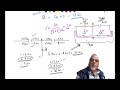 Sanjay Sir's Class JEE Advanced 2007 paper
 JEE ADVANCED REAL TIME PROBLEMS II MECHANICS II GURUJI ONLINE II PHYSICS BY SANJAY SIR
 edjee.in #jeeadvanced #iitfoundation #education #jeebatch
 www.edjee.in Register for #onlinecourses #physicssanjaysir #iitfoundation
 www.edjee.in #jee #engineeringentranceexam #cbse #class
 Jee advanced problem no 2 by guruji online physics Sanjay Sir
 UNITS & MEASUREMENT II NCERT CHAPTER I PHYSICS II CBSE II NUMERICALS Q11 TO Q20 II CLASS XI
