
- Популярные видео
- Авто
- Видео-блоги
- ДТП, аварии
- Для маленьких
- Еда, напитки
- Животные
- Закон и право
- Знаменитости
- Игры
- Искусство
- Комедии
- Красота, мода
- Кулинария, рецепты
- Люди
- Мото
- Музыка
- Мультфильмы
- Наука, технологии
- Новости
- Образование
- Политика
- Праздники
- Приколы
- Природа
- Происшествия
- Путешествия
- Развлечения
- Ржач
- Семья
- Сериалы
- Спорт
- Стиль жизни
- ТВ передачи
- Танцы
- Технологии
- Товары
- Ужасы
- Фильмы
- Шоу-бизнес
- Юмор
The "Knockoff" Australian Carrier That Was Actually Better Built Than The British Original
When Britain couldn't spare a single Bren Carrier after Dunkirk, Australia reverse-engineered one and built over 5,500 of its own — with welded armor plate that contained no nickel and no molybdenum. The Australian LP2 carrier was better than the British original.
In 1940, Australia obtained a single British Universal Carrier and took it apart at the Victorian Railways workshops in Melbourne. What came next was one of the most remarkable feats of wartime industrial improvisation of World War II. Australian engineers didn't just copy the British design — they improved it. The LP2 Local Pattern carrier featured all-welded hull construction two full years before Britain adopted the same technique, a steeper glacis plate angle that squeezed better ballistic protection from the same thickness of steel, and a revolutionary armor plate called ABP3 developed by BHP Newcastle that needed none of the strategic alloys conventional armor required. Factories across four Australian states — from Ford at Homebush in Sydney to the State Engineering Works in North Fremantle — produced roughly 5,560 carriers between 1940 and 1943. They served in North Africa at Tobruk and El Alamein, in the jungles of New Guinea at Buna-Gona, and as far afield as Korea. This video covers the full story: why Australia had to build its own armored vehicles, how BHP invented nickel-free bulletproof steel from scratch, the engineering differences between the LP2 and the British Universal Carrier, the combat record from the Western Desert to the Pacific, the specialized variants including the 2-Pounder anti-tank carrier, and how the Australian "knockoff" ended up anticipating improvements the British wouldn't make for years.
British War Machine covers WW2 weapons, military technology, and engineering that changed the course of the war. New videos every week — subscribe and turn on notifications so you never miss one.
TOPICS COVERED IN THIS VIDEO
Why Australia needed to build its own carriers after Dunkirk 1940
Essington Lewis and the Australian Department of Munitions
Reverse-engineering British carrier T2831 at Newport Workshops Melbourne
LP1 riveted carrier vs LP2 welded carrier — what changed and why
All-welded hull construction and the rivet splash problem
The steeper glacis plate angle and its ballistic advantage
BHP ABP3 armor plate — bulletproof steel with no nickel or molybdenum
Production across four states — Ford Homebush, Victorian Railways, Metropolitan Gas Company, South Australian Railways, State Engineering Works North Fremantle
LP2 specifications — Ford V8 engine, Horstmann suspension, 7-10mm armor
Combat record in North Africa — Syria, Tobruk, El Alamein
The disaster at Buna-Gona New Guinea December 1942
Reorganization of Australian carrier units for jungle warfare
Two LP2 carriers captured by the Japanese on Ambon
2-Pounder anti-tank carrier variant and 3-inch mortar carrier
Comparison with the British Universal Carrier Mk II and American T16
New Zealand LP2 production at Lower Hutt
Post-war use, surplus sales, and modern restorations
MAJOR RESEARCH SOURCES
Australian War Memorial — LP2A Machine Gun Carrier collection records (Gull Force, Ambon)
Morris, "A Review of the War-Time Activities of the BHP Steel Plant" (1947) — BHP Newcastle armor plate production data
Nevington War Museum — Australian Carrier Variants technical reference
Michael K. Cecil, "Australian Military Equipment Profiles Vol. 2: Local Pattern Carriers 1939 to 1945" (1992, ISBN 0-646-12600-8)
WW2 Database — Universal Carrier specifications and production figures
The Lancers Museum — Australian Bren Carrier operational history
FURTHER READING
Michael K. Cecil, "Australian Military Equipment Profiles Vol. 2: Local Pattern Carriers 1939 to 1945" — the definitive reference on LP1, LP2, and all Australian carrier variants with full production serial number ranges and technical drawings
Peter Chamberlain and Chris Ellis, "British and American Tanks of World War II" — comparative specifications for British Universal Carrier marks and American T16
Gavin Long, "Australia in the War of 1939-1945: To Benghazi" — official Australian war history covering early carrier deployments in the Middle East
David Horner, "Australia in the War of 1939-1945: High Command" — the political and industrial decisions behind Australian wartime munitions production
New Zealand Military Vehicle Club Bulletin — detailed history of New Zealand Bren Carrier production and post-war service
#AustralianLP2Carrier #BrenCarrier #WW2History #BritishWarMachine #UniversalCarrier
Видео The "Knockoff" Australian Carrier That Was Actually Better Built Than The British Original канала British War Machine
In 1940, Australia obtained a single British Universal Carrier and took it apart at the Victorian Railways workshops in Melbourne. What came next was one of the most remarkable feats of wartime industrial improvisation of World War II. Australian engineers didn't just copy the British design — they improved it. The LP2 Local Pattern carrier featured all-welded hull construction two full years before Britain adopted the same technique, a steeper glacis plate angle that squeezed better ballistic protection from the same thickness of steel, and a revolutionary armor plate called ABP3 developed by BHP Newcastle that needed none of the strategic alloys conventional armor required. Factories across four Australian states — from Ford at Homebush in Sydney to the State Engineering Works in North Fremantle — produced roughly 5,560 carriers between 1940 and 1943. They served in North Africa at Tobruk and El Alamein, in the jungles of New Guinea at Buna-Gona, and as far afield as Korea. This video covers the full story: why Australia had to build its own armored vehicles, how BHP invented nickel-free bulletproof steel from scratch, the engineering differences between the LP2 and the British Universal Carrier, the combat record from the Western Desert to the Pacific, the specialized variants including the 2-Pounder anti-tank carrier, and how the Australian "knockoff" ended up anticipating improvements the British wouldn't make for years.
British War Machine covers WW2 weapons, military technology, and engineering that changed the course of the war. New videos every week — subscribe and turn on notifications so you never miss one.
TOPICS COVERED IN THIS VIDEO
Why Australia needed to build its own carriers after Dunkirk 1940
Essington Lewis and the Australian Department of Munitions
Reverse-engineering British carrier T2831 at Newport Workshops Melbourne
LP1 riveted carrier vs LP2 welded carrier — what changed and why
All-welded hull construction and the rivet splash problem
The steeper glacis plate angle and its ballistic advantage
BHP ABP3 armor plate — bulletproof steel with no nickel or molybdenum
Production across four states — Ford Homebush, Victorian Railways, Metropolitan Gas Company, South Australian Railways, State Engineering Works North Fremantle
LP2 specifications — Ford V8 engine, Horstmann suspension, 7-10mm armor
Combat record in North Africa — Syria, Tobruk, El Alamein
The disaster at Buna-Gona New Guinea December 1942
Reorganization of Australian carrier units for jungle warfare
Two LP2 carriers captured by the Japanese on Ambon
2-Pounder anti-tank carrier variant and 3-inch mortar carrier
Comparison with the British Universal Carrier Mk II and American T16
New Zealand LP2 production at Lower Hutt
Post-war use, surplus sales, and modern restorations
MAJOR RESEARCH SOURCES
Australian War Memorial — LP2A Machine Gun Carrier collection records (Gull Force, Ambon)
Morris, "A Review of the War-Time Activities of the BHP Steel Plant" (1947) — BHP Newcastle armor plate production data
Nevington War Museum — Australian Carrier Variants technical reference
Michael K. Cecil, "Australian Military Equipment Profiles Vol. 2: Local Pattern Carriers 1939 to 1945" (1992, ISBN 0-646-12600-8)
WW2 Database — Universal Carrier specifications and production figures
The Lancers Museum — Australian Bren Carrier operational history
FURTHER READING
Michael K. Cecil, "Australian Military Equipment Profiles Vol. 2: Local Pattern Carriers 1939 to 1945" — the definitive reference on LP1, LP2, and all Australian carrier variants with full production serial number ranges and technical drawings
Peter Chamberlain and Chris Ellis, "British and American Tanks of World War II" — comparative specifications for British Universal Carrier marks and American T16
Gavin Long, "Australia in the War of 1939-1945: To Benghazi" — official Australian war history covering early carrier deployments in the Middle East
David Horner, "Australia in the War of 1939-1945: High Command" — the political and industrial decisions behind Australian wartime munitions production
New Zealand Military Vehicle Club Bulletin — detailed history of New Zealand Bren Carrier production and post-war service
#AustralianLP2Carrier #BrenCarrier #WW2History #BritishWarMachine #UniversalCarrier
Видео The "Knockoff" Australian Carrier That Was Actually Better Built Than The British Original канала British War Machine
Australian LP2 Bren Carrier LP2 carrier WW2 Australian Universal Carrier Bren Carrier welded vs riveted BHP ABP3 armor plate Australian WW2 armored vehicles Universal Carrier history Bren Gun Carrier WW2 British carrier Dunkirk equipment losses Essington Lewis munitions LP2 vs British carrier Australian war production Buna Gona carriers 2 pounder anti tank carrier Australia WW2 military history
Комментарии отсутствуют
Информация о видео
16 апреля 2026 г. 6:53:51
00:12:02
Другие видео канала
 The 'Homemade' Kiwi Tank Built In A Railway Workshop To Defend A Nation Of 1.5 Million From Japan
 Why This 'Ugly' British Armoured Truck Survived Taliban Bombs That Killed Every Lighter Vehicle
 Why Britain's WW1 Tank Designers Built A 'Monster' That Belonged In The Last War
 Why This 'Swimming' British Tank Sank 27 Times On D-Day — And Saved Thousands On Every Other Beach
 Why This 'Crude' British Tank That Never Fired Made 5,000 Germans Surrender
 The 'Ridiculous' Tractor Tank New Zealand Built When Britain Refused To Send A Single Vehicle
 Why This 'Fake' British Gun Kept German Defenders Pinned On D-Day Beaches
 The 'Borrowed' American Truck That Hauled Every British Tank From The Desert To Berlin
 The 'Invisible' British Motorcycle That Dropped Inside A Bomb Container Behind German Lines On D-Day
 The 'Unbreakable' British Rollers That Cleared German Minefields By Crushing Every Mine In Path
 Why This 'Linked' British Vehicle Couples Two Trucks To Cross Afghan Minefields
 Why This 'Failed' British Tank Was Rejected By Seven Nations Before Changing D-Day
 Why The British Army Drove This 'Tiny' Buggy Into A Minefield To Save A Soldier After The Falklands
 The 'Useless' British Tank That Couldn't Aim Its Own Gun Unless It Drove Onto A Hill
 The 'Giant' British Armoured Car That Carried A Tank Gun And Terrified Rommel's Scouts
 The 'Bedford-Bodied' South African Mine Truck That Fought Africa's First IED War
 Why This 'Tiny' British Vehicle Did Every Single Job In The Entire War
 Why British Crews Loved This 'Unreliable' Tank That Kept Breaking Down In The Desert
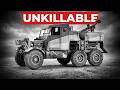 The "Ancient" British Truck From 1927 That Dragged Tanks Off Every Battlefield For Sixty Years
 The 'Thundering' British Sherman That Beat The Ground With 43 Chains To Clear German Minefields
