
- Популярные видео
- Авто
- Видео-блоги
- ДТП, аварии
- Для маленьких
- Еда, напитки
- Животные
- Закон и право
- Знаменитости
- Игры
- Искусство
- Комедии
- Красота, мода
- Кулинария, рецепты
- Люди
- Мото
- Музыка
- Мультфильмы
- Наука, технологии
- Новости
- Образование
- Политика
- Праздники
- Приколы
- Природа
- Происшествия
- Путешествия
- Развлечения
- Ржач
- Семья
- Сериалы
- Спорт
- Стиль жизни
- ТВ передачи
- Танцы
- Технологии
- Товары
- Ужасы
- Фильмы
- Шоу-бизнес
- Юмор
ICSE Solid State Chemistry Explained! [Grade 12] | Chemistry
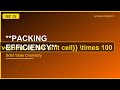
Hey everyone, and welcome! Today, we're diving into the fascinating world of Solid State Chemistry. Did you know that the properties of materials, like the hardness of a diamond or the flexibility of plastic, all come down to how their atoms are arranged in the solid state? We're going to make this chapter super easy to understand. So, let's get started! What exactly *is* the solid state? Well, it's one of the fundamental states of matter where particles are tightly packed. For ICSE, this chapter is really important because it often has direct questions and application-based problems. So, pay close attention! Now, let's talk about the first big idea: Classification of Solids. Solids can be broadly classified as crystalline and amorphous. Crystalline solids have a long-range order, meaning the arrangement of atoms is consistent throughout the entire material. Amorphous solids, on the other hand, have only short-range order. Think of glass; it's a classic example. Knowing the difference between these two is key. Now, let's define crystalline solids. A crystalline solid is a solid whose atoms, molecules, or ions are arranged in a highly ordered microscopic structure, forming a crystal lattice that extends in all directions. This order gives them sharp melting points. Next up: Crystal Lattices and Unit Cells. Imagine building a wall with identical bricks. That repeating brick is like a unit cell. A crystal lattice is just a 3D arrangement of these unit cells. There are different types of unit cells: simple cubic, face-centered cubic, and body-centered cubic. Each has a different packing efficiency. Here's a key formula: Density = (Z * M) / (a^3 * N_A). Where Z is the number of atoms per unit cell, M is the molar mass, a is the edge length of the unit cell, and N_A is Avogadro's number. Remember this for calculations! Now, let's talk about packing efficiency. This tells us how much space in a unit cell is actually occupied by the atoms. Face-centered cubic has the highest packing efficiency at 74%, followed by body-centered cubic at 68%, and simple cubic at 52.4%. Knowing these values helps you predict properties. Here's another important relationship: r = a / (2 * sqrt(2)) | r=radius of the atom, a=edge length of the FCC unit cell. This formula relates the radius of an atom to the edge length of a face-centered cubic unit cell. Understanding this helps in calculating atomic radii. A common mistake is confusing the contributions of atoms at different lattice points. Remember, atoms at corners contribute 1/8th, face centers contribute 1/2, and body centers contribute fully. Keep this in mind when calculating 'Z' in the density formula. Let's do a quick example. Q: An element crystallizes in a BCC structure. The edge length of its unit cell is 288 pm. If the density of the element is 7.2 g/cm³, what is its atomic mass? Ans: Step 1: Use the density formula: Density = (Z * M) / (a^3 * N_A). Step 2: For BCC, Z = 2. Step 3: Solve for M: M = (Density * a^3 * N_A) / Z. M = (7.2 * (288*10^-10)^3 * 6.022*10^23) / 2. Ans: M ≈ 51.8 g/mol. Semiconductors are a great real-world application. Doping silicon with impurities like phosphorus or boron changes its conductivity. This is the basis of transistors and computer chips. This is crucial for modern electronics! Remember these exam tips: First, always draw the unit cell diagram to visualize atom positions. Second, pay attention to units! Convert everything to consistent units before plugging into formulas. Third, practice numerical problems extensively. Finally, let's summarize what we've learned. We covered the classification of solids, distinguishing between crystalline and amorphous. Then, we explored crystal lattices and unit cells, understanding their structure and packing efficiency. Finally, we touched on real-world applications like semiconductors. All of this – AI notes, doubt solving, practice tests for Solid State – is FREE on Synapse. Study smarter, not harder! So, start your FREE trial today at synapse.omapps.in. Master Solid State for ICSE. And please subscribe to our channel for more free lessons. Visit Synapse dot omapps dot in and start learning today!
━━━━━━━━━━━━━━━━━━━━
📚 Master every chapter with AI — FREE on Synapse
👉 https://synapse.omapps.in
📢 Join our FREE Telegram channel for AI Exam Prep (CBSE | ICSE | JEE | NEET)
👉 https://t.me/+k0xQ9g2qcCBmZDM1
🔔 Please subscribe to our channel to get more content like this.
━━━━━━━━━━━━━━━━━━━━
#Synapse #AILearning #CBSE #JEE #NEET #FreeEducation
Видео ICSE Solid State Chemistry Explained! [Grade 12] | Chemistry канала Abhrajit Pal
━━━━━━━━━━━━━━━━━━━━
📚 Master every chapter with AI — FREE on Synapse
👉 https://synapse.omapps.in
📢 Join our FREE Telegram channel for AI Exam Prep (CBSE | ICSE | JEE | NEET)
👉 https://t.me/+k0xQ9g2qcCBmZDM1
🔔 Please subscribe to our channel to get more content like this.
━━━━━━━━━━━━━━━━━━━━
#Synapse #AILearning #CBSE #JEE #NEET #FreeEducation
Видео ICSE Solid State Chemistry Explained! [Grade 12] | Chemistry канала Abhrajit Pal
Комментарии отсутствуют
Информация о видео
10 апреля 2026 г. 22:58:49
00:04:54
Другие видео канала
 Oxidation | JEE Advanced Class 11 Chemistry | Synapse
 Salient features and examples | NEET Class 11 Biology | Synapse
 Solid State ISC 12 Class 12 | Complete Chapter Explained | 2026
 Nationalism in India | CBSE Grade 10 | Synapse
 Yesterday it's recorded into my dash cam
 DJI 0035
 Preparation | JEE Advanced Class 11 Chemistry | Synapse
 CBSE Ray Optics & Optical Instruments Explained! | Physics
 Electricity CBSE Grade 10 - Full Chapter Explained! | Physics
 Homolytic & heterolytic bond fission | JEE Main Class 11 Chemistry | Synapse
 Solutions for NEET: Master Key Concepts in Minutes | Chemistry
 Dzire 2017
 ICSE Relations and Functions Explained Simply | Mathematics
 Secondary Growth | NEET Class 11 Biology | Synapse
 Laws of Motion NEET: Complete Chapter in 3 Minutes!
 Resonance | JEE Main Class 11 Chemistry | Synapse
 Basis of Classification | NEET Class 11 Biology | Synapse
 Mitochondria — double membrane cristae powerhouse of cell ATP production | CBSE Class 9 | Synapse
 Biomolecules for NEET: Carbs, Proteins, Lipids Explained! | Biology
 Indian Agriculture: CBSE Grade 10 Social Science | Social Science
