
- Популярные видео
- Авто
- Видео-блоги
- ДТП, аварии
- Для маленьких
- Еда, напитки
- Животные
- Закон и право
- Знаменитости
- Игры
- Искусство
- Комедии
- Красота, мода
- Кулинария, рецепты
- Люди
- Мото
- Музыка
- Мультфильмы
- Наука, технологии
- Новости
- Образование
- Политика
- Праздники
- Приколы
- Природа
- Происшествия
- Путешествия
- Развлечения
- Ржач
- Семья
- Сериалы
- Спорт
- Стиль жизни
- ТВ передачи
- Танцы
- Технологии
- Товары
- Ужасы
- Фильмы
- Шоу-бизнес
- Юмор
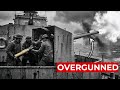
The 'Impossible' British Destroyer Bombardment That Saved Omaha Beach
On 6 June 1944, two small Royal Navy Hunt-class destroyers held the western flank of Omaha Beach. HMS Talybont and HMS Tanatside fired fifteen salvos in seven minutes that demolished German strongpoints at Pointe et Raz de la Percée — and history nearly forgot them.
This is the documented combat record of the Royal Navy at Omaha Beach. Two Type III Hunt-class escort destroyers, designed to kill E-boats in the English Channel, tasked with breaking fortified coastal positions on D-Day. Drawing directly from Lieutenant Commander Edward Francis Baines's action report submitted on 24 June 1944, this deep-dive walks minute by minute through the pre-H-Hour bombardment that suppressed the cliff defences above Pointe du Hoc, silenced machine gun positions firing on approaching DUKWs, and delivered fifteen documented salvos against the radar and strongpoint complex designated targets 76 and 77.
We separate fact from myth. Rear-Admiral Bryant's famous 0950 order to "get on them" went to the American Gleaves-class destroyers of DESRON 18 — not the British Hunts, which had withdrawn to the outer screen by doctrine. We explain why: the technical limits of Type III fire control, the Mark 37 advantage carried by US destroyers, and how British discipline and inter-allied coordination defined what the Hunts actually did that morning.
Featuring HMS Talybont (L18) under Lieutenant Commander Baines, DSO, and HMS Tanatside (L69) under Commander Bernard Jasper de St. Croix, both ships adopted by Welsh communities through Warship Week subscriptions in 1942, this is the rigorous, source-verified story of British naval excellence at Omaha Beach.
TOPICS COVERED
→ The 35-minute pre-assault bombardment plan and why it nearly failed
→ Rear-Admiral John L. Hall's pre-invasion warning about inadequate naval gunfire support
→ Full Type III Hunt-class technical specifications and armament fit
→ HMS Talybont's combat record from Operation Pedestal to the Battle of Sept-Îles
→ HMS Tanatside's service from Operation Torch to the Brittany action of February 1944
→ Minute-by-minute timeline of Talybont's bombardment of Pointe du Hoc
→ The fifteen-salvo barrage on targets 76 and 77 at Pointe et Raz de la Percée
→ HMS Tanatside's eastern Omaha bombardment alongside FS Georges Leygues
→ Comparative analysis of Hunt-class versus Gleaves-class destroyers
→ Why fire control technology, not courage, dictated the inshore action
→ Talybont's damage off Cherbourg and continued combat operations through August 1944
MAJOR RESEARCH SOURCES
→ Action report of Lieutenant Commander E.F. Baines, RN, dated 24 June 1944, reproduced in Gary Sterne, "The Cover Up at Omaha Beach: Maisy Battery and the US Rangers" (Pen and Sword, 2013)
→ William B. Kirkland, "Destroyers at Normandy: Naval Gunfire Support at Omaha Beach"
→ Samuel Eliot Morison, "The Invasion of France and Germany 1944–1945," History of US Naval Operations in World War II, Volume XI
→ Stephen W. Roskill, "The War at Sea, 1939–1945," Volume III
→ Norman Friedman, "British Destroyers and Frigates: The Second World War and After"
→ Adrian R. Lewis, "Omaha Beach: A Flawed Victory"
→ Joseph Balkoski, "Omaha Beach: D-Day, June 6, 1944"
→ Craig L. Symonds, "Neptune: The Allied Invasion of Europe and the D-Day Landings"
→ US Army Center of Military History, "Small Unit Actions: Pointe du Hoe"
→ Conway's "All the World's Fighting Ships 1922–1946"
FURTHER READING
For Hunt-class technical detail, see John English, "The Hunts: A History of the Design, Development and Careers of the 86 Destroyers of this Class Built for the Royal and Allied Navies during World War II" (World Ship Society, 1987). For the US Navy perspective, the US Naval Institute's Naval History Magazine articles "The Gallant Destroyers of D-Day" (June 2004) and "The Navy Saved Our Hides" (June 2014) are essential. The H-Gram 031-1 from the Naval History and Heritage Command provides the official US naval account of Operation Neptune. Lt Cdr Geoffrey B. Mason's RN service histories at naval-history.net give comprehensive ship-level chronologies.
Subscribe to British Naval History for documented, source-verified deep-dives into Royal Navy vessels, weapons systems, and combat operations from 1900 to the present.
#RoyalNavy #DDay #WW2
Видео The 'Impossible' British Destroyer Bombardment That Saved Omaha Beach канала British Naval History
This is the documented combat record of the Royal Navy at Omaha Beach. Two Type III Hunt-class escort destroyers, designed to kill E-boats in the English Channel, tasked with breaking fortified coastal positions on D-Day. Drawing directly from Lieutenant Commander Edward Francis Baines's action report submitted on 24 June 1944, this deep-dive walks minute by minute through the pre-H-Hour bombardment that suppressed the cliff defences above Pointe du Hoc, silenced machine gun positions firing on approaching DUKWs, and delivered fifteen documented salvos against the radar and strongpoint complex designated targets 76 and 77.
We separate fact from myth. Rear-Admiral Bryant's famous 0950 order to "get on them" went to the American Gleaves-class destroyers of DESRON 18 — not the British Hunts, which had withdrawn to the outer screen by doctrine. We explain why: the technical limits of Type III fire control, the Mark 37 advantage carried by US destroyers, and how British discipline and inter-allied coordination defined what the Hunts actually did that morning.
Featuring HMS Talybont (L18) under Lieutenant Commander Baines, DSO, and HMS Tanatside (L69) under Commander Bernard Jasper de St. Croix, both ships adopted by Welsh communities through Warship Week subscriptions in 1942, this is the rigorous, source-verified story of British naval excellence at Omaha Beach.
TOPICS COVERED
→ The 35-minute pre-assault bombardment plan and why it nearly failed
→ Rear-Admiral John L. Hall's pre-invasion warning about inadequate naval gunfire support
→ Full Type III Hunt-class technical specifications and armament fit
→ HMS Talybont's combat record from Operation Pedestal to the Battle of Sept-Îles
→ HMS Tanatside's service from Operation Torch to the Brittany action of February 1944
→ Minute-by-minute timeline of Talybont's bombardment of Pointe du Hoc
→ The fifteen-salvo barrage on targets 76 and 77 at Pointe et Raz de la Percée
→ HMS Tanatside's eastern Omaha bombardment alongside FS Georges Leygues
→ Comparative analysis of Hunt-class versus Gleaves-class destroyers
→ Why fire control technology, not courage, dictated the inshore action
→ Talybont's damage off Cherbourg and continued combat operations through August 1944
MAJOR RESEARCH SOURCES
→ Action report of Lieutenant Commander E.F. Baines, RN, dated 24 June 1944, reproduced in Gary Sterne, "The Cover Up at Omaha Beach: Maisy Battery and the US Rangers" (Pen and Sword, 2013)
→ William B. Kirkland, "Destroyers at Normandy: Naval Gunfire Support at Omaha Beach"
→ Samuel Eliot Morison, "The Invasion of France and Germany 1944–1945," History of US Naval Operations in World War II, Volume XI
→ Stephen W. Roskill, "The War at Sea, 1939–1945," Volume III
→ Norman Friedman, "British Destroyers and Frigates: The Second World War and After"
→ Adrian R. Lewis, "Omaha Beach: A Flawed Victory"
→ Joseph Balkoski, "Omaha Beach: D-Day, June 6, 1944"
→ Craig L. Symonds, "Neptune: The Allied Invasion of Europe and the D-Day Landings"
→ US Army Center of Military History, "Small Unit Actions: Pointe du Hoe"
→ Conway's "All the World's Fighting Ships 1922–1946"
FURTHER READING
For Hunt-class technical detail, see John English, "The Hunts: A History of the Design, Development and Careers of the 86 Destroyers of this Class Built for the Royal and Allied Navies during World War II" (World Ship Society, 1987). For the US Navy perspective, the US Naval Institute's Naval History Magazine articles "The Gallant Destroyers of D-Day" (June 2004) and "The Navy Saved Our Hides" (June 2014) are essential. The H-Gram 031-1 from the Naval History and Heritage Command provides the official US naval account of Operation Neptune. Lt Cdr Geoffrey B. Mason's RN service histories at naval-history.net give comprehensive ship-level chronologies.
Subscribe to British Naval History for documented, source-verified deep-dives into Royal Navy vessels, weapons systems, and combat operations from 1900 to the present.
#RoyalNavy #DDay #WW2
Видео The 'Impossible' British Destroyer Bombardment That Saved Omaha Beach канала British Naval History
HMS Talybont HMS Tanatside Hunt-class destroyer Omaha Beach D-Day Royal Navy D-Day British destroyers Normandy Operation Neptune Pointe du Hoc Pointe et Raz de la Percée Royal Navy WW2 D-Day naval bombardment Type III Hunt class Normandy 1944 naval gunfire support June 6 1944 WW2 destroyers Bombardment Force C DESRON 18 US Navy D-Day Atlantic Wall British Naval History naval history WW2 Lt Cdr Baines Gleaves class
Комментарии отсутствуют
Информация о видео
27 апреля 2026 г. 9:00:35
00:16:20
Другие видео канала
 The 'Never At Sea' British Women Who Won The Battle Of The Atlantic
 The '£25' British Weapon That Went From 433 Charges Per U-Boat Kill To 60
 The 'Explosive-Packed' British Destroyer That Destroyed Germany's Largest Dry Dock
 The 'Borrowed' Canadian Destroyer That Rammed A U-Boat Twice And Limped Home Ablaze
 The 'Doomed' British Battlecruiser That Dodged Nineteen Torpedoes Before The Twentieth Hit
 The 'Cursed' British Destroyer That Killed 3 Stukas Before Capsizing
 The 'Blind' British Carrier That Was Destroyed From 15 Miles Away
 The ‘Quiet’ Destroyer That Blew The Bow Off A German Warship At Point-Blank
 The British 'Eyes' That Saw Underwater When Germany Had Nothing Until 1943
 What Happened To Every Royal Navy Ship After WW2 — The Saddest Story In NavalHistory
 The 'Civilian Rescue' Myth That Hid Dunkirk's Real Heroes For 85 Years
 The 'Australian' British-Built Cruiser That Hunted The Italian Navy's Fastest Ship Until It Sank
 The 'Obsolete Guns' British Liner That Saved 32 Ships—Germans Called It 'Exceptional Courage'
 The 'Borrowed-Gun' British Monitor That Broke Two Of Mussolini's Desert Fortresses In Three Weeks
 The Minesweepers That Cleared 6,000 Mines In One Night Before D-Day
 The 'Blind' British Fleet That Lost 5 Cruisers And 9 Destroyers To Japan
 The 'Worthless' Old Destroyer Britain Turned Into a Giant Bomb
 The 'Defenceless' British Liner Hitler Put A Bounty On, That No U-Boat Ever Caught
 The 'Obsolete' British Destroyer That Became A Suicide Bomb
 Why The German High Command Couldn't Explain How Seven Thousand Ships Crossed Their Minefield
 Why British Destroyers With '75% Casualties' Were The Most Feared Ships
