
- Популярные видео
- Авто
- Видео-блоги
- ДТП, аварии
- Для маленьких
- Еда, напитки
- Животные
- Закон и право
- Знаменитости
- Игры
- Искусство
- Комедии
- Красота, мода
- Кулинария, рецепты
- Люди
- Мото
- Музыка
- Мультфильмы
- Наука, технологии
- Новости
- Образование
- Политика
- Праздники
- Приколы
- Природа
- Происшествия
- Путешествия
- Развлечения
- Ржач
- Семья
- Сериалы
- Спорт
- Стиль жизни
- ТВ передачи
- Танцы
- Технологии
- Товары
- Ужасы
- Фильмы
- Шоу-бизнес
- Юмор
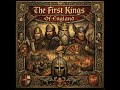
First Kings of England: XI. Cnut the Great — Empire of the North Sea (1016–1035) #aimusic
King Cnut the Great ruled England from 1016 to 1035 and achieved something few conquerors ever manage: he made conquest look like competent governance. A Danish king by birth, Cnut inherited England through war, but he kept it through restraint, calculation, and a sharp understanding of how power actually works.
After defeating Edmund Ironside, Cnut moved quickly to stabilize the realm. He retained much of the existing Anglo-Saxon administration, ruled through established law codes, and balanced Danish warriors with English elites rather than replacing one with the other. England was not treated as occupied territory, but as the central pillar of a new North Sea empire linking England, Denmark, and later Norway.
Cnut cultivated legitimacy with care. He supported the Church generously, enforced peace, and projected the image of a Christian king chosen by God rather than a pagan conqueror clinging to a sword. The famous story of him commanding the tide to halt—often misunderstood—was a lesson in humility, not arrogance: even a king, he demonstrated, could not command nature.
Under Cnut, England enjoyed relative stability after decades of chaos. Trade revived, coinage was standardized, and royal authority was respected. His empire depended heavily on his personal authority, however, and after his death in 1035 it fractured rapidly under weaker successors.
Cnut’s greatness lies in contrast. He arrived as an invader and ruled as a king; he built an empire not by erasing England’s institutions, but by mastering them. In doing so, he proved that the end of the Anglo-Saxon line was not the end of English governance—only a change in who held the crown.
#historicalmetal #aimusic #aimetal #metalmusic
Видео First Kings of England: XI. Cnut the Great — Empire of the North Sea (1016–1035) #aimusic канала HRG94
After defeating Edmund Ironside, Cnut moved quickly to stabilize the realm. He retained much of the existing Anglo-Saxon administration, ruled through established law codes, and balanced Danish warriors with English elites rather than replacing one with the other. England was not treated as occupied territory, but as the central pillar of a new North Sea empire linking England, Denmark, and later Norway.
Cnut cultivated legitimacy with care. He supported the Church generously, enforced peace, and projected the image of a Christian king chosen by God rather than a pagan conqueror clinging to a sword. The famous story of him commanding the tide to halt—often misunderstood—was a lesson in humility, not arrogance: even a king, he demonstrated, could not command nature.
Under Cnut, England enjoyed relative stability after decades of chaos. Trade revived, coinage was standardized, and royal authority was respected. His empire depended heavily on his personal authority, however, and after his death in 1035 it fractured rapidly under weaker successors.
Cnut’s greatness lies in contrast. He arrived as an invader and ruled as a king; he built an empire not by erasing England’s institutions, but by mastering them. In doing so, he proved that the end of the Anglo-Saxon line was not the end of English governance—only a change in who held the crown.
#historicalmetal #aimusic #aimetal #metalmusic
Видео First Kings of England: XI. Cnut the Great — Empire of the North Sea (1016–1035) #aimusic канала HRG94
Комментарии отсутствуют
Информация о видео
7 февраля 2026 г. 9:53:24
00:04:11
Другие видео канала
 Memory of the Coalition : Fifty Years After the Guns |#aimusic|#historicalmetal
 where England began #historicalmetal #aimusic #epicmetal #aimetal #powermetal #metalhistory
 Romance of the Three Kingdoms: Brothers in Ashes #aimusic
 Romance of the Three Kingdoms: Hulao Gate #historicalmetal
 Romance of the Three Kingdoms: The Heir to the Dragon |#aimusic |#historicalmetal
 Prince Edward of Woodstock: The Black Prince Rides #aimusic
 Romance of the Three Kingdoms: Beneath the Black Banners |#aimusic |#historicalmetal
 Mehmed the Conqueror and Catherine the Great: Thrones of the Black Sea #aimusic
 Romance of the Three Kingdoms: The Dragon Throne Falls North #aimusic
 Romance of the Three Kingdoms: Moon over Chang’an #aimusic
 Vercingetorix-Cry of Gaul #AIMUSIC
 The Little Conqueror #aimusic #metal #historicalmetal
 Napoleon’s Marshals: Soult,Marshal of Steel and Pride|#aimusic |#historicalmetal
 Napoleon’s Marshals: Bessières, Guardian of the Eagle |#aimusic |#historicalmetal
 Romance of the Three Kingdoms: The Battle of Yiling #aimusic
 Romance of the Three Kingdoms: The Downfall of Yuan Shu
 The Red Baron: Scarlet Dominion #aimetal
 Napoleon’s Marshals: Bernadotte, From Marshal to King|#aimusic |#historicalmetal
 Romance of the Three Kingdoms: End of the Hero of Chaos #aimusic
 Georgy Zhukov: Marshal of the Red Storm #aimusic
 Viking Berserker: Rage of the Berserker #aimetal
