
- Популярные видео
- Авто
- Видео-блоги
- ДТП, аварии
- Для маленьких
- Еда, напитки
- Животные
- Закон и право
- Знаменитости
- Игры
- Искусство
- Комедии
- Красота, мода
- Кулинария, рецепты
- Люди
- Мото
- Музыка
- Мультфильмы
- Наука, технологии
- Новости
- Образование
- Политика
- Праздники
- Приколы
- Природа
- Происшествия
- Путешествия
- Развлечения
- Ржач
- Семья
- Сериалы
- Спорт
- Стиль жизни
- ТВ передачи
- Танцы
- Технологии
- Товары
- Ужасы
- Фильмы
- Шоу-бизнес
- Юмор
What would you see at the edge of the universe?
If you think the universe has an edge you could visit, you're confusing two completely different things — and you're not alone.
When we talk about the "edge of the universe," we're actually dealing with at least four different boundaries, none of which work the way most people imagine. The observable universe has a clear edge 46 billion light-years away, but it's not a wall you could touch — it's a horizon in time. Beyond that lies the event horizon, marking regions we'll never see no matter how long we wait. And then there's the universe itself, which likely has no edge at all.
This isn't just cosmic trivia. Understanding these boundaries reveals why every star you see is a time machine, why there are galaxies we could reach today but never again if we wait too long, and why the night sky is literally showing you the universe's baby pictures every time you look up.
We'll take an imaginary journey to each of these edges, watching galaxies get younger and more primitive as we travel farther from Earth, until we hit the cosmic microwave background — a wall of light from when the universe first became transparent 380,000 years after the Big Bang. But even this isn't really an edge. It's just the farthest back in time we can see with light.
The real mind-bender? If our best theories are correct, space goes on forever. Travel far enough in any direction and you won't find an edge — just more galaxies, more cosmic structure, stretching infinitely. The only true boundary is time itself: we're limited not by walls in space, but by the finite age of the universe and the speed of light.
From our single vantage point on Earth, astronomers have pieced together the entire story of cosmic evolution written across the sky. Every distance is a different moment in cosmic history, making the observable universe the ultimate time machine.
Sources: NASA Goddard Space Flight Center cosmic distance measurements, Planck Collaboration cosmic microwave background data, Brian Greene's "The Elegant Universe"
Ready to explore more cosmic mysteries that challenge everything you thought you knew? Subscribe for weekly videos that make the universe genuinely understandable.
Видео What would you see at the edge of the universe? канала Monty Explains
When we talk about the "edge of the universe," we're actually dealing with at least four different boundaries, none of which work the way most people imagine. The observable universe has a clear edge 46 billion light-years away, but it's not a wall you could touch — it's a horizon in time. Beyond that lies the event horizon, marking regions we'll never see no matter how long we wait. And then there's the universe itself, which likely has no edge at all.
This isn't just cosmic trivia. Understanding these boundaries reveals why every star you see is a time machine, why there are galaxies we could reach today but never again if we wait too long, and why the night sky is literally showing you the universe's baby pictures every time you look up.
We'll take an imaginary journey to each of these edges, watching galaxies get younger and more primitive as we travel farther from Earth, until we hit the cosmic microwave background — a wall of light from when the universe first became transparent 380,000 years after the Big Bang. But even this isn't really an edge. It's just the farthest back in time we can see with light.
The real mind-bender? If our best theories are correct, space goes on forever. Travel far enough in any direction and you won't find an edge — just more galaxies, more cosmic structure, stretching infinitely. The only true boundary is time itself: we're limited not by walls in space, but by the finite age of the universe and the speed of light.
From our single vantage point on Earth, astronomers have pieced together the entire story of cosmic evolution written across the sky. Every distance is a different moment in cosmic history, making the observable universe the ultimate time machine.
Sources: NASA Goddard Space Flight Center cosmic distance measurements, Planck Collaboration cosmic microwave background data, Brian Greene's "The Elegant Universe"
Ready to explore more cosmic mysteries that challenge everything you thought you knew? Subscribe for weekly videos that make the universe genuinely understandable.
Видео What would you see at the edge of the universe? канала Monty Explains
Комментарии отсутствуют
Информация о видео
14 мая 2026 г. 20:45:00
00:13:24
Другие видео канала
 What You Would Actually See at Light Speed
 Here's what you would see at the speed of light
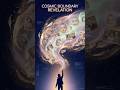 What would you see at the edge of the universe?
 Black holes aren't black. Here's what you'd actually see
 How ChatGPT Actually Works (The Real Process Explained)
 Moving Faster Makes You Travel Through Time Slower
 What Would Happen If Humans Travelled at the Speed of Light
 Why Nothing Can Go Faster Than Light (It's Not About Light)
 Why the Speed of Light Isn't Actually Constant
 What Is Gravity, Really? (Finally Explained)
 What the Speed of Light Is Actually Measuring
 What would you see inside a wormhole?
 The sky doesn't exist (and NASA has the photos to prove it)
 Quantum mechanics is wrong about reality. Here's the proof
 What is an Economy? The Simple Truth Behind the Complexity
 Distance Shrinks at Light Speed
 What Actually IS Blockchain? (Finally Explained Simply)
 How Neural Networks Really Work (Finally Explained Simply)
 Why time travel would kill you
 Empty Space Is a Myth. Here's What's Actually There
