
- Популярные видео
- Авто
- Видео-блоги
- ДТП, аварии
- Для маленьких
- Еда, напитки
- Животные
- Закон и право
- Знаменитости
- Игры
- Искусство
- Комедии
- Красота, мода
- Кулинария, рецепты
- Люди
- Мото
- Музыка
- Мультфильмы
- Наука, технологии
- Новости
- Образование
- Политика
- Праздники
- Приколы
- Природа
- Происшествия
- Путешествия
- Развлечения
- Ржач
- Семья
- Сериалы
- Спорт
- Стиль жизни
- ТВ передачи
- Танцы
- Технологии
- Товары
- Ужасы
- Фильмы
- Шоу-бизнес
- Юмор
Nigeria - Primary 1 - Physical & Health Education - Games
Nigeria - Primary 1 - Physical & Health Education - Games
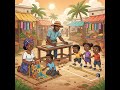
Lessonotes Nigeria curriculum lesson video for Primary 1 Physical & Health Education. This lesson focuses on Games for classroom teaching, revision, and home learning.
Country: Nigeria
Grade: Primary 1
Subject: Physical & Health Education
Scheme: Nigerian Educational Research and Development Council (NERDC) Standard Curriculum 2025
Theme: Sports and Games
Period: Term 2
Week: 3
Performance Objectives
1. Demonstrate the skills of some local games
2. Perform some local games
3. Perform the basic skills in ball games
4. Mention safety rules in games
Lesson Content
Grade / Level: Primary 1
Subject: Physical & Health Education
Theme: Sports and Games
Topic: Games
Term: 2nd Term
Week: 3
---
## 1. Overview and Learning Objectives
This topic, "Games," introduces Primary 1 students to various physical activities that promote physical fitness, social interaction, and cognitive development. It is crucial for Nigerian learners as games are integral to childhood development, fostering teamwork, sportsmanship, and cultural understanding through traditional play. Participation in games helps students develop fundamental motor skills, improve coordination, and understand the importance of rules and safety, which are essential for active and healthy living in their communities.
Upon completion of this lesson, students will be able to:
1. **Demonstrate the skills of some local games:** Students will show proficiency in the basic movements and actions required for popular traditional Nigerian games. This connects to their cultural heritage and common play activities in their neighborhoods.
2. **Perform some local games:** Students will actively participate in and play familiar local games, reinforcing their understanding of rules and sequences. This directly applies to their everyday recreational experiences with peers.
3. **Perform the basic skills in ball games:** Students will exhibit fundamental techniques for handling a ball, such as kicking and stopping. These skills are foundational for participation in various popular sports and recreational activities like football, which is widely played across Nigeria.
4. **Mention safety rules in games:** Students will identify and articulate simple rules that ensure safety while playing, promoting responsible behavior and injury prevention during play both at school and at home.
## 2. Key Concepts and Explanations
This section provides the foundational knowledge and detailed explanations necessary for the teacher to effectively deliver the lesson.
**2.1. What are Games?**
Games are structured forms of play, usually undertaken for enjoyment and sometimes used as an educational tool. They are distinct from work, which is usually carried out for recompense, and from art, which is more concerned with the expression of ideas. Games often involve rules, competition, and interaction, either individually or in teams. For Primary 1 students, games are primarily about active play, fun, and learning to interact with others.
**2.2. Local Games**
Local games, also known as traditional or indigenous games, are games that have been passed down through generations within a particular culture or community. They often require minimal equipment, using natural materials or simple objects readily available. These games are culturally significant as they reflect the values, customs, and history of the people.
* **Examples of Local Games suitable for Primary 1 in Nigeria:**
* **_Suwe_ (Hopscotch):** A game played by drawing a series of numbered squares on the ground. Players throw a stone (or _tapa_) into a square and hop through the squares, skipping the one with the stone.
* **Skills involved:** Hopping, balancing, throwing, aiming, counting, following sequences.
* **_Tinko-Tinko_ (Clapping Game):** A rhythmic hand-clapping game often accompanied by songs or rhymes. Multiple variations exist, but the core involves partners clapping hands in a synchronized pattern.
* **Skills involved:** Hand-eye coordination, rhythm, timing, memory, social interaction.
* **_Bo-Jubo_ (Hide-and-Seek):** A game where one player (the "seeker") closes their eyes and counts to a pre-determined number while others hide. The seeker then searches for the hidden players.
* **Skills involved:** Running, hiding, seeking, counting, patience, observation.
**2.3. Ball Games**
Ball games are games that involve the use of a ball. They are popular globally and in Nigeria, with football being the most prominent. For Primary 1, the focus is on developing basic manipulative skills with a ball.
* **Basic Skills in Ball Games:**
* **Kicking:** The act of propelling a ball with the foot.
* **Technique:** Place the non-kicking foot beside the ball. Swing the kicking leg back and then forward, making contact with the instep (top part) of the foot or the inside of the foot for accuracy. Follow through in the direction of the kick.
* **Example:** Kicking a station
Видео Nigeria - Primary 1 - Physical & Health Education - Games канала Lessonotes Video Teachings
Lessonotes Nigeria curriculum lesson video for Primary 1 Physical & Health Education. This lesson focuses on Games for classroom teaching, revision, and home learning.
Country: Nigeria
Grade: Primary 1
Subject: Physical & Health Education
Scheme: Nigerian Educational Research and Development Council (NERDC) Standard Curriculum 2025
Theme: Sports and Games
Period: Term 2
Week: 3
Performance Objectives
1. Demonstrate the skills of some local games
2. Perform some local games
3. Perform the basic skills in ball games
4. Mention safety rules in games
Lesson Content
Grade / Level: Primary 1
Subject: Physical & Health Education
Theme: Sports and Games
Topic: Games
Term: 2nd Term
Week: 3
---
## 1. Overview and Learning Objectives
This topic, "Games," introduces Primary 1 students to various physical activities that promote physical fitness, social interaction, and cognitive development. It is crucial for Nigerian learners as games are integral to childhood development, fostering teamwork, sportsmanship, and cultural understanding through traditional play. Participation in games helps students develop fundamental motor skills, improve coordination, and understand the importance of rules and safety, which are essential for active and healthy living in their communities.
Upon completion of this lesson, students will be able to:
1. **Demonstrate the skills of some local games:** Students will show proficiency in the basic movements and actions required for popular traditional Nigerian games. This connects to their cultural heritage and common play activities in their neighborhoods.
2. **Perform some local games:** Students will actively participate in and play familiar local games, reinforcing their understanding of rules and sequences. This directly applies to their everyday recreational experiences with peers.
3. **Perform the basic skills in ball games:** Students will exhibit fundamental techniques for handling a ball, such as kicking and stopping. These skills are foundational for participation in various popular sports and recreational activities like football, which is widely played across Nigeria.
4. **Mention safety rules in games:** Students will identify and articulate simple rules that ensure safety while playing, promoting responsible behavior and injury prevention during play both at school and at home.
## 2. Key Concepts and Explanations
This section provides the foundational knowledge and detailed explanations necessary for the teacher to effectively deliver the lesson.
**2.1. What are Games?**
Games are structured forms of play, usually undertaken for enjoyment and sometimes used as an educational tool. They are distinct from work, which is usually carried out for recompense, and from art, which is more concerned with the expression of ideas. Games often involve rules, competition, and interaction, either individually or in teams. For Primary 1 students, games are primarily about active play, fun, and learning to interact with others.
**2.2. Local Games**
Local games, also known as traditional or indigenous games, are games that have been passed down through generations within a particular culture or community. They often require minimal equipment, using natural materials or simple objects readily available. These games are culturally significant as they reflect the values, customs, and history of the people.
* **Examples of Local Games suitable for Primary 1 in Nigeria:**
* **_Suwe_ (Hopscotch):** A game played by drawing a series of numbered squares on the ground. Players throw a stone (or _tapa_) into a square and hop through the squares, skipping the one with the stone.
* **Skills involved:** Hopping, balancing, throwing, aiming, counting, following sequences.
* **_Tinko-Tinko_ (Clapping Game):** A rhythmic hand-clapping game often accompanied by songs or rhymes. Multiple variations exist, but the core involves partners clapping hands in a synchronized pattern.
* **Skills involved:** Hand-eye coordination, rhythm, timing, memory, social interaction.
* **_Bo-Jubo_ (Hide-and-Seek):** A game where one player (the "seeker") closes their eyes and counts to a pre-determined number while others hide. The seeker then searches for the hidden players.
* **Skills involved:** Running, hiding, seeking, counting, patience, observation.
**2.3. Ball Games**
Ball games are games that involve the use of a ball. They are popular globally and in Nigeria, with football being the most prominent. For Primary 1, the focus is on developing basic manipulative skills with a ball.
* **Basic Skills in Ball Games:**
* **Kicking:** The act of propelling a ball with the foot.
* **Technique:** Place the non-kicking foot beside the ball. Swing the kicking leg back and then forward, making contact with the instep (top part) of the foot or the inside of the foot for accuracy. Follow through in the direction of the kick.
* **Example:** Kicking a station
Видео Nigeria - Primary 1 - Physical & Health Education - Games канала Lessonotes Video Teachings
Комментарии отсутствуют
Информация о видео
3 ч. 4 мин. назад
00:01:54
Другие видео канала
 Nigeria - Primary 2 - General Mathematics - Length
 Nigeria - Senior Secondary 3 - Physical Education - Greek festivals and the olympic games
 Nigeria - Senior Secondary 1 - Physical Education - Philosophy of physical education
 Nigeria - Primary 1 - General Mathematics - Whole numbers 6-9
 Nigeria - Senior Secondary 2 - Automobile Parts Merchandising - Suspension system and parts
 Nigeria - Senior Secondary 1 - Physical Education - Circulatory system
 Nigeria - Senior Secondary 1 - Physical Education - Institutional sports
 Nigeria - Primary 1 - General Mathematics - Addition II
 Nigeria - SS1 - Radio Television and Electrical Work - Electronic Communication Systems
 Nigeria - Senior Secondary 3 - Plumbing And Pipe Fitting - Central sewage system
 Nigeria - Primary 1 - Basic Science - Colour (identification)
 Nigeria - Senior Secondary 3 - Automobile Parts Merchandising - Lubrication system and its parts
 Nigeria - Primary 1 - General Mathematics - Weight
 Nigeria - Senior Secondary 3 - Physical Education - Athletics
 Nigeria - Primary 1 - Social Studies - Sources and Uses of Water
 Nigeria - Senior Secondary 3 - Physical Education - International competitions
 Nigeria - Senior Secondary 2 - Automobile Parts Merchandising - Cooling system and its parts
 Nigeria - Senior Secondary 3 - Physical Education - Circulatory system
 Nigeria - SS1 - Radio Television And Repairs - Soldering and Desoldering in Electronic Circuit
 Nigeria - Primary 1 - Basic Technology - Energy
