
- Популярные видео
- Авто
- Видео-блоги
- ДТП, аварии
- Для маленьких
- Еда, напитки
- Животные
- Закон и право
- Знаменитости
- Игры
- Искусство
- Комедии
- Красота, мода
- Кулинария, рецепты
- Люди
- Мото
- Музыка
- Мультфильмы
- Наука, технологии
- Новости
- Образование
- Политика
- Праздники
- Приколы
- Природа
- Происшествия
- Путешествия
- Развлечения
- Ржач
- Семья
- Сериалы
- Спорт
- Стиль жизни
- ТВ передачи
- Танцы
- Технологии
- Товары
- Ужасы
- Фильмы
- Шоу-бизнес
- Юмор
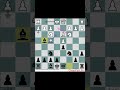
Trompowsky: Classical: Big Center #Chess #ChessOpening #ChessOpenings #chessmaster #chessstrategy
Trompowsky Attack: Classical Defense, Big Center Variation
1. d4 Nf6 2. Bg5 e6 3. e4
https://chesspath.pro/?pgn=1.%20d4%20Nf6%202.%20Bg5%20e6%203.%20e4
🔑 Key Ideas
This setup fuses the Trompowsky spirit with a French-Defense-like structure. By playing e4–e5, White locks the center and grabs space — transforming the game into a slow-burning positional battle with attacking potential.
The move Qg4 signals White’s intent: pressure on the kingside, target g7, and provoke weaknesses like ...f6.
🎯 What Both Sides Want
White: Expand with f4–f5, squeeze the dark squares, and eventually shift the attack to the kingside. Control of e5 and f6 squares is the long-term goal.
Black: Counterpunch in the center with ...c5 (already done) and ...Nc6–...Qb4 ideas, trying to chip away at White’s center before the attack lands.
❗ Practical Risks
The center is closed — if you overextend with f5 too early, Black may counterattack on the queenside or break open the middle with ...fxe5 and ...cxd4.
The move Qg4 is powerful but commits you; if Black castles long or plays accurately with ...O-O and ...f5, your queen can become misplaced.
With both sides having fixed pawn chains, piece maneuvering is critical — one wrong knight route can cost the initiative.
🧭 Typical Plans
Kingside Attack: h4–h5 to pry open lines, Nf3–h4–g6 motifs, and Rf1–f3–g3 lifts.
Central Anchor: Keep the e5 pawn alive; it’s your positional soul.
Queenside Defense: Use a3/b4 to blunt any ...Qb4 or ...Nb6–c4 ideas.
If Black plays ...f6, respond dynamically — sometimes sacrifice with f5 or open the f-file for counterplay.
⚔️ Tactical Themes
Qg4 vs ...f6 tension: often leads to direct kingside attacks or sacrifices on e6.
Exchange sacrifice Rxf6 can appear in sharper lines if Black castles kingside.
Knight reroutes: Nf3–h4–f5 or Nd2–b3–c5 — both can tip the balance.
⚖️ Verdict
White holds more space, a clear plan, and attacking chances, while Black must navigate carefully to untangle. There’s no concrete advantage, but it’s White who drives the narrative.
Verdict: White slightly better with initiative and a clearer plan — a strong practical weapon against unprepared opponents.
Видео Trompowsky: Classical: Big Center #Chess #ChessOpening #ChessOpenings #chessmaster #chessstrategy канала ChessPath
1. d4 Nf6 2. Bg5 e6 3. e4
https://chesspath.pro/?pgn=1.%20d4%20Nf6%202.%20Bg5%20e6%203.%20e4
🔑 Key Ideas
This setup fuses the Trompowsky spirit with a French-Defense-like structure. By playing e4–e5, White locks the center and grabs space — transforming the game into a slow-burning positional battle with attacking potential.
The move Qg4 signals White’s intent: pressure on the kingside, target g7, and provoke weaknesses like ...f6.
🎯 What Both Sides Want
White: Expand with f4–f5, squeeze the dark squares, and eventually shift the attack to the kingside. Control of e5 and f6 squares is the long-term goal.
Black: Counterpunch in the center with ...c5 (already done) and ...Nc6–...Qb4 ideas, trying to chip away at White’s center before the attack lands.
❗ Practical Risks
The center is closed — if you overextend with f5 too early, Black may counterattack on the queenside or break open the middle with ...fxe5 and ...cxd4.
The move Qg4 is powerful but commits you; if Black castles long or plays accurately with ...O-O and ...f5, your queen can become misplaced.
With both sides having fixed pawn chains, piece maneuvering is critical — one wrong knight route can cost the initiative.
🧭 Typical Plans
Kingside Attack: h4–h5 to pry open lines, Nf3–h4–g6 motifs, and Rf1–f3–g3 lifts.
Central Anchor: Keep the e5 pawn alive; it’s your positional soul.
Queenside Defense: Use a3/b4 to blunt any ...Qb4 or ...Nb6–c4 ideas.
If Black plays ...f6, respond dynamically — sometimes sacrifice with f5 or open the f-file for counterplay.
⚔️ Tactical Themes
Qg4 vs ...f6 tension: often leads to direct kingside attacks or sacrifices on e6.
Exchange sacrifice Rxf6 can appear in sharper lines if Black castles kingside.
Knight reroutes: Nf3–h4–f5 or Nd2–b3–c5 — both can tip the balance.
⚖️ Verdict
White holds more space, a clear plan, and attacking chances, while Black must navigate carefully to untangle. There’s no concrete advantage, but it’s White who drives the narrative.
Verdict: White slightly better with initiative and a clearer plan — a strong practical weapon against unprepared opponents.
Видео Trompowsky: Classical: Big Center #Chess #ChessOpening #ChessOpenings #chessmaster #chessstrategy канала ChessPath
Комментарии отсутствуют
Информация о видео
10 октября 2025 г. 8:21:24
00:00:49
Другие видео канала
 Mexican Defense, Nc3 #Chess #ChessOpening #ChessOpenings #chessmaster #chesstactics #chessstrategy
 Italian: Two Knights: Polerio: Bishop Check #Chess #ChessOpenings #chesstactics #chessstrategy
 Queen's Gambit Declined: Ragozin: Alekhine #Chess #ChessOpenings #chesstactics #chessstrategy
 Italian: Two Knights: Blackburne #Chess #ChessOpening #ChessOpenings #chesstactics #chessstrategy
 Catalan Opening: Open Defense, Na3 #Chess #ChessOpening #ChessOpenings #chesstactics #chessstrategy
 Queen's Gambit Accepted #Chess #ChessOpening #ChessOpenings #chesslife #chesstactics #chessstrategy
 King's Indian Defense: Kazakh Var #Chess #ChessOpening #ChessOpenings #chesstactics #chessstrategy
 Scotch Game: Schmidt Variation #Chess #ChessOpening #ChessOpenings #chesstactics #chessstrategy
 Caro-Kann: Tartakower Variation #Chess #ChessOpening #ChessOpenings #chesstactics #chessstrategy
 Italian: Two Knights: Traxler, d4 Counterattack #Chess #ChessOpenings #chesstactics #chessstrategy
 Italian Game: Two Knights Defense, Fritz Variation #chess #chessmaster #chessopening #chesslife
 Rapport-Jobava System #Chess #ChessOpening #ChessOpenings
 French Defense: Alekhine-Chatard Attack #Chess #ChessOpening #ChessOpenings #chessmaster
 Italian Game: Rousseau Gambit #Chess #ChessOpening #ChessOpenings #chesstactics #chessstrategy
 Réti Opening: Advance Var: b4 g5 #Chess #ChessOpening #ChessOpenings #chesstactics #chessstrategy
 Blackmar-Diemer Gambit: Lemberger Countergambit #Chess #ChessOpenings #chessmaster #chessstrategy
 Nimzo-Indian Defense: Classical, Berlin, Pirc Var #Chess #ChessOpenings #chesstactics #chessstrategy
 Ruy Lopez: Berlin Defense, Mortimer Variation/Trap #chess #chessopening #chessopenings #chessmaster
 Stafford Gambit Counter #Chess #ChessOpening #ChessOpenings #chesstactics #chessstrategy
 Italian: Greco Gambit #Chess #ChessOpening #ChessOpenings #chesslife #chesstactics #chessstrategy
 Rapport-Jobava System w/early c5 Counter#Chess #ChessOpenings #ChessOpening
