
- Популярные видео
- Авто
- Видео-блоги
- ДТП, аварии
- Для маленьких
- Еда, напитки
- Животные
- Закон и право
- Знаменитости
- Игры
- Искусство
- Комедии
- Красота, мода
- Кулинария, рецепты
- Люди
- Мото
- Музыка
- Мультфильмы
- Наука, технологии
- Новости
- Образование
- Политика
- Праздники
- Приколы
- Природа
- Происшествия
- Путешествия
- Развлечения
- Ржач
- Семья
- Сериалы
- Спорт
- Стиль жизни
- ТВ передачи
- Танцы
- Технологии
- Товары
- Ужасы
- Фильмы
- Шоу-бизнес
- Юмор
The "Cost Heuristic" Compilers Use to Judge Your Assembly Code (Ep. 54)
Look at two blocks of assembly code. They might achieve the exact same computational result, but to an optimizing compiler, one is objectively superior. How does the compiler actually evaluate and choose between them without relying on intuition?
In Episode 54, we explore the rigorous mathematical model that code generators use to evaluate execution efficiency. Because compiling directly to raw silicon is unmanageable, compilers initially target a generalized sandbox known as the Abstract Target Machine. We break down the architecture of this abstract CPU and dive into the "Cost Heuristic"—the strict mathematical equation compilers use to penalize slow memory fetches and reward efficient register usage.
IN THIS VIDEO, YOU WILL LEARN:
- Why code generators use an Abstract Target Machine instead of compiling directly to bare metal.
- The architecture of the abstract CPU: Blending RISC execution speed with CISC memory routing flexibility.
- The Cost Heuristic: Calculating execution efficiency based on physical memory word lengths (Cost = 1 + additional addressing costs).
- Why accessing CPU registers is mathematically "free" while fetching memory locations carries a heavy penalty.
- How to systematically scan and score functionally identical assembly blocks to prove which one is faster.
- How micro-level cost tracking drives macro-level optimizations like Register Allocation by Graph Coloring.
Видео The "Cost Heuristic" Compilers Use to Judge Your Assembly Code (Ep. 54) канала Raiyan Hasan
In Episode 54, we explore the rigorous mathematical model that code generators use to evaluate execution efficiency. Because compiling directly to raw silicon is unmanageable, compilers initially target a generalized sandbox known as the Abstract Target Machine. We break down the architecture of this abstract CPU and dive into the "Cost Heuristic"—the strict mathematical equation compilers use to penalize slow memory fetches and reward efficient register usage.
IN THIS VIDEO, YOU WILL LEARN:
- Why code generators use an Abstract Target Machine instead of compiling directly to bare metal.
- The architecture of the abstract CPU: Blending RISC execution speed with CISC memory routing flexibility.
- The Cost Heuristic: Calculating execution efficiency based on physical memory word lengths (Cost = 1 + additional addressing costs).
- Why accessing CPU registers is mathematically "free" while fetching memory locations carries a heavy penalty.
- How to systematically scan and score functionally identical assembly blocks to prove which one is faster.
- How micro-level cost tracking drives macro-level optimizations like Register Allocation by Graph Coloring.
Видео The "Cost Heuristic" Compilers Use to Judge Your Assembly Code (Ep. 54) канала Raiyan Hasan
Комментарии отсутствуют
Информация о видео
21 апреля 2026 г. 22:46:45
00:05:47
Другие видео канала
 The Parse Tree is Useless: Why Compilers Need SDDs (Ep. 31)
 I Built an AI App to Learn from YouTube Without Distractions
 The "Abstraction Penalty" Secret Compilers Hide From You (Ep. 64)
 Lexical Analysis Deep Dive: From Characters to Tokens (Ep. 13)
 How Compilers Parse Code (Context-Free Grammars Explained) | Ep. 6
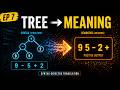 The Syntax-Semantics Bridge: Syntax-Directed Translation (Ep. 7)
 Stop Writing Messy Backend Code (Use This Blueprint)
 Architecting a Lexical Analyzer: Transition Diagrams & State Machines (Ep. 16)
 State Explosion: The Fatal Flaw of LR(1) Parsers (Ep. 27)
 The Architecture of Top-Down Parsing: Recursive Descent & First Sets (Ep. 8)
 The Memory Map: The Architecture of Scope, State, and Bindings
 The Abstraction Engine: The Science of Compiler Design
 Beyond the Resume: I built an intelligent, interactive portfolio.
 Syntax Error Recovery: The Parser’s Dilemma & Panic Mode (Ep. 22)
 High-Performance Lexical Analysis: Buffering & Sentinels (Ep. 14)
 Coursify Demo – Converting YouTube Playlists into Structured Courses
 The Architecture of Symbol Tables: Lexical Scope & Chained Environments (Ep. 11)
 The NP-Complete Math Problem Hidden Inside Every Compiler (Ep. 53)
 The "Node Splitting" Trick Compilers Use to Fix Spaghetti Code (Ep. 70)
 The "Safe Conservatism" Rule That Prevents Compilers from Breaking Your Code (Ep. 65)
