
- Популярные видео
- Авто
- Видео-блоги
- ДТП, аварии
- Для маленьких
- Еда, напитки
- Животные
- Закон и право
- Знаменитости
- Игры
- Искусство
- Комедии
- Красота, мода
- Кулинария, рецепты
- Люди
- Мото
- Музыка
- Мультфильмы
- Наука, технологии
- Новости
- Образование
- Политика
- Праздники
- Приколы
- Природа
- Происшествия
- Путешествия
- Развлечения
- Ржач
- Семья
- Сериалы
- Спорт
- Стиль жизни
- ТВ передачи
- Танцы
- Технологии
- Товары
- Ужасы
- Фильмы
- Шоу-бизнес
- Юмор
The Rise and Fall of MaxxForce The $2.5 Billion Bet That Broke Navistar
In 2007, the EPA dropped new emission regulations that would force diesel manufacturers to slash NOx output by 92% within three years. While every competitor scrambled to adopt SCR technology with DEF fluid systems, Navistar saw an opportunity nobody else did. Their engineering team believed they could meet the new standards through Advanced Exhaust Gas Recirculation alone—no DEF tanks, no urea injection, no complex aftertreatment hardware. CEO Dan Ustian stood on industry stages and publicly dismissed SCR as overengineered complexity that fleet operators would eventually reject. Navistar's MaxxForce engine family would prove that elegant engineering could beat brute-force compliance systems.
The gamble was audacious. Navistar recirculated exhaust gas at levels nobody had ever attempted—pushing thermal and mechanical systems far beyond conventional limits. For a brief moment in 2009, it looked like they might actually pull it off. Then the EGR coolers started cracking under extreme thermal cycling. Turbochargers failed from soot contamination. Diesel particulate filters clogged every few hundred miles, triggering fuel-consuming regenerations that left trucks belching smoke and essentially unusable for thirty minutes at a time. Oil dilution from frequent regens destroyed turbo bearings. Corrosive exhaust condensation ate through aluminum intake manifolds.
Fleet operators who bought Navistar's promise of simplified maintenance discovered they'd traded one fluid for a dozen catastrophic failure modes. Warranty claims flooded in. Major carriers filed lawsuits alleging chronic defects. The used truck market made the brutal truth undeniable—MaxxForce-equipped trucks were worth thousands less than competitors, with some dealers refusing to accept them in trade altogether. By 2012, facing regulatory pressure and market collapse, Navistar admitted defeat. They pivoted to SCR, started offering Cummins engines in their flagship trucks, and quietly retired the MaxxForce name by 2016.
This is the story of how one company bet everything on outsmarting the entire diesel industry—and lost nearly $2.5 billion proving that sometimes the complex solution exists because it's the only one that actually works.
What engineering principle did Navistar's MaxxForce disaster teach the diesel industry? Drop your thoughts below.
#verdictengine #MaxxForce #Navistar #DieselEngines #TruckHistory #EngineeringFailure #EPA #EmissionsRegulations #SCR #EGR #InternationalTrucks #Cummins #DetroitDiesel #CommercialTrucks #TruckingIndustry #HeavyDuty #DieselTech
In 2007, the EPA introduced new federal regulations, drastically cutting acceptable levels of NOx emissions for diesel engines. This challenge spurred the industry to adopt the SCR system, which uses diesel exhaust fluid to meet stringent environmental standards. This move, driven by the Clean Air Act, marked a major shift in emission control technology for diesel engines.
Видео The Rise and Fall of MaxxForce The $2.5 Billion Bet That Broke Navistar канала Verdict Engine
The gamble was audacious. Navistar recirculated exhaust gas at levels nobody had ever attempted—pushing thermal and mechanical systems far beyond conventional limits. For a brief moment in 2009, it looked like they might actually pull it off. Then the EGR coolers started cracking under extreme thermal cycling. Turbochargers failed from soot contamination. Diesel particulate filters clogged every few hundred miles, triggering fuel-consuming regenerations that left trucks belching smoke and essentially unusable for thirty minutes at a time. Oil dilution from frequent regens destroyed turbo bearings. Corrosive exhaust condensation ate through aluminum intake manifolds.
Fleet operators who bought Navistar's promise of simplified maintenance discovered they'd traded one fluid for a dozen catastrophic failure modes. Warranty claims flooded in. Major carriers filed lawsuits alleging chronic defects. The used truck market made the brutal truth undeniable—MaxxForce-equipped trucks were worth thousands less than competitors, with some dealers refusing to accept them in trade altogether. By 2012, facing regulatory pressure and market collapse, Navistar admitted defeat. They pivoted to SCR, started offering Cummins engines in their flagship trucks, and quietly retired the MaxxForce name by 2016.
This is the story of how one company bet everything on outsmarting the entire diesel industry—and lost nearly $2.5 billion proving that sometimes the complex solution exists because it's the only one that actually works.
What engineering principle did Navistar's MaxxForce disaster teach the diesel industry? Drop your thoughts below.
#verdictengine #MaxxForce #Navistar #DieselEngines #TruckHistory #EngineeringFailure #EPA #EmissionsRegulations #SCR #EGR #InternationalTrucks #Cummins #DetroitDiesel #CommercialTrucks #TruckingIndustry #HeavyDuty #DieselTech
In 2007, the EPA introduced new federal regulations, drastically cutting acceptable levels of NOx emissions for diesel engines. This challenge spurred the industry to adopt the SCR system, which uses diesel exhaust fluid to meet stringent environmental standards. This move, driven by the Clean Air Act, marked a major shift in emission control technology for diesel engines.
Видео The Rise and Fall of MaxxForce The $2.5 Billion Bet That Broke Navistar канала Verdict Engine
Verdict engine Vintage machines American engines Diesel engines Detroit diesel Vintage engines Verdict engines nox scr system diesel exhaust fluid clean air act environmental standards vintage american machines diesel detroit diesel series 60 detroit diesel sound diesel power train journey diesel engine detroit diesel engines series 60 vintage farm equipment horsepower wars two stroke diesel truck engines vintage diesel engines vintage machinery
Комментарии отсутствуют
Информация о видео
18 декабря 2025 г. 19:00:55
00:15:28
Другие видео канала
 The $50 Million Mistake Hidden Inside Cummins' Big Cam
 The Complete EMD Story: From La Grange to Caterpillar 1922-2025
 Why Europe’s Class 66 Locomotive Still Haunts EMD
 The Insane Truth About Detroit Diesel's 2,900 HP 20V149 Engine
 The Underrated V8 That Embarrassed Cummins' Big Cam
 The Brutal Truth Behind the Bizarre Deutz F4L912 Diesel Engine 1
 The Agricultural Empire That Collapsed: How Massey-Ferguson Lost Everything
 The Shocking Truth About Detroit Diesel: America's Most Legendary Engine
 The EMD 567: The Two-Stroke Engine That Killed Steam Forever
 The Diesel Engine That Ended ALCO's Locomotive Dynasty
 The $2 Billion Mistake That Destroyed EMD's Railroad Empire in 1994
 The $5 Billion Smoke Screen: EMD’s Final Disaster
 The SD40-2: Why It Became the Most Successful Locomotive Ever
 Union Pacific's $5 Billion Merger That Broke American Railroads in 1996
 The $3 Billion War: How GE Finally Destroyed EMD's Century of Dominance
 The Complete GE Locomotive Story From Erie to Wabtec 1918 2025
 GE's Secret Weapon: How the Dash 8 Destroyed EMD's Empire
 The Submarine on Rails: The Rise and Fall of Fairbanks Morse
 GE's Secret Shame: The AC6000CW Disaster Nobody Talks About
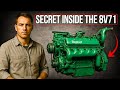 Detroit Diesel 8V71: Why This Legendary Engine Divided Mechanics for Decades
