
- Популярные видео
- Авто
- Видео-блоги
- ДТП, аварии
- Для маленьких
- Еда, напитки
- Животные
- Закон и право
- Знаменитости
- Игры
- Искусство
- Комедии
- Красота, мода
- Кулинария, рецепты
- Люди
- Мото
- Музыка
- Мультфильмы
- Наука, технологии
- Новости
- Образование
- Политика
- Праздники
- Приколы
- Природа
- Происшествия
- Путешествия
- Развлечения
- Ржач
- Семья
- Сериалы
- Спорт
- Стиль жизни
- ТВ передачи
- Танцы
- Технологии
- Товары
- Ужасы
- Фильмы
- Шоу-бизнес
- Юмор
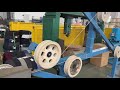
A Comprehensive Pre-Shipment Testing Protocol for Copper Foil Slitting Machines
The goal of pre-shipment testing is to simulate actual production environments as closely as possible. This goes beyond simply "spinning the motors." It involves running the machine with representative materials, at target speeds, and measuring the output against the stringent quality standards of the copper foil industry.
The Multi-Stage Pre-Shipment Testing Protocol
A thorough test is conducted in a logical sequence, verifying mechanical, electrical, and control systems before culminating in a dynamic material run.
Stage 1: Mechanical and Electrical Integrity Check (No-Load Test)
Before any material is loaded, the machine's fundamental systems are verified.
Structural & Safety Inspection:
Verify the machine is level and securely mounted on its base.
Check all guards, emergency stops, and safety interlocks. Each must function instantly and halt all machine movement.
Confirm that all lubrication points are filled and that pneumatic systems are leak-free and operating at the correct pressure.
Subsystem Activation & Calibration:
Unwind & Rewind Stands: Test the operation of the hydraulic or pneumatic mandrels for secure core gripping and release. Verify the lateral movement of the unwind/rewind beds for web alignment.
Drive Systems: Run all motors (unwind, rewind, pull rolls) independently at various speeds without material. Listen for abnormal noises from bearings or gears. Check for any vibration.
Web Path: Manually rotate all idler, pinch, and spreader rollers to ensure they turn freely and are aligned correctly.
Slitting Head: Manually rotate the slitting shaft(s). Verify that the blade holders move smoothly and lock securely at the specified positions. For razor slitting systems, check the air pressure or mechanical pressure system for the blade actuators.
Stage 2: Control System and HMI Verification
The brain of the machine must be as robust as its body.
Human-Machine Interface (HMI): Test all screens, navigation, and input commands. Verify that setpoints (speed, tension, length) can be entered and saved correctly.
Programmable Logic Controller (PLC) & Drives: Confirm that all pre-programmed recipes for different roll widths and diameters function correctly.
Tension Control System: This is critical. While unloaded, the system's tension transducers and controllers should be calibrated and show a zero-reading. Test the tension control algorithm by simulating a "dancer" or load cell signal.
Data Logging & Diagnostics: Verify that the machine accurately logs operational data and generates clear error messages for simulated faults.
Stage 3: The Dynamic Material Run (The Core Test)
This is the most critical phase, where the machine proves its capability.
Test Material Selection:
A "dummy" master roll of copper foil is used. Its specifications (thickness, width, grade) should be as close as possible to the customer's intended material—for example, 8-12μm electrodeposited copper for battery applications.
The roll is slit into a pre-defined set of narrower widths (e.g., 150mm, 200mm) to demonstrate versatility.
The Slitting Process Test:
Threading & Setup: The machine is threaded according to standard operating procedure. The slitting head is configured with new, sharp razor blades set to the specified widths.
Tension Profile Execution: The machine is started at a low speed. The unwind brake and rewind drive are observed to ensure they are maintaining the preset, low-tension profile (often as low as 2-5 kg/cm² for thin foil).
Speed Ramp-Up: The machine speed is gradually increased to its maximum operational rating (e.g., 300 m/min or more). Operators monitor for any web flutter, misalignment, or tension instability.
Slit Edge Quality Inspection: This is a key deliverable. Samples from the beginning, middle, and end of the run are collected.
Visual Inspection: The slit edges are examined under a magnifying lamp or microscope for burrs, micro-fractures, or delamination.
Burr Measurement: A precision profilometer or a specialized "burr gauge" is used to quantitatively measure any burr height. The result must be within the contractual specification, typically ≤2μm for high-grade foil.
Rewind Quality Assessment:
The finished narrow rolls are the final product. They are inspected for:
Telescoping: No layers should be misaligned.
Starring or Cinching: There should be no internal wrinkles caused by tension spikes.
Hard/Soft Spots: The roll should have uniform hardness throughout, indicating consistent tension.
Surface Defects: The foil surface must be free from scratches, impressions, or contamination introduced by the machine's rollers.
Stage 4: Performance Data Collection & Final Report
A test is only as good as its documentation.
The manufacturer compiles a comprehensive Factory Acceptance Test (FAT) Report that includes:
Видео A Comprehensive Pre-Shipment Testing Protocol for Copper Foil Slitting Machines канала Fiona Lu
The Multi-Stage Pre-Shipment Testing Protocol
A thorough test is conducted in a logical sequence, verifying mechanical, electrical, and control systems before culminating in a dynamic material run.
Stage 1: Mechanical and Electrical Integrity Check (No-Load Test)
Before any material is loaded, the machine's fundamental systems are verified.
Structural & Safety Inspection:
Verify the machine is level and securely mounted on its base.
Check all guards, emergency stops, and safety interlocks. Each must function instantly and halt all machine movement.
Confirm that all lubrication points are filled and that pneumatic systems are leak-free and operating at the correct pressure.
Subsystem Activation & Calibration:
Unwind & Rewind Stands: Test the operation of the hydraulic or pneumatic mandrels for secure core gripping and release. Verify the lateral movement of the unwind/rewind beds for web alignment.
Drive Systems: Run all motors (unwind, rewind, pull rolls) independently at various speeds without material. Listen for abnormal noises from bearings or gears. Check for any vibration.
Web Path: Manually rotate all idler, pinch, and spreader rollers to ensure they turn freely and are aligned correctly.
Slitting Head: Manually rotate the slitting shaft(s). Verify that the blade holders move smoothly and lock securely at the specified positions. For razor slitting systems, check the air pressure or mechanical pressure system for the blade actuators.
Stage 2: Control System and HMI Verification
The brain of the machine must be as robust as its body.
Human-Machine Interface (HMI): Test all screens, navigation, and input commands. Verify that setpoints (speed, tension, length) can be entered and saved correctly.
Programmable Logic Controller (PLC) & Drives: Confirm that all pre-programmed recipes for different roll widths and diameters function correctly.
Tension Control System: This is critical. While unloaded, the system's tension transducers and controllers should be calibrated and show a zero-reading. Test the tension control algorithm by simulating a "dancer" or load cell signal.
Data Logging & Diagnostics: Verify that the machine accurately logs operational data and generates clear error messages for simulated faults.
Stage 3: The Dynamic Material Run (The Core Test)
This is the most critical phase, where the machine proves its capability.
Test Material Selection:
A "dummy" master roll of copper foil is used. Its specifications (thickness, width, grade) should be as close as possible to the customer's intended material—for example, 8-12μm electrodeposited copper for battery applications.
The roll is slit into a pre-defined set of narrower widths (e.g., 150mm, 200mm) to demonstrate versatility.
The Slitting Process Test:
Threading & Setup: The machine is threaded according to standard operating procedure. The slitting head is configured with new, sharp razor blades set to the specified widths.
Tension Profile Execution: The machine is started at a low speed. The unwind brake and rewind drive are observed to ensure they are maintaining the preset, low-tension profile (often as low as 2-5 kg/cm² for thin foil).
Speed Ramp-Up: The machine speed is gradually increased to its maximum operational rating (e.g., 300 m/min or more). Operators monitor for any web flutter, misalignment, or tension instability.
Slit Edge Quality Inspection: This is a key deliverable. Samples from the beginning, middle, and end of the run are collected.
Visual Inspection: The slit edges are examined under a magnifying lamp or microscope for burrs, micro-fractures, or delamination.
Burr Measurement: A precision profilometer or a specialized "burr gauge" is used to quantitatively measure any burr height. The result must be within the contractual specification, typically ≤2μm for high-grade foil.
Rewind Quality Assessment:
The finished narrow rolls are the final product. They are inspected for:
Telescoping: No layers should be misaligned.
Starring or Cinching: There should be no internal wrinkles caused by tension spikes.
Hard/Soft Spots: The roll should have uniform hardness throughout, indicating consistent tension.
Surface Defects: The foil surface must be free from scratches, impressions, or contamination introduced by the machine's rollers.
Stage 4: Performance Data Collection & Final Report
A test is only as good as its documentation.
The manufacturer compiles a comprehensive Factory Acceptance Test (FAT) Report that includes:
Видео A Comprehensive Pre-Shipment Testing Protocol for Copper Foil Slitting Machines канала Fiona Lu
Комментарии отсутствуют
Информация о видео
28 ноября 2025 г. 13:48:23
00:00:31
Другие видео канала
 copper extrusion machine is waiting to load
 10月27日
 workshop
 How “No-Twist” Tech Revolutionizes Cable Production
 slitting machine
 Precision down to the micron is the foundation of safety and efficiency.
 How to Perfectly Synchronize Your Paper Wrapping with Your Strander's Speed?
 10月21日
 c
c
 350 extrusion machine for copper
 Here's how we turn raw copper foil into precision-engineered strips that power modern electronics
 copper extrusion machine
 copper extrusion machine
 When 0.1mm makes all the difference: The art of precision copper foil slitting
