
- Популярные видео
- Авто
- Видео-блоги
- ДТП, аварии
- Для маленьких
- Еда, напитки
- Животные
- Закон и право
- Знаменитости
- Игры
- Искусство
- Комедии
- Красота, мода
- Кулинария, рецепты
- Люди
- Мото
- Музыка
- Мультфильмы
- Наука, технологии
- Новости
- Образование
- Политика
- Праздники
- Приколы
- Природа
- Происшествия
- Путешествия
- Развлечения
- Ржач
- Семья
- Сериалы
- Спорт
- Стиль жизни
- ТВ передачи
- Танцы
- Технологии
- Товары
- Ужасы
- Фильмы
- Шоу-бизнес
- Юмор
LITERARY TERMS IMP ENGLISH LITERATURE SET /NET
LITERARY TERMS IMP ENGLISH LITERATURE SET /NET
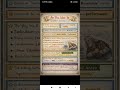
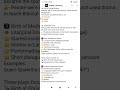
A narrative where characters/events represent abstract ideas or moral principles.Alliteration: The repetition of consonant sounds at the beginning of nearby words.Allusion: A passing reference to a well-known person, place, event, or literary work.Anachronism: A detail that is historically inaccurate, placed outside its proper time period.Analogy: A comparison between two distinct things to explain a complex idea.Anti-hero: A protagonist lacking traditional heroic qualities (e.g., courage, morality).Antithesis: A pair of statements or images where one reverses or contrasts with the other.Apostrophe: A figure of speech in which a speaker directly addresses an absent person or personified quality.Assonance: The repetition of vowel sounds within nearby words.Euphemism: A mild or indirect expression used in place of one that is harsh or blunt.Hyperbole: An intentional, extreme exaggeration for emphasis.Irony (Verbal): When a speaker says one thing but means the opposite.Metaphor: A direct comparison between two unlike things without using "like" or "as".Oxymoron: A combination of contradictory words (e.g., "deafening silence").Paradox: A statement that appears contradictory but reveals a deeper truth.Personification: Attributing human characteristics to inanimate objects or abstract ideas.Simile: A comparison between two unlike things using "like" or "as".Symbolism: The use of symbols (objects, characters) to represent abstract ideas.Synecdoche: A figure of speech where a part represents the whole (e.g., "wheels" for a car
https://youtu.be/6hGTd_U7HqU
Видео LITERARY TERMS IMP ENGLISH LITERATURE SET /NET канала Bright Learner's Academy
A narrative where characters/events represent abstract ideas or moral principles.Alliteration: The repetition of consonant sounds at the beginning of nearby words.Allusion: A passing reference to a well-known person, place, event, or literary work.Anachronism: A detail that is historically inaccurate, placed outside its proper time period.Analogy: A comparison between two distinct things to explain a complex idea.Anti-hero: A protagonist lacking traditional heroic qualities (e.g., courage, morality).Antithesis: A pair of statements or images where one reverses or contrasts with the other.Apostrophe: A figure of speech in which a speaker directly addresses an absent person or personified quality.Assonance: The repetition of vowel sounds within nearby words.Euphemism: A mild or indirect expression used in place of one that is harsh or blunt.Hyperbole: An intentional, extreme exaggeration for emphasis.Irony (Verbal): When a speaker says one thing but means the opposite.Metaphor: A direct comparison between two unlike things without using "like" or "as".Oxymoron: A combination of contradictory words (e.g., "deafening silence").Paradox: A statement that appears contradictory but reveals a deeper truth.Personification: Attributing human characteristics to inanimate objects or abstract ideas.Simile: A comparison between two unlike things using "like" or "as".Symbolism: The use of symbols (objects, characters) to represent abstract ideas.Synecdoche: A figure of speech where a part represents the whole (e.g., "wheels" for a car
https://youtu.be/6hGTd_U7HqU
Видео LITERARY TERMS IMP ENGLISH LITERATURE SET /NET канала Bright Learner's Academy
Комментарии отсутствуют
Информация о видео
9 мая 2026 г. 15:35:32
00:26:36
Другие видео канала
 MAHA SET EXAM PAPER 1 SOLVED QUESTION PAPER 1
 ENGLISH LITERATURE SOLVED QUESTION MOSTLY ASKED MAHA SET EXAM
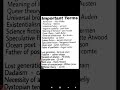 Imp Terms in english literature
 Poetic Devices
 W B Yeats
 Shakespeare famous Quotations
 PREVIOUS YEAR SOLVED QUESTIONS MAHA SET EXAM 26
 11 February 2026
 Importance of Self Confidence
 The Road Not Taken
 English Literature
 English Literature for Maharashtra SET 2024|Maharashtra SET Sep 2021 (Booklet A)|PYQs Full Revision
 CULTURAL STUDIES PART 1 STUART HALL MAHA SET 2026
 Model verbs
 English Literature Short Recap
 ULYSSES
 As You Like It Shakespeare
 Previous Year Questions (PYQs) for English Literature SET exam 26
 19 March 2026
 Tenses A Grammar section 8th 12th std English preparation
 मंथन परिक्षा part3
