
- Популярные видео
- Авто
- Видео-блоги
- ДТП, аварии
- Для маленьких
- Еда, напитки
- Животные
- Закон и право
- Знаменитости
- Игры
- Искусство
- Комедии
- Красота, мода
- Кулинария, рецепты
- Люди
- Мото
- Музыка
- Мультфильмы
- Наука, технологии
- Новости
- Образование
- Политика
- Праздники
- Приколы
- Природа
- Происшествия
- Путешествия
- Развлечения
- Ржач
- Семья
- Сериалы
- Спорт
- Стиль жизни
- ТВ передачи
- Танцы
- Технологии
- Товары
- Ужасы
- Фильмы
- Шоу-бизнес
- Юмор
CSSP 2022 0616 Talk Modeling Antarctic Ice with Adaptive Mesh Refinement
The response of the Antarctic Ice Sheet (AIS) remains the largest uncertainty in projections of sea-level rise. The AIS (particularly in West Antarctica) is believed to be vulnerable to collapse driven by warm-water incursion under ice shelves, which causes a loss of buttressing, subsequent grounding-line retreat, and large (potentially up to 4m) contributions to sea-level rise. Understanding the response of the Earth's ice sheets to forcing from a changing climate has required the development of a new generation of next-generation ice sheet models which are much more accurate, scalable, and sophisticated than their predecessors. For example very fine (finer than 1km) spatial resolution is needed to resolve ice dynamics around shear margins and grounding lines (the point at which grounded ice begins to float). The LBL-developed BISICLES ice sheet model uses adaptive mesh refinement (AMR) to enable sufficiently-resolved modeling of full-continent Antarctic ice sheet response to climate forcing. Dan Martin discusses recent progress and challenges modeling the sometimes-dramatic response of the ice sheet to climate forcing using AMR.
Видео CSSP 2022 0616 Talk Modeling Antarctic Ice with Adaptive Mesh Refinement канала Computing Sciences at Berkeley Lab
Видео CSSP 2022 0616 Talk Modeling Antarctic Ice with Adaptive Mesh Refinement канала Computing Sciences at Berkeley Lab
Комментарии отсутствуют
Информация о видео
29 июня 2022 г. 0:48:55
00:58:55
Другие видео канала
 Jia Yin - CS Postdoc Symposium 2023
 Adaptive Variational Quantum Simulation -- Niladri Gomes
 The Power of Data and Experimental Advantages in Quantum Machine Learning
 Faster Algorithms for Tensor Ring Decomposition -- Osman Malik
 Modeling Non-equilibrium Phase Transition in Complex Fluids
 Ozan Karsavuran - CS Postdoc Symposium 2023
 Parametric Amplification of a Quantum Transducer -- Huo Chen
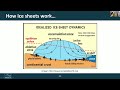 CSSP 2024 0625 (Talk) Modeling Antarctic Ice with Adaptive Mesh Refinement
 40 Years of Accomplishments in Applied Mathematics and Computational Science at the DOE Labs, Part 1
 A Tale of Scientific Workflows - Lavanya Ramakrishnan
 Siyuan Niu - CS Postdoc Symposium 2024
 Quantum Algorithms for Eigenvalue Problems - Lin Lin
 NERSC: 50 Years of Scientific Computing
 Quantum Imaginary Time Evolution on the Advanced Quantum Testbed
 3D Deep Learning Models for Molecular Property Prediction - Ankur Gupta
 Data-Driven Models for Equation-Oriented Optimization
 CSSP 2022 0614 (Talk) Designing and Presenting a Science Poster
 GPTune: Non-smooth and Mixed Variables in Surrogate Models -- Hengrui Luo
 Performance Portability in Materials Simulations -- Soham Ghosh
 ESnet6: Serving Conversations That Matter
