
- Популярные видео
- Авто
- Видео-блоги
- ДТП, аварии
- Для маленьких
- Еда, напитки
- Животные
- Закон и право
- Знаменитости
- Игры
- Искусство
- Комедии
- Красота, мода
- Кулинария, рецепты
- Люди
- Мото
- Музыка
- Мультфильмы
- Наука, технологии
- Новости
- Образование
- Политика
- Праздники
- Приколы
- Природа
- Происшествия
- Путешествия
- Развлечения
- Ржач
- Семья
- Сериалы
- Спорт
- Стиль жизни
- ТВ передачи
- Танцы
- Технологии
- Товары
- Ужасы
- Фильмы
- Шоу-бизнес
- Юмор
Day 3 – NomadAir Project Scaffold
Website Link: www.systemdrd.com
Course Link: https://systemdrd.com/courses/flutter-hands-on-travel-app/
This lesson fixes a problem most Flutter projects don’t notice until it’s too late.
Beginner Flutter tutorials usually start with a simple folder structure:
screens, widgets, utils, everything under lib/. That structure works — until the app grows. Once you have multiple features, shared state, design tokens, repositories, and mock data, that flat structure turns into something fragile.
The problem isn’t files or folders.
The problem is no enforced boundaries.
In a single-package Flutter app, any file can import any other file. A widget can pull in a repository. A utility can depend on UI. Nothing technically breaks — but the build graph becomes fully connected. Changes ripple unexpectedly, merge conflicts increase, and tests become impossible to isolate.
This lesson shows why that happens — and how to fix it structurally, not by convention.
Instead of relying on folder discipline or code reviews, we move to package-level boundaries, because Flutter and Dart already know how to enforce those correctly.
You’ll learn:
Why Dart enforces dependencies per package, not per file
How path-based packages create real, compiler-enforced boundaries
Why this catches architectural violations at compile time, not in review
How a monorepo avoids “shared utils” becoming a dumping ground
We scaffold NomadAir as a three-package monorepo:
core for domain models, design tokens, and interfaces
ui for widgets and theming
data for repository implementations and mock data
Each package has a strict dependency direction.
If a package tries to import something it shouldn’t, the build fails — immediately.
This lesson also introduces Dart 3.x class modifiers in a practical way:
abstract final for design tokens that must never be instantiated or extended
abstract interface for repository contracts
final for concrete models and implementations to prevent accidental coupling
Nothing here relies on lint rules or discipline.
The compiler enforces the architecture for you.
By the end of Day 3, you’ll have:
A Flutter project that scales beyond tutorials
Independent packages that analyze and build in isolation
A structure that stays stable as features multiply
If you’ve ever thought “we’ll clean up the architecture later” — this lesson explains why later usually never comes.
#Day3
#Flutter
#FlutterArchitecture
#FlutterProjectStructure
#Dart
#FlutterBeginner
#FlutterMonorepo
#CleanArchitecture
#MobileDevelopment
#SoftwareArchitecture
Видео Day 3 – NomadAir Project Scaffold канала SystemDR - Scalable System Design
Course Link: https://systemdrd.com/courses/flutter-hands-on-travel-app/
This lesson fixes a problem most Flutter projects don’t notice until it’s too late.
Beginner Flutter tutorials usually start with a simple folder structure:
screens, widgets, utils, everything under lib/. That structure works — until the app grows. Once you have multiple features, shared state, design tokens, repositories, and mock data, that flat structure turns into something fragile.
The problem isn’t files or folders.
The problem is no enforced boundaries.
In a single-package Flutter app, any file can import any other file. A widget can pull in a repository. A utility can depend on UI. Nothing technically breaks — but the build graph becomes fully connected. Changes ripple unexpectedly, merge conflicts increase, and tests become impossible to isolate.
This lesson shows why that happens — and how to fix it structurally, not by convention.
Instead of relying on folder discipline or code reviews, we move to package-level boundaries, because Flutter and Dart already know how to enforce those correctly.
You’ll learn:
Why Dart enforces dependencies per package, not per file
How path-based packages create real, compiler-enforced boundaries
Why this catches architectural violations at compile time, not in review
How a monorepo avoids “shared utils” becoming a dumping ground
We scaffold NomadAir as a three-package monorepo:
core for domain models, design tokens, and interfaces
ui for widgets and theming
data for repository implementations and mock data
Each package has a strict dependency direction.
If a package tries to import something it shouldn’t, the build fails — immediately.
This lesson also introduces Dart 3.x class modifiers in a practical way:
abstract final for design tokens that must never be instantiated or extended
abstract interface for repository contracts
final for concrete models and implementations to prevent accidental coupling
Nothing here relies on lint rules or discipline.
The compiler enforces the architecture for you.
By the end of Day 3, you’ll have:
A Flutter project that scales beyond tutorials
Independent packages that analyze and build in isolation
A structure that stays stable as features multiply
If you’ve ever thought “we’ll clean up the architecture later” — this lesson explains why later usually never comes.
#Day3
#Flutter
#FlutterArchitecture
#FlutterProjectStructure
#Dart
#FlutterBeginner
#FlutterMonorepo
#CleanArchitecture
#MobileDevelopment
#SoftwareArchitecture
Видео Day 3 – NomadAir Project Scaffold канала SystemDR - Scalable System Design
Комментарии отсутствуют
Информация о видео
20 апреля 2026 г. 15:34:06
00:01:22
Другие видео канала
 Check Token Budget Before Every Claude Code Batch — Not After
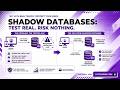 Shadow Databases Explained: The Safest Way to Test Database Migrations at Scale
 RISC-V vs ARM vs x86 Explained | Licensing, Open Source Freedom & CPU Customization Comparison
 Auto-Scaling Explained | Handle Traffic Spikes Without Crashing or Overpaying
 Day 25: Booking Flow — getFlightDetails, 404 & 412 Handling
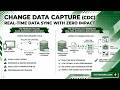 Change Data Capture (CDC) Explained | Real-Time Data Sync Without DB Load
