
- Популярные видео
- Авто
- Видео-блоги
- ДТП, аварии
- Для маленьких
- Еда, напитки
- Животные
- Закон и право
- Знаменитости
- Игры
- Искусство
- Комедии
- Красота, мода
- Кулинария, рецепты
- Люди
- Мото
- Музыка
- Мультфильмы
- Наука, технологии
- Новости
- Образование
- Политика
- Праздники
- Приколы
- Природа
- Происшествия
- Путешествия
- Развлечения
- Ржач
- Семья
- Сериалы
- Спорт
- Стиль жизни
- ТВ передачи
- Танцы
- Технологии
- Товары
- Ужасы
- Фильмы
- Шоу-бизнес
- Юмор
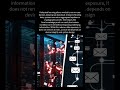
How GPUDirect Storage Erased the CPU From AI Data Loading #techfacts #AITraining
🌟 In large-scale AI training pipelines, keeping massive clusters of GPUs fully fed with data is one of the toughest challenges in infrastructure engineering. As models scale, the biggest bottleneck isn't the computational speed of the accelerator—it’s the time spent waiting for dataset batches to cross motherboard channels.
📖 Historically, AI training workloads relied on CPU-mediated data loading. When streaming massive training datasets from NVMe drives or distributed storage systems, the data had to be pulled into host system memory (RAM), processed by the CPU, and then copied *again* across the PCIe bus into GPU memory. This redundant bounce creates an immense "CPU tax," starving fast GPUs of data while pinning host processor cores.
💡 Modern AI clusters shatter this performance barrier by using GPUDirect Storage (GDS). This architecture bypasses the host operating system, CPU, and system memory entirely. By establishing a direct, peer-to-peer Data Memory Access (DMA) path over high-speed RDMA fabrics (such as InfiniBand or RoCE), remote storage can stream raw tensor data directly into the GPU's High Bandwidth Memory (HBM).
🚀 Bypassing these legacy data bounces slashes I/O latency, scales throughput to the absolute maximum limits of the network, and frees up host CPU resources to focus entirely on on-the-fly data augmentation. If you want to master the bleeding edge of AI infrastructure, deep learning systems, and high-performance computing, smash that subscribe button, hit like, and click the bell icon!
#techfacts #AITraining #GPUDirectStorage #AIInfrastructure #NVIDIAGPU #SystemsArchitecture #HPC
Видео How GPUDirect Storage Erased the CPU From AI Data Loading #techfacts #AITraining канала Tech Thinks
📖 Historically, AI training workloads relied on CPU-mediated data loading. When streaming massive training datasets from NVMe drives or distributed storage systems, the data had to be pulled into host system memory (RAM), processed by the CPU, and then copied *again* across the PCIe bus into GPU memory. This redundant bounce creates an immense "CPU tax," starving fast GPUs of data while pinning host processor cores.
💡 Modern AI clusters shatter this performance barrier by using GPUDirect Storage (GDS). This architecture bypasses the host operating system, CPU, and system memory entirely. By establishing a direct, peer-to-peer Data Memory Access (DMA) path over high-speed RDMA fabrics (such as InfiniBand or RoCE), remote storage can stream raw tensor data directly into the GPU's High Bandwidth Memory (HBM).
🚀 Bypassing these legacy data bounces slashes I/O latency, scales throughput to the absolute maximum limits of the network, and frees up host CPU resources to focus entirely on on-the-fly data augmentation. If you want to master the bleeding edge of AI infrastructure, deep learning systems, and high-performance computing, smash that subscribe button, hit like, and click the bell icon!
#techfacts #AITraining #GPUDirectStorage #AIInfrastructure #NVIDIAGPU #SystemsArchitecture #HPC
Видео How GPUDirect Storage Erased the CPU From AI Data Loading #techfacts #AITraining канала Tech Thinks
Комментарии отсутствуют
Информация о видео
30 июня 2026 г. 20:22:28
00:00:32
Другие видео канала
 Why your phone lies about battery percentage? #techfacts #mobilebattery #enery
 WebAssembly (WASM) Sandboxing & Kernel-Native eBPF Tracing #WebAssembly #EdgeComputing2026
 Do you know this effect? What to know?
 The Death of the "Cold Boot": The Rise of Universal Memory #techfacts #ram #volatility
 Do you know this black hole discovery in 2025? Facts of the day #facts #space #blackhole #education
 conjuring Universe #shorts #shortvideo
 Labeling Functions (LFs) & Noise-Aware Loss Optimization #DataProgramming #DataCentricAI
 mucormycosis | Analysis #shorts #shortvideo #mucormycosis
 do know about Titanic investigation #history #shortvideo #facts
 Geopatriation: Why the "Cloud" is Moving Back to Earth #techfacts #cloudcomputing
 Why do even the best apps occasionally fail? 🌐 #techfacts #computerscience #processors
 Direct-to-Chip Microfluidic Channels & Thermal Throttle Elimination #HardwareArchitecture2026
 How Analog In-Memory Computing Beats Von Neumann Bottlenecks #techfacts #AIAccelerators
 The "Edge of Chaos" Optimization Breakthrough #techfacts #tosiba #bifurcation
 moore’s law is dead? #facts #techreels #science
 Java HashMap Converts Linked List to Red-Black Tree After 8 Collisions #facts #java #digital
 mucormycosis | TM'sthink #shorts #shortvideo
 The Internet Isn't Wireless — It's Underwater #facts #internet #cable #education
 Do you know this kind of fish? Facts of the day #facts #factshorts #fish #oceanlife
 Core Tech: Recursive SNARKs & Federated Learning #techfacts #fintech
 The Cache Invalidation Problem #techfacts #distributedsystems
