
- Популярные видео
- Авто
- Видео-блоги
- ДТП, аварии
- Для маленьких
- Еда, напитки
- Животные
- Закон и право
- Знаменитости
- Игры
- Искусство
- Комедии
- Красота, мода
- Кулинария, рецепты
- Люди
- Мото
- Музыка
- Мультфильмы
- Наука, технологии
- Новости
- Образование
- Политика
- Праздники
- Приколы
- Природа
- Происшествия
- Путешествия
- Развлечения
- Ржач
- Семья
- Сериалы
- Спорт
- Стиль жизни
- ТВ передачи
- Танцы
- Технологии
- Товары
- Ужасы
- Фильмы
- Шоу-бизнес
- Юмор
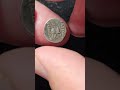
Visigoths. Leovigild, AD 569-586. Anonymous tremissis
Visigoths. Leovigild, AD 569-586. Anonymous tremissis (Gold, 1.30 g), probably Toledo. “CVRRV”. Visigothic imitations of Justin II. Diademed, draped, and cuirassed bust right, with cross on breast. Rev. Devolved Victory, shown with six legs, advancing right and holding wreath and palm; pellet between legs. Tomasini 573-575 var. group C3; MEC I, 207 var.; Chaves 81 var. Rare.
A rare anonymous Visigothic tremissis from the transitional phase of Leovigild’s coinage, before the fully royal Visigothic gold series had settled into its later, more explicit form. The type is ultimately derived from Byzantine tremisses of Justin II, but by this stage the imperial prototype has been radically localized: the legends are blundered, the imperial bust is schematic, and the Victory reverse has become almost abstract, here with the striking “six-legged” rendering noted in the catalog.
This pseudo-imperial style reflects the monetary culture of the western post-Roman kingdoms. Early Visigothic gold did not initially break cleanly with Byzantine models. Instead, it adapted them, preserving the prestige of imperial gold while gradually transforming the design into a local royal coinage. Leovigild’s reign was decisive in that process. He strengthened royal authority, expanded Visigothic control in Spain, fought Byzantine holdings in the south, and eventually introduced more assertive royal types naming the Visigothic king rather than merely imitating imperial models.
The probable attribution to Toledo is significant, though cautious. Toledo became the political center of the Visigothic kingdom, and Leovigild’s reign helped elevate it as a royal capital. An anonymous tremissis of this type therefore belongs to the same broad movement by which Visigothic power became more centralized, more Iberian, and less dependent on inherited imperial forms.
The references place the coin within Tomasini’s C3 group, a category of highly devolved pseudo-Justin II tremisses associated with the Leovigild period. Recent scholarship on transitional Leovigild coinage has emphasized how difficult these anonymous and pseudo-imperial groups can be to assign, since they bridge the change from imperial imitation to royal Visigothic self-representation. Yoon and Bartlett, for example, describe Leovigild’s transitional coinage as spanning the movement from issues in the name of Justin II toward issues in Leovigild’s own name, with Tomasini’s classification still forming a basic framework for the series.
Видео Visigoths. Leovigild, AD 569-586. Anonymous tremissis канала L5
A rare anonymous Visigothic tremissis from the transitional phase of Leovigild’s coinage, before the fully royal Visigothic gold series had settled into its later, more explicit form. The type is ultimately derived from Byzantine tremisses of Justin II, but by this stage the imperial prototype has been radically localized: the legends are blundered, the imperial bust is schematic, and the Victory reverse has become almost abstract, here with the striking “six-legged” rendering noted in the catalog.
This pseudo-imperial style reflects the monetary culture of the western post-Roman kingdoms. Early Visigothic gold did not initially break cleanly with Byzantine models. Instead, it adapted them, preserving the prestige of imperial gold while gradually transforming the design into a local royal coinage. Leovigild’s reign was decisive in that process. He strengthened royal authority, expanded Visigothic control in Spain, fought Byzantine holdings in the south, and eventually introduced more assertive royal types naming the Visigothic king rather than merely imitating imperial models.
The probable attribution to Toledo is significant, though cautious. Toledo became the political center of the Visigothic kingdom, and Leovigild’s reign helped elevate it as a royal capital. An anonymous tremissis of this type therefore belongs to the same broad movement by which Visigothic power became more centralized, more Iberian, and less dependent on inherited imperial forms.
The references place the coin within Tomasini’s C3 group, a category of highly devolved pseudo-Justin II tremisses associated with the Leovigild period. Recent scholarship on transitional Leovigild coinage has emphasized how difficult these anonymous and pseudo-imperial groups can be to assign, since they bridge the change from imperial imitation to royal Visigothic self-representation. Yoon and Bartlett, for example, describe Leovigild’s transitional coinage as spanning the movement from issues in the name of Justin II toward issues in Leovigild’s own name, with Tomasini’s classification still forming a basic framework for the series.
Видео Visigoths. Leovigild, AD 569-586. Anonymous tremissis канала L5
Комментарии отсутствуют
Информация о видео
Вчера, 20:51:08
00:00:33
Другие видео канала
 Sicily, Syracuse. Circa 480-475 BC. Tetradrachm
 Greco-Baktrian kingdom: Euthydemos I 230-200 B.C AE 1/2 obol 6.81g
 Gordian III. AD 238-244. AR Antoninianus (22mm, 3.44g). Rome Mint. Struck AD 242
 Yazdgard I Drachm
 Richard the 2nd, 1377-1399 silver coin!
 Early Hadrian As with long legends
 Gordian III. AD 238-244. AR Antoninianus (22mm, 4.01g). Rome Mint.
 Seleukid Demetrius I Soter AR Tetradrachm Tyche Antioch 162-150 BC Greek Silver
 Demetrios I Poliorketes (306-283 BC). Drachm. Tarsos.
 Alexander III, 336-323 BC, posthumous issue Tetradrachm
 Elagabalus. AD 218-222. AR Antoninianus (21mm, 5.57g). Rome Mint. Struck 218-222
 Constantius II, 337-361, Solidus
 Title Need to updated
 Mysia, Lampsakos. EL Stater
 tester
 Seleukid Kings of Syria Seleukos I Nikator AR Tetradrachm Alexander Type Babylon
 Ptolemy III Euergetes (246-222 BC). AE 38mm.
 LEO I (457-474). GOLD Solidus. Constantinople.
 Title need to be update
 Eukratides I Megas Twin "Caps of Victory"
 Roman Imperial. Aquileia. Diocletian.
