
- Популярные видео
- Авто
- Видео-блоги
- ДТП, аварии
- Для маленьких
- Еда, напитки
- Животные
- Закон и право
- Знаменитости
- Игры
- Искусство
- Комедии
- Красота, мода
- Кулинария, рецепты
- Люди
- Мото
- Музыка
- Мультфильмы
- Наука, технологии
- Новости
- Образование
- Политика
- Праздники
- Приколы
- Природа
- Происшествия
- Путешествия
- Развлечения
- Ржач
- Семья
- Сериалы
- Спорт
- Стиль жизни
- ТВ передачи
- Танцы
- Технологии
- Товары
- Ужасы
- Фильмы
- Шоу-бизнес
- Юмор
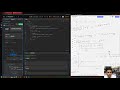
TensorTonic | Non-Maximum Suppression
In this video, I explain the Non-Maximum Suppression (NMS) algorithm, one of the most important techniques used in Object Detection models like YOLO, Faster R-CNN, SSD, and other computer vision pipelines.
We start by understanding why multiple bounding boxes are predicted for the same object, then learn how IoU — Intersection over Union helps us compare overlapping boxes. After that, we implement NMS step-by-step in Python and debug the common mistakes that happen while writing the logic.
📌 Topics Covered:
What is Non-Maximum Suppression?
Why NMS is used in object detection
Understanding bounding boxes
IoU formula: Intersection over Union
How to calculate intersection area
How to calculate union area
Sorting boxes by confidence score
Suppressing boxes based on IoU threshold
Python implementation of NMS
Common bugs while implementing NMS
🧠 Core Idea:
NMS keeps the bounding box with the highest confidence score and suppresses other boxes that overlap too much with it. This helps object detection models avoid duplicate detections for the same object.
💻 Useful for:
Computer Vision beginners
Machine Learning learners
Deep Learning students
YOLO/Object Detection learners
Coding interview preparation
TensorTonic problem-solving practice
If you found this video helpful, don’t forget to like, share, and subscribe for more Machine Learning, Deep Learning, Computer Vision, and coding problem explanations.
#NonMaximumSuppression #NMS #IoU #ObjectDetection #ComputerVision #YOLO #MachineLearning #DeepLearning #Python #TensorTonic #BoundingBoxes #CodingInterview #Algorithms #ArtificialIntelligence
Видео TensorTonic | Non-Maximum Suppression канала AlgorithmsUntilRED
We start by understanding why multiple bounding boxes are predicted for the same object, then learn how IoU — Intersection over Union helps us compare overlapping boxes. After that, we implement NMS step-by-step in Python and debug the common mistakes that happen while writing the logic.
📌 Topics Covered:
What is Non-Maximum Suppression?
Why NMS is used in object detection
Understanding bounding boxes
IoU formula: Intersection over Union
How to calculate intersection area
How to calculate union area
Sorting boxes by confidence score
Suppressing boxes based on IoU threshold
Python implementation of NMS
Common bugs while implementing NMS
🧠 Core Idea:
NMS keeps the bounding box with the highest confidence score and suppresses other boxes that overlap too much with it. This helps object detection models avoid duplicate detections for the same object.
💻 Useful for:
Computer Vision beginners
Machine Learning learners
Deep Learning students
YOLO/Object Detection learners
Coding interview preparation
TensorTonic problem-solving practice
If you found this video helpful, don’t forget to like, share, and subscribe for more Machine Learning, Deep Learning, Computer Vision, and coding problem explanations.
#NonMaximumSuppression #NMS #IoU #ObjectDetection #ComputerVision #YOLO #MachineLearning #DeepLearning #Python #TensorTonic #BoundingBoxes #CodingInterview #Algorithms #ArtificialIntelligence
Видео TensorTonic | Non-Maximum Suppression канала AlgorithmsUntilRED
Non Maximum Suppression NMS IoU Intersection over Union Bounding Boxes Object Detection Computer Vision YOLO Ultralytics YOLO Python NMS NMS Python Machine Learning Deep Learning AI Artificial Intelligence TensorTonic Coding Problem Algorithm Greedy Algorithm Bounding Box IoU Suppression Threshold Confidence Score Object Detection Tutorial Computer Vision Tutorial Python Coding
Комментарии отсутствуют
Информация о видео
24 апреля 2026 г. 20:04:01
00:22:16
Другие видео канала
 LeetCode | Number of Substrings With Only 1s | C++ | Golang | Rust
 CSES - Counting Rooms
 LeetCode | 1 bit and 2 bit Characters | C++ | Golang | Rust
 Home Surveillance setup | HTML Agent | Wails | Golang | HTML | JS
 LeetCode | Increment Submatrices by One | C++ | Golang | Rust
 LeetCode | Apple Redistribution into Boxes | C++ | Golang | Rust
 LeetCode | Make Sum Divisible by P | C++ | Golang | Rust
 LeetCode | Coupon Code Validator | C++ | Golang | Rust
 Codeforces - Round 1027 Div 3 | A to E Solved
 LeetCode | Minimum Number of Operations to Make All Array Elements Equal to 1 | C++ | Golang | Rust
 BirdClef 2025 - Inference and Submission
 Kaggle's CSIRO - Image2Biomass Prediction | How I got silver medal🥈
 LeetCode | Maximum Running Time of N Computers | C++ | Golang | Rust
 Recod.ai/LUC - Scientific Image Forgery Detection | Baseline | Dinov2 training | Inference
 LeetCode | Unique Length 3 Palindromic Subsequences | C++ | Golang | Rust
 LeetCode | Two Best Non Overlapping Events | C++ | Golang | Rust
 Recod.ai/LUC - Scientific Image Forgery Detection | Final Submission Documentation
 Codeforces - Educational Round 172
 LeetCode | Greatest Sum Divisible by Three | C++ | Golang | Rust
 AtCoder Beginner Contest 382
