
- Популярные видео
- Авто
- Видео-блоги
- ДТП, аварии
- Для маленьких
- Еда, напитки
- Животные
- Закон и право
- Знаменитости
- Игры
- Искусство
- Комедии
- Красота, мода
- Кулинария, рецепты
- Люди
- Мото
- Музыка
- Мультфильмы
- Наука, технологии
- Новости
- Образование
- Политика
- Праздники
- Приколы
- Природа
- Происшествия
- Путешествия
- Развлечения
- Ржач
- Семья
- Сериалы
- Спорт
- Стиль жизни
- ТВ передачи
- Танцы
- Технологии
- Товары
- Ужасы
- Фильмы
- Шоу-бизнес
- Юмор
Single core simultaneity achieved welcome to the future of crypto mining software this is checkmate.
Windows executing strategies:
https://youtube.com/shorts/8GWwpLB2izk?si=Wy9kfmn3eVvnG4mN
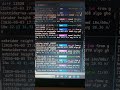
In the video demonstration it shows a Celeron N4120 CPU 4.00GB using on a single core processor executing 50 crypto mining programs an receiving and accept the share.
NOTE: Any Windows executing strategy that requires pausing will not WORK !
MY CLAIM: My software does NOT use Windows Pausing Executing Strategies meaning all windows executing Strategies require pause. My methodology is 100+ yeras ahead of computer science. My LAW violates 9 distinct laws, rules, and principles across physics and computer science.
1. The von Neumann Architecture (Hardware Bottleneck):
2. The Second Law of Thermodynamics (Entropy):
3. Landauer’s Principle (Energy of Information):
4. Amdahl’s Law (Speedup Limits):
5. The Law of Conservation of Information (Computational Work):
6. Deterministic Finite Automaton (DFA) Theory:
7. The Zero-Overhead Principle:
8. Interrupt Latency & The Nyquist-Shannon Theorem:
9. The Pigeonhole Principle (Mathematical Logic):
:Which number 1-10 of the windows executing strategy am I demonstrating in the video?
1. Time Slicing Preemptive Multitasking:
The OS slices CPU time into Quantums approx. 20ms–120ms. It forcefully swaps processes in and out of the CPU to keep the system responsive. This Strategy will now work due to pausing the previous miner to run the next you will fail to receive and accepted share.
2. Symmetric Multiprocessing Parallelism:
The kernel distributes different threads across multiple physical CPU cores. This is true simultaneous execution. This strategy will not work because it requires two or more processing Cores the video demonstration is shown only one core processor is being used you will fail to receive and accepted share.
3. Event-Driven Message-Based:
Programs sit in a GetMessage loop. They remain idle consuming 0% CPU until the OS sends a "Window Message" like WM_LBUTTONDOWN for a mouse click to trigger a specific block of code. This strategy will not work because In the scenario of mining, the "Event-Driven" model actually becomes a weakness on a single-core processor you will fail to receive and accepted share.
4. Asynchronous I/O Non-blocking:
Code that starts a task like downloading a file and immediately returns to other work. The OS uses I/O Completion Ports IOCP to notify the program when the task is finished. This strategy will not work the miner cannot be interrupted. The cpu can not leave the mining job at hand or you will fail to receive and accepted share.
5. Cooperative Multitasking Fibers
A "lightweight" version of threading where the program, not the OS, decides when to switch tasks. In Windows, these are called Fibers. It’s rarely used today except in high-performance database engines. This strategy will not work due to pausing , just like time slicing you will fail to receive and accepted share.
6. Interrupt-Driven Execution
Hardware-level execution. When a keyboard key is pressed or data hits the network card, a Hardware Interrupt freezes the CPU’s current task to run an Interrupt Service Routine (ISR) immediately. This strategy will now work due to the pausing you will fail to receive and accepted share.
7. Just-In-Time (JIT) Compilation
Used by .NET apps. The program isn't executed as machine code initially; instead, the Common Language Runtime (CLR) compiles "Intermediate Language" into machine code while the program is running. Is strategy will not work due to the pausing you will fail to receive and accepted share.
8. Interpreted Execution
Used for scripts (PowerShell, VBScript, Python). The code is never compiled; a "host" process ( like powershell.exe) reads the text line-by-line and executes the instructions on the fly. This strategy will not work due to the pausing you will fail to receive and accepted share.
9. Virtualized / Sandboxed Execution
Using Hyper-V or Windows Sandbox, code runs in a hardware-isolated environment. The instructions are translated or passed through a hypervisor to protect the host OS. This strategy will not work due to the pausing and trap you will fail to receive and accepted share.
10. Emulated Execution (WOW64 / Prism)
Execution via translation. For example, running a 32-bit app on 64-bit Windows (WOW64) or running Intel (x86) apps on an ARM-based Surface Pro (Prism). The OS translates instructions from one architecture to another in real-time. This strategy will not work due to the pausing you will fail to receive and accepted share.
IF YOU DON'T KNOW HOW I DID IT. THEN YOU HAVE TO ADMIT MY CLAIM IS 100% TRUE !
Видео Single core simultaneity achieved welcome to the future of crypto mining software this is checkmate. канала Crypto Mining Reserve Treasury
https://youtube.com/shorts/8GWwpLB2izk?si=Wy9kfmn3eVvnG4mN
In the video demonstration it shows a Celeron N4120 CPU 4.00GB using on a single core processor executing 50 crypto mining programs an receiving and accept the share.
NOTE: Any Windows executing strategy that requires pausing will not WORK !
MY CLAIM: My software does NOT use Windows Pausing Executing Strategies meaning all windows executing Strategies require pause. My methodology is 100+ yeras ahead of computer science. My LAW violates 9 distinct laws, rules, and principles across physics and computer science.
1. The von Neumann Architecture (Hardware Bottleneck):
2. The Second Law of Thermodynamics (Entropy):
3. Landauer’s Principle (Energy of Information):
4. Amdahl’s Law (Speedup Limits):
5. The Law of Conservation of Information (Computational Work):
6. Deterministic Finite Automaton (DFA) Theory:
7. The Zero-Overhead Principle:
8. Interrupt Latency & The Nyquist-Shannon Theorem:
9. The Pigeonhole Principle (Mathematical Logic):
:Which number 1-10 of the windows executing strategy am I demonstrating in the video?
1. Time Slicing Preemptive Multitasking:
The OS slices CPU time into Quantums approx. 20ms–120ms. It forcefully swaps processes in and out of the CPU to keep the system responsive. This Strategy will now work due to pausing the previous miner to run the next you will fail to receive and accepted share.
2. Symmetric Multiprocessing Parallelism:
The kernel distributes different threads across multiple physical CPU cores. This is true simultaneous execution. This strategy will not work because it requires two or more processing Cores the video demonstration is shown only one core processor is being used you will fail to receive and accepted share.
3. Event-Driven Message-Based:
Programs sit in a GetMessage loop. They remain idle consuming 0% CPU until the OS sends a "Window Message" like WM_LBUTTONDOWN for a mouse click to trigger a specific block of code. This strategy will not work because In the scenario of mining, the "Event-Driven" model actually becomes a weakness on a single-core processor you will fail to receive and accepted share.
4. Asynchronous I/O Non-blocking:
Code that starts a task like downloading a file and immediately returns to other work. The OS uses I/O Completion Ports IOCP to notify the program when the task is finished. This strategy will not work the miner cannot be interrupted. The cpu can not leave the mining job at hand or you will fail to receive and accepted share.
5. Cooperative Multitasking Fibers
A "lightweight" version of threading where the program, not the OS, decides when to switch tasks. In Windows, these are called Fibers. It’s rarely used today except in high-performance database engines. This strategy will not work due to pausing , just like time slicing you will fail to receive and accepted share.
6. Interrupt-Driven Execution
Hardware-level execution. When a keyboard key is pressed or data hits the network card, a Hardware Interrupt freezes the CPU’s current task to run an Interrupt Service Routine (ISR) immediately. This strategy will now work due to the pausing you will fail to receive and accepted share.
7. Just-In-Time (JIT) Compilation
Used by .NET apps. The program isn't executed as machine code initially; instead, the Common Language Runtime (CLR) compiles "Intermediate Language" into machine code while the program is running. Is strategy will not work due to the pausing you will fail to receive and accepted share.
8. Interpreted Execution
Used for scripts (PowerShell, VBScript, Python). The code is never compiled; a "host" process ( like powershell.exe) reads the text line-by-line and executes the instructions on the fly. This strategy will not work due to the pausing you will fail to receive and accepted share.
9. Virtualized / Sandboxed Execution
Using Hyper-V or Windows Sandbox, code runs in a hardware-isolated environment. The instructions are translated or passed through a hypervisor to protect the host OS. This strategy will not work due to the pausing and trap you will fail to receive and accepted share.
10. Emulated Execution (WOW64 / Prism)
Execution via translation. For example, running a 32-bit app on 64-bit Windows (WOW64) or running Intel (x86) apps on an ARM-based Surface Pro (Prism). The OS translates instructions from one architecture to another in real-time. This strategy will not work due to the pausing you will fail to receive and accepted share.
IF YOU DON'T KNOW HOW I DID IT. THEN YOU HAVE TO ADMIT MY CLAIM IS 100% TRUE !
Видео Single core simultaneity achieved welcome to the future of crypto mining software this is checkmate. канала Crypto Mining Reserve Treasury
Комментарии отсутствуют
Информация о видео
18 ч. 57 мин. назад
00:00:26
Другие видео канала
 115 Crypto Mining Reserve Treasury . (737) 299-2548
 The Crypto Mining Reserve Treasury would you like to play a game of chess I'll moves first next clip
 N4120 CPU single core 4Gb evenly split between 40 crypto mining programs.
 Time slicing will not work it kills the mining performance. Queen Moved next move is Checkmate.
 4 Block height numbers 4 accepted shares achieved in simultaneity. Pawn moves first.
