
- Популярные видео
- Авто
- Видео-блоги
- ДТП, аварии
- Для маленьких
- Еда, напитки
- Животные
- Закон и право
- Знаменитости
- Игры
- Искусство
- Комедии
- Красота, мода
- Кулинария, рецепты
- Люди
- Мото
- Музыка
- Мультфильмы
- Наука, технологии
- Новости
- Образование
- Политика
- Праздники
- Приколы
- Природа
- Происшествия
- Путешествия
- Развлечения
- Ржач
- Семья
- Сериалы
- Спорт
- Стиль жизни
- ТВ передачи
- Танцы
- Технологии
- Товары
- Ужасы
- Фильмы
- Шоу-бизнес
- Юмор
Fortune 50 CEO's AI Agent Changed the security policy? WOW
As enterprises deploy autonomous AI agents across cloud infrastructure, APIs, SaaS platforms, DevOps pipelines, copilots, and internal business systems, a dangerous assumption is emerging:
If the AI agent is authenticated, it must be safe.
That assumption is wrong.
In this video, we break down the growing enterprise security problem known as “The Authorization Gap” — the critical space between identity verification and real-time runtime control.
Modern AI systems can already:
• Access sensitive systems
• Trigger workflows
• Execute code
• Modify data
• Call APIs
• Chain actions across environments
• Make autonomous decisions at machine speed
But most security architectures still focus almost entirely on authentication and access management.
The result?
Organizations know WHO the agent is…
…but they have no runtime control over WHAT the agent is actually doing.
That is the Authorization Gap.
This video explores why traditional IAM, RBAC, static permissions, API keys, and coarse-grained access controls are fundamentally insufficient for agentic AI systems.
Topics covered include:
• Why authenticated AI agents can still become catastrophic security risks
• The difference between authentication and runtime authorization
• How overprivileged AI agents create enterprise-scale blast radius
• Why “Polite AI ≠ Secure AI”
• Runtime authorization and continuous policy evaluation
• Policy-as-Code (OPA/Rego/Cedar) for AI enforcement
• Fine-grained authorization for AI agents and non-human identities
• Context-aware authorization decisions
• AI agent governance and action-level enforcement
• Continuous authorization versus one-time login validation
• Why SIEMs and detection systems alone cannot stop AI misuse
• The future of AI runtime security architectures
• Zero Trust for autonomous systems
• AI authorization guardrails and enforcement layers
• Immutable auditability and decision telemetry
• AI security, compliance, and governance implications
We also examine how enterprise security must evolve from:
“Can this identity access the system?”
to:
“Should this exact action be allowed right now in this specific context?”
This is the architectural shift required to secure agentic AI.
At EnforceAuth, we believe the industry is approaching AI security backwards. Most vendors focus on visibility, monitoring, or post-event detection. But detection is not defense.
True AI security requires:
• Runtime authorization
• Fine-grained enforcement
• Continuous policy evaluation
• Real-time contextual decisioning
• Action-level governance
Because once autonomous AI agents are operating across enterprise environments, the attack surface changes permanently.
The future belongs to organizations that can continuously govern machine behavior — not just authenticate machine identity.
EnforceAuth is building the runtime authorization layer for agentic AI, machine identities, APIs, and autonomous systems.
The Authorization Gap is real.
And closing it will define the next era of cybersecurity.
Learn more:
[EnforceAuth](https://enforceauth.com?utm_source=chatgpt.com)
Read more about The Authorization Gap:
[The Authorization Gap](https://enforceauth.com/the-authorization-gap?utm_source=chatgpt.com)
#AI #CyberSecurity #Authorization #ZeroTrust #IdentitySecurity #PolicyAsCode #OPA #AgenticAI #AIAgents #RuntimeSecurity #IAM #CISO #CloudSecurity #NonHumanIdentity #enterprisesecurity #venturebeat
Видео Fortune 50 CEO's AI Agent Changed the security policy? WOW канала EnforceAuth
If the AI agent is authenticated, it must be safe.
That assumption is wrong.
In this video, we break down the growing enterprise security problem known as “The Authorization Gap” — the critical space between identity verification and real-time runtime control.
Modern AI systems can already:
• Access sensitive systems
• Trigger workflows
• Execute code
• Modify data
• Call APIs
• Chain actions across environments
• Make autonomous decisions at machine speed
But most security architectures still focus almost entirely on authentication and access management.
The result?
Organizations know WHO the agent is…
…but they have no runtime control over WHAT the agent is actually doing.
That is the Authorization Gap.
This video explores why traditional IAM, RBAC, static permissions, API keys, and coarse-grained access controls are fundamentally insufficient for agentic AI systems.
Topics covered include:
• Why authenticated AI agents can still become catastrophic security risks
• The difference between authentication and runtime authorization
• How overprivileged AI agents create enterprise-scale blast radius
• Why “Polite AI ≠ Secure AI”
• Runtime authorization and continuous policy evaluation
• Policy-as-Code (OPA/Rego/Cedar) for AI enforcement
• Fine-grained authorization for AI agents and non-human identities
• Context-aware authorization decisions
• AI agent governance and action-level enforcement
• Continuous authorization versus one-time login validation
• Why SIEMs and detection systems alone cannot stop AI misuse
• The future of AI runtime security architectures
• Zero Trust for autonomous systems
• AI authorization guardrails and enforcement layers
• Immutable auditability and decision telemetry
• AI security, compliance, and governance implications
We also examine how enterprise security must evolve from:
“Can this identity access the system?”
to:
“Should this exact action be allowed right now in this specific context?”
This is the architectural shift required to secure agentic AI.
At EnforceAuth, we believe the industry is approaching AI security backwards. Most vendors focus on visibility, monitoring, or post-event detection. But detection is not defense.
True AI security requires:
• Runtime authorization
• Fine-grained enforcement
• Continuous policy evaluation
• Real-time contextual decisioning
• Action-level governance
Because once autonomous AI agents are operating across enterprise environments, the attack surface changes permanently.
The future belongs to organizations that can continuously govern machine behavior — not just authenticate machine identity.
EnforceAuth is building the runtime authorization layer for agentic AI, machine identities, APIs, and autonomous systems.
The Authorization Gap is real.
And closing it will define the next era of cybersecurity.
Learn more:
[EnforceAuth](https://enforceauth.com?utm_source=chatgpt.com)
Read more about The Authorization Gap:
[The Authorization Gap](https://enforceauth.com/the-authorization-gap?utm_source=chatgpt.com)
#AI #CyberSecurity #Authorization #ZeroTrust #IdentitySecurity #PolicyAsCode #OPA #AgenticAI #AIAgents #RuntimeSecurity #IAM #CISO #CloudSecurity #NonHumanIdentity #enterprisesecurity #venturebeat
Видео Fortune 50 CEO's AI Agent Changed the security policy? WOW канала EnforceAuth
Комментарии отсутствуют
Информация о видео
19 ч. 37 мин. назад
00:01:48
Другие видео канала
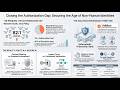
 The Authorization Gap Securing Autonomous AI at Runtime
 IBM + EnforceAuth
 Salesforce Next Move? Partner with EnforceAuth?
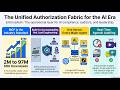 The Authorization Gap the defining enterprise security problem of the agentic AI era. EnforceAuth
 EnforceAuth Blueprint
 AI's Authorization Problem
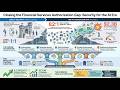 EnforceAuth Closing the Financial Services Authorization Gap
 Free version of EnforceAuth Sign up
 Free Tier at EnforceAuth Sign up today
 Cribl's Data Checkpoint
 The Politeness Trap Architecting the Complete AI Agent Securit
 Okta and EnforceAuth ... Okta left the door wide open
 NVIDIA's AI Ferrari (short)
 Today EnforceAuth open-sourced Zift, a code scanner for authorization,
 EnforceAuth AI Governance
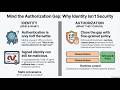 EnforceAuth Invented the “Authorization Gap”
 IBM Security + EnforceAuth The Future of Identity Is Not Authentication. It’s Runtime Authorization.
 Today, EnforceAuth is open-sourcing the scanner
 NVIDIA Built an AI Ferrari
 EnforceAuth + NVIDIA OpenShell
 Free Enterprise AI Authorization
