
- Популярные видео
- Авто
- Видео-блоги
- ДТП, аварии
- Для маленьких
- Еда, напитки
- Животные
- Закон и право
- Знаменитости
- Игры
- Искусство
- Комедии
- Красота, мода
- Кулинария, рецепты
- Люди
- Мото
- Музыка
- Мультфильмы
- Наука, технологии
- Новости
- Образование
- Политика
- Праздники
- Приколы
- Природа
- Происшествия
- Путешествия
- Развлечения
- Ржач
- Семья
- Сериалы
- Спорт
- Стиль жизни
- ТВ передачи
- Танцы
- Технологии
- Товары
- Ужасы
- Фильмы
- Шоу-бизнес
- Юмор
ESD Flooring Testing: Conductivity, Dimensional Stability, and Color Difference
When it comes to ESD (Electrostatic Discharge) flooring, testing plays a crucial role in ensuring the floor meets both functional and aesthetic standards. In this article, we will focus on three key areas of ESD flooring testing: conductivity, dimensional stability, and color difference.
1. Conductivity Testing
One of the most important features of ESD flooring is its ability to prevent static electricity buildup, which could damage sensitive electronic equipment or pose a safety risk. To ensure the flooring meets the required standards, conductivity testing is essential.
Methods:
Surface Resistivity Test: This test measures the floor’s ability to resist electrical flow, typically requiring a resistivity of less than 1 x 10⁹ ohms to meet ESD flooring standards. It ensures that static charges are safely dissipated, preventing electrostatic discharge.
Grounding Continuity Test: This test verifies that the ESD floor is properly grounded, ensuring that any static charges that do form are conducted away to the ground without harming the environment or equipment.
Standard Requirements:
The required conductivity varies based on the type of environment where the ESD flooring will be installed. For most industrial applications, the floor must allow for controlled and safe dissipation of electrostatic charge. Some floors are designed for stricter applications like cleanrooms or laboratories where higher precision is required.
2. Dimensional Stability Testing
Dimensional stability refers to the ability of the ESD flooring to maintain its size and shape after exposure to environmental factors such as temperature, humidity, and foot traffic. This test is vital to ensure the floor won’t warp, buckle, or shrink over time, which could compromise its performance and safety.
Testing Procedure:
Heat and Humidity Testing: The flooring sample is exposed to elevated temperatures and humidity levels for a specified time. The floor is then measured to see if any expansion or contraction has occurred.
Long-term Exposure: To simulate normal usage conditions, the flooring is also subjected to extended periods of pressure and wear, ensuring it maintains its stability over the long run.
Standard Requirements:
According to international standards like ISO and ASTM, ESD flooring should exhibit minimal dimensional changes after testing, with the change in length or width not exceeding 0.1% of the original dimensions.
3. Color Difference Testing
Color is not only a critical aesthetic factor in ESD flooring but also serves a functional role in visibility and distinguishing different zones in a workspace. Color difference testing ensures that the product matches the specified color standards and maintains consistency in production.
Testing Procedure:
Visual Inspection: A sample of the flooring is compared to a color reference standard. The flooring should not deviate by more than a certain threshold in terms of hue, brightness, or saturation.
Instrumental Measurement: Advanced tools like spectrophotometers may be used to measure color accuracy and consistency, offering objective data that is less subjective than visual inspection.
Видео ESD Flooring Testing: Conductivity, Dimensional Stability, and Color Difference канала Y.H.F
1. Conductivity Testing
One of the most important features of ESD flooring is its ability to prevent static electricity buildup, which could damage sensitive electronic equipment or pose a safety risk. To ensure the flooring meets the required standards, conductivity testing is essential.
Methods:
Surface Resistivity Test: This test measures the floor’s ability to resist electrical flow, typically requiring a resistivity of less than 1 x 10⁹ ohms to meet ESD flooring standards. It ensures that static charges are safely dissipated, preventing electrostatic discharge.
Grounding Continuity Test: This test verifies that the ESD floor is properly grounded, ensuring that any static charges that do form are conducted away to the ground without harming the environment or equipment.
Standard Requirements:
The required conductivity varies based on the type of environment where the ESD flooring will be installed. For most industrial applications, the floor must allow for controlled and safe dissipation of electrostatic charge. Some floors are designed for stricter applications like cleanrooms or laboratories where higher precision is required.
2. Dimensional Stability Testing
Dimensional stability refers to the ability of the ESD flooring to maintain its size and shape after exposure to environmental factors such as temperature, humidity, and foot traffic. This test is vital to ensure the floor won’t warp, buckle, or shrink over time, which could compromise its performance and safety.
Testing Procedure:
Heat and Humidity Testing: The flooring sample is exposed to elevated temperatures and humidity levels for a specified time. The floor is then measured to see if any expansion or contraction has occurred.
Long-term Exposure: To simulate normal usage conditions, the flooring is also subjected to extended periods of pressure and wear, ensuring it maintains its stability over the long run.
Standard Requirements:
According to international standards like ISO and ASTM, ESD flooring should exhibit minimal dimensional changes after testing, with the change in length or width not exceeding 0.1% of the original dimensions.
3. Color Difference Testing
Color is not only a critical aesthetic factor in ESD flooring but also serves a functional role in visibility and distinguishing different zones in a workspace. Color difference testing ensures that the product matches the specified color standards and maintains consistency in production.
Testing Procedure:
Visual Inspection: A sample of the flooring is compared to a color reference standard. The flooring should not deviate by more than a certain threshold in terms of hue, brightness, or saturation.
Instrumental Measurement: Advanced tools like spectrophotometers may be used to measure color accuracy and consistency, offering objective data that is less subjective than visual inspection.
Видео ESD Flooring Testing: Conductivity, Dimensional Stability, and Color Difference канала Y.H.F
esd floor esd flooring esd tile flooring anti-static flooring static dissipative flooring conductive flooring static control flooring electrostatic flooring Electrostatic Dissipative (ESD) Flooring esd floor tiles esd vinyl floor tiles esd antistatic flooring esd pvc floor esd vct flooring esd flooring tiles esd vinyl flooring ESD dissipative flooring Antistatic flooring anti-static floor vinyl static flooring ESD antistatic flooring factory China
Комментарии отсутствуют
Информация о видео
30 марта 2026 г. 12:00:19
00:00:11
Другие видео канала
 ESD Anti-Static Flooring Tiles in Computer Room #esdflooring #esdflooringtiles #antistaticflooring
 Custom ESD Vinyl Flooring: Tailored Solutions for Your Needs #esdflooring #antistaticflooring
 Inside Our LVT Glue Down with Pad Production -YH FLOORS Company in China
 Carbon-Fibers Loaded ESD Anti-Static Vinyl Flooring Tiles Flexibility
 In China, YH FLOORS: The Factory for High-Quality ESD Anti-static Vinyl Flooring Tiles #esdflooring
 Manufacturing SPC Flooring, Interior Design with Durability and Style
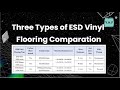 Three Types of ESD Vinyl Flooring Comparation
 YH FLOORS: A Leading Manufacturer of ESD Anti-static Vinyl Flooring Tiles in China #esdflooring
 Guide to Installing ESD PVC Flooring #esdflooring #esdflooringtiles #antistaticflooring
 The Most Popular Standard Sizes of ESD static control Tiles
 Durability and Functionality of ESD PVC Flooring Tiles
 Understanding the Composition and Benefits of ESD Vinyl Flooring Tiles
 ESD PVC Flooring Tiles for Maintaining Clean Room Standards
 ESD flooring tiles made by YH FLOORS, a China factory are being installed at the site #esdflooring
 ESD PVC Flooring Tiles for Laboratory Safety #esdflooring #esdflooringtiles #antistaticflooring
 ESD PVC Flooring: Waterproof Protection for Static-Controlled Environments #esdflooring #esdtiles
 SPC Vinyl Flooring: Strength, Style & Versatility
 Extending the Lifespan of Antistatic Flooring Tiles #esdflooring #antistaticflooring #esdtiles
 YH FLOORS Homogeneous Vinyl Flooring Sheets: Manufacturer in China
 ESD anti-static carbon fiber-free vinyl flooring sheets factory in China Manufacturing-YH FLOORS
 Popular Standard Sizes for ESD Static Control Flooring #esdflooring #antistaticflooring #esdtiles
