
- Популярные видео
- Авто
- Видео-блоги
- ДТП, аварии
- Для маленьких
- Еда, напитки
- Животные
- Закон и право
- Знаменитости
- Игры
- Искусство
- Комедии
- Красота, мода
- Кулинария, рецепты
- Люди
- Мото
- Музыка
- Мультфильмы
- Наука, технологии
- Новости
- Образование
- Политика
- Праздники
- Приколы
- Природа
- Происшествия
- Путешествия
- Развлечения
- Ржач
- Семья
- Сериалы
- Спорт
- Стиль жизни
- ТВ передачи
- Танцы
- Технологии
- Товары
- Ужасы
- Фильмы
- Шоу-бизнес
- Юмор
[Day-5 Hindi] Information Gathering- Active & Passive Footprinting | Reconnaissance | Google Dorks
Offensive Cyber Security Training Bootcamp is organized for students, freshers and working professionals who are looking to start their career or want to switch their career into Cyber Security, even from Non-IT background. This complete Cyber Security course is covered with introduction to cyber security, latest cyber security fundamentals, step by step Cyber security roadmap for beginners in 2025.
Topics covered in the video -
Information Gathering (Footprinting)
Types of Footprinting - Active and Passive Footprinting
Reconnaissance - Whois Lookup, Wappalyzer, Whatweb, Google dorks, etc.
Footprinting through search engines (Shodan, Censys)
Google hacking database (GHDB)
Information Gathering (Reconnaissance):
Information Gathering, also known as Reconnaissance, is the crucial first step in cybersecurity and hacking. It involves systematically collecting data about a target, which could be a network, system, or organization. The information gathered during this phase helps hackers and security professionals understand the target's infrastructure, weaknesses, and potential attack vectors, enabling them to devise effective strategies.
Whois Lookup:
Whois Lookup is a fundamental tool for obtaining information about domain names. By querying domain registries, it provides data about domain ownership, registration dates, and contact details. Ethical hackers and security experts use Whois Lookup to investigate domains, uncover ownership details, and gain insights into potentially malicious websites.
Wappalyzer:
Wappalyzer is a web browser extension and online tool designed to identify the technologies powering websites. It detects and reveals information about content management systems (CMS), web servers, programming languages, and more. This knowledge is valuable for understanding a website's architecture and potential vulnerabilities.
WhatWeb:
WhatWeb is a web application scanner that assists in fingerprinting web applications. It analyzes HTTP responses, HTML content, and other web attributes to identify the software and technologies used on a website. Ethical hackers use WhatWeb to assess a target's security posture, helping them identify vulnerabilities and weaknesses.
Google Dorks:
Google Dorks, also known as Google Hacking, involves crafting specific search queries to uncover sensitive information and vulnerabilities on websites and web servers. By using precise search strings, hackers and security professionals can discover exposed directories, login pages, vulnerable scripts, and other valuable data that may be unintentionally accessible.
Shodan:
Shodan is a specialized search engine that scans the internet for connected devices and services. Unlike traditional search engines, Shodan focuses on identifying online devices, such as servers, webcams, routers, and more. Security experts and hackers use Shodan to find devices with open ports, potential misconfigurations, and vulnerabilities, making it a powerful tool for footprinting and reconnaissance.
Footprinting through Search Engines (Shodan, Censys):
Footprinting through search engines involves using specialized search engines like Shodan and Censys to gather information about internet-connected devices and services. These search engines provide details about open ports, services running on those ports, and potentially vulnerable systems. Footprinting through search engines is a critical step in identifying potential targets for cyberattacks.
Google Hacking Database (GHDB):
The Google Hacking Database (GHDB) is a repository of Google Dorks or search queries specifically designed to find vulnerabilities and exposed data on the internet. Security professionals and hackers utilize GHDB to discover specific vulnerabilities in web applications, servers, and websites. It acts as a valuable resource for identifying potential points of entry in a target's online infrastructure.
#informationgathering #footprinting #reconnaissance #shodan #ethicalhacking
_______________________________________
Let’s connect on social media:
WhatsApp: https://wa.me/918791620202
Instagram: https://www.instagram.com/bluexploit/
LinkedIn: https://www.linkedin.com/company/bluexploit/
Facebook: https://www.facebook.com/bluexploits
X: https://x.com/Blue_Xploit
Want more but on the go? Check out our website:
https://bluexploit.org
Видео [Day-5 Hindi] Information Gathering- Active & Passive Footprinting | Reconnaissance | Google Dorks канала BlueXploit
Topics covered in the video -
Information Gathering (Footprinting)
Types of Footprinting - Active and Passive Footprinting
Reconnaissance - Whois Lookup, Wappalyzer, Whatweb, Google dorks, etc.
Footprinting through search engines (Shodan, Censys)
Google hacking database (GHDB)
Information Gathering (Reconnaissance):
Information Gathering, also known as Reconnaissance, is the crucial first step in cybersecurity and hacking. It involves systematically collecting data about a target, which could be a network, system, or organization. The information gathered during this phase helps hackers and security professionals understand the target's infrastructure, weaknesses, and potential attack vectors, enabling them to devise effective strategies.
Whois Lookup:
Whois Lookup is a fundamental tool for obtaining information about domain names. By querying domain registries, it provides data about domain ownership, registration dates, and contact details. Ethical hackers and security experts use Whois Lookup to investigate domains, uncover ownership details, and gain insights into potentially malicious websites.
Wappalyzer:
Wappalyzer is a web browser extension and online tool designed to identify the technologies powering websites. It detects and reveals information about content management systems (CMS), web servers, programming languages, and more. This knowledge is valuable for understanding a website's architecture and potential vulnerabilities.
WhatWeb:
WhatWeb is a web application scanner that assists in fingerprinting web applications. It analyzes HTTP responses, HTML content, and other web attributes to identify the software and technologies used on a website. Ethical hackers use WhatWeb to assess a target's security posture, helping them identify vulnerabilities and weaknesses.
Google Dorks:
Google Dorks, also known as Google Hacking, involves crafting specific search queries to uncover sensitive information and vulnerabilities on websites and web servers. By using precise search strings, hackers and security professionals can discover exposed directories, login pages, vulnerable scripts, and other valuable data that may be unintentionally accessible.
Shodan:
Shodan is a specialized search engine that scans the internet for connected devices and services. Unlike traditional search engines, Shodan focuses on identifying online devices, such as servers, webcams, routers, and more. Security experts and hackers use Shodan to find devices with open ports, potential misconfigurations, and vulnerabilities, making it a powerful tool for footprinting and reconnaissance.
Footprinting through Search Engines (Shodan, Censys):
Footprinting through search engines involves using specialized search engines like Shodan and Censys to gather information about internet-connected devices and services. These search engines provide details about open ports, services running on those ports, and potentially vulnerable systems. Footprinting through search engines is a critical step in identifying potential targets for cyberattacks.
Google Hacking Database (GHDB):
The Google Hacking Database (GHDB) is a repository of Google Dorks or search queries specifically designed to find vulnerabilities and exposed data on the internet. Security professionals and hackers utilize GHDB to discover specific vulnerabilities in web applications, servers, and websites. It acts as a valuable resource for identifying potential points of entry in a target's online infrastructure.
#informationgathering #footprinting #reconnaissance #shodan #ethicalhacking
_______________________________________
Let’s connect on social media:
WhatsApp: https://wa.me/918791620202
Instagram: https://www.instagram.com/bluexploit/
LinkedIn: https://www.linkedin.com/company/bluexploit/
Facebook: https://www.facebook.com/bluexploits
X: https://x.com/Blue_Xploit
Want more but on the go? Check out our website:
https://bluexploit.org
Видео [Day-5 Hindi] Information Gathering- Active & Passive Footprinting | Reconnaissance | Google Dorks канала BlueXploit
information gathering footprinting types of footprinting active and passive footprinting Reconnaissance recon google dorks shodan censys whatweb whois lookup free cybersecurity trainings cybersecurity bootcamp footprinting through search engines information gathering tools introduction to ethical hacking wayback OSINT open source intelligence how to find someone's geolocation OSINT framework cybersecurity course ethical hacking course free cybersecurity training
Комментарии отсутствуют
Информация о видео
13 сентября 2023 г. 17:51:07
00:41:23
Другие видео канала
![[Day-1 English] Introduction to Cyber Security | Career Roadmap | Cyber Security Jobs and Salaries](https://i.ytimg.com/vi/D21D42q-z5k/default.jpg) [Day-1 English] Introduction to Cyber Security | Career Roadmap | Cyber Security Jobs and Salaries
[Day-1 English] Introduction to Cyber Security | Career Roadmap | Cyber Security Jobs and Salaries
![[Day-3 Hindi] Lab Environment Setup for Cyber Security | Kali Linux | Metasploitable-2 | Portswigger](https://i.ytimg.com/vi/cnVtU0tD2JM/default.jpg) [Day-3 Hindi] Lab Environment Setup for Cyber Security | Kali Linux | Metasploitable-2 | Portswigger
[Day-3 Hindi] Lab Environment Setup for Cyber Security | Kali Linux | Metasploitable-2 | Portswigger
![[Day-4 English] Phases of Hacking | Cyber Security Terminologies- Port & Protocols, Vulnerability..](https://i.ytimg.com/vi/lqRHtNJ95xA/default.jpg) [Day-4 English] Phases of Hacking | Cyber Security Terminologies- Port & Protocols, Vulnerability..
[Day-4 English] Phases of Hacking | Cyber Security Terminologies- Port & Protocols, Vulnerability..
![[Day-5 English] Information Gathering- Active & Passive Footprinting | Reconnaissance | Google Dorks](https://i.ytimg.com/vi/goWpy0ZU5I8/default.jpg) [Day-5 English] Information Gathering- Active & Passive Footprinting | Reconnaissance | Google Dorks
[Day-5 English] Information Gathering- Active & Passive Footprinting | Reconnaissance | Google Dorks
 Breaking Cyber Alert - Indian Government Systems Targeted! by BlueXploit
 Mastering Wireshark for Network Traffic Analysis | Complete Wireshark Tutorial for Beginners 2025
![[Day-4 Hindi] Phases of Hacking | Cyber Security Terminologies - Ports & Protocols, Vulnerability..](https://i.ytimg.com/vi/t7X2z4WcWZ8/default.jpg) [Day-4 Hindi] Phases of Hacking | Cyber Security Terminologies - Ports & Protocols, Vulnerability..
[Day-4 Hindi] Phases of Hacking | Cyber Security Terminologies - Ports & Protocols, Vulnerability..
![[Day-2 Hindi] Networking Concepts - IP Address, IPv4 vs IPv6, DHCP, DNS, ISP, Static vs Dynamic IP](https://i.ytimg.com/vi/94OcdSewaL0/default.jpg) [Day-2 Hindi] Networking Concepts - IP Address, IPv4 vs IPv6, DHCP, DNS, ISP, Static vs Dynamic IP
[Day-2 Hindi] Networking Concepts - IP Address, IPv4 vs IPv6, DHCP, DNS, ISP, Static vs Dynamic IP
 3 Pillars of Cybersecurity by BlueXploit
 Are You REALLY an Ethical Hacker If You’re Not Using These Tools? Let’s settle it once and for all!
![[Day 1 Hindi] Introduction to Cyber Security | Career Roadmap | Cyber Security Jobs and Salaries](https://i.ytimg.com/vi/aqgcEghnVmM/default.jpg) [Day 1 Hindi] Introduction to Cyber Security | Career Roadmap | Cyber Security Jobs and Salaries
[Day 1 Hindi] Introduction to Cyber Security | Career Roadmap | Cyber Security Jobs and Salaries
![[Day-6 Hindi] System Hacking - Password Cracking, Clearing Logs | What is Malware, Trojan, Spyware](https://i.ytimg.com/vi/0KJqnCDPJdY/default.jpg) [Day-6 Hindi] System Hacking - Password Cracking, Clearing Logs | What is Malware, Trojan, Spyware
[Day-6 Hindi] System Hacking - Password Cracking, Clearing Logs | What is Malware, Trojan, Spyware
 Complete Hands on Nmap tool for Ethical Hacking by BlueXploit | Mastering Nmap for Network Scanning
 Your password might already be on the Dark Web. Here's how to check..
![[Day-3 English] Lab Environment Setup for Offensive Cyber Security Training Bootcamp | Kali Linux](https://i.ytimg.com/vi/ghXiLDUTMqY/default.jpg) [Day-3 English] Lab Environment Setup for Offensive Cyber Security Training Bootcamp | Kali Linux
[Day-3 English] Lab Environment Setup for Offensive Cyber Security Training Bootcamp | Kali Linux
![[Day-2 English] Networking Concepts - IP Address, IPv4 vs IPv6, DHCP, DNS, ISP, Static vs Dynamic IP](https://i.ytimg.com/vi/VmBbPcIHMyA/default.jpg) [Day-2 English] Networking Concepts - IP Address, IPv4 vs IPv6, DHCP, DNS, ISP, Static vs Dynamic IP
[Day-2 English] Networking Concepts - IP Address, IPv4 vs IPv6, DHCP, DNS, ISP, Static vs Dynamic IP
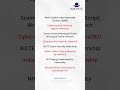 Govt. Authorized Cybersecurity Internships – 2025 is HERE! 🔥
![[Day-6 English] System Hacking - Password Cracking, Clearing Logs | What is Malware, Trojan, Spyware](https://i.ytimg.com/vi/KzvxgljEjmY/default.jpg) [Day-6 English] System Hacking - Password Cracking, Clearing Logs | What is Malware, Trojan, Spyware
[Day-6 English] System Hacking - Password Cracking, Clearing Logs | What is Malware, Trojan, Spyware
 Worst Passwords People Still Use in 2025 by BlueXploit
