- Популярные видео
- Авто
- Видео-блоги
- ДТП, аварии
- Для маленьких
- Еда, напитки
- Животные
- Закон и право
- Знаменитости
- Игры
- Искусство
- Комедии
- Красота, мода
- Кулинария, рецепты
- Люди
- Мото
- Музыка
- Мультфильмы
- Наука, технологии
- Новости
- Образование
- Политика
- Праздники
- Приколы
- Природа
- Происшествия
- Путешествия
- Развлечения
- Ржач
- Семья
- Сериалы
- Спорт
- Стиль жизни
- ТВ передачи
- Танцы
- Технологии
- Товары
- Ужасы
- Фильмы
- Шоу-бизнес
- Юмор
1980s Oil War Economic Paradox
Oil as a pillar of modern sovereignty: the "#war #economy" is not a byproduct of historical friction, but rather a calculated mechanism for the global liquidation of resources.
For over a century, #oil has served as a primary catalyst for global conflicts, evolving from a curiosity of the coal age into the decisive strategic resource of the modern era. As demonstrated by the "first secret oil war" (1914–1918), the transition toward an oil-based military-industrial complex was institutionalized through a #symbiotic—and often #corrupt—relationship between sovereign states and what is known as the "#Oil_companies #Mafia."
The core of this fact-based theory holds that global instability in "oil lands" (such as the #Middle_East) is rarely accidental; rather, it is orchestrated to ensure a steady flow of mineral wealth at advantageous costs for industrial superpowers (#USA, #UK, #France, #Germany, #Japan, #Italy 🇮🇹, #China, and even #Russia). By embedding strategic access to #crude_oil 🛢🛢 into the very foundations of modern sovereignty, oil has become the supreme arbiter determining which regimes survive and which empires face decline.
This modern "war economy" reached a turning point during the 1979 #Guadeloupe_Conference (January 4–7). As part of a strategic maneuver aimed at destabilizing the region (the Middle East) and reconfiguring oil markets, European powers and media outlets—particularly the #BBC, Voice of America (#VOA), #Radio of #Israel (in Persian language)—provided the platform necessary for the installation of #Khomeini in #Iran, by disseminating his #propaganda speeches on a vast scale while Khomeini was sitting in his home in the quiet village of Neauphle-le-Château.
This political engineering operation and the so-called Revolution of 1979, led directly to the collapse of OPEC's control over production—as documented by Begg and Vernasca—transforming the market from a state of controlled scarcity to one of forced, high-volume "war situation #pumping". This pattern, which involves empowering radical forces serving extraction-related interests, finds a modern parallel in the rise to power of Al-Jolani in #Syria in December 2024. In both eras, the rhetoric of "exporting democracy" serves as a strategic cover. History shows that whenever oil prices rise—such as the peak of $125 per barrel recorded between 2011 and 2012 during the rise of #ISIS—induced instability follows, causing a price collapse. During the 2016–2017 period, this volatility drove prices below $40 per barrel, effectively providing a massive "energy subsidy" to industrial consumers (the US, UK, Germany, etc.).
In effect, the #microeconomics of conflict acts as a forced shift in the (oil) supply curve. Through a comparative static analysis of the Iran-Iraq War (1980–1988), one can observe the transition from S1 (OPEC-controlled stability) to S2 (war/liquidation).
Under the pressure of an eight-year conflict and catastrophic war, the belligerent regimes are forced to #extract oil #ceaselessly to finance their military survival and feed their people. This "increase in oil supply" shifts the equilibrium from P1/q1 to P2/q2: quantity rises, while the price drops significantly for foreign buyers (in a #LONG_TERM period).
This #mechanism (of The Oil War Economy) transforms #mineral #wealth into immediate #liquidity, benefiting the "#war_winners"—the United States, Great Britain, France, Japan, Italy, etc.—at the cost of millions of #deaths and #injuries and the long-term exploitation of the #strategic #resources of entire nation. Furthermore, between 1980 and 1988, Germany reaped substantial benefits from industrial and #arms #exports, selling #billions of #dollars' worth of industrial equipments and war materials—including #chemical gas, high-tech chemical bombs, engineering/construction projects, and 1,027 tons of chemical #precursors for nerve agents—to #Saddam's regime.
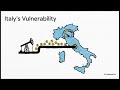
Meanwhile, Italy sold millions of #landmines to Iraq (#maiming and #severing the #legs of thousands upon thousands of #children—even after the war and up to the present day), as well as #warships (built by #ALENIA and #Fincantieri) and various types of military equipment such as missiles and radar, to both sides of the conflict (Khomeini&Saddam) simultaneously! #No_Oil_War 🖋 #NO_War_Economy #NO_War_Anywhere
For further information: https://www.researchgate.net/publication/406067481_THE_OIL_WAR_ECONOMY_PowerPoint_Slides
#Ravazzi, P. (1998). Complementi di economia. C.L.U.T. Editrice.
#Begg, D., Vernasca, G., Fischer, S., & Dornbusch, R. (2011). Economics.
#Cozzi, T., & Zamagni, S. (2003). Istituzioni di economia politica: Un testo europeo. Il Mulino.
#Ross, S. A., Westerfield, R. W., & Jaffe, J. F. (2005). Corporate finance. McGraw-Hill/Irwin.
#Bodie, Z., Kane, A., & Marcus, A. J. (2002). Investments. McGraw-Hill/Irwin.
#Nash, J. F. (1951). Non-cooperative games. Annals of Mathematics.
#Pindyck, R. S., & Rubinfeld, D. L. (2005). Microeconomics. Pearson.
Видео 1980s Oil War Economic Paradox канала Kyros KHAKSARI
For over a century, #oil has served as a primary catalyst for global conflicts, evolving from a curiosity of the coal age into the decisive strategic resource of the modern era. As demonstrated by the "first secret oil war" (1914–1918), the transition toward an oil-based military-industrial complex was institutionalized through a #symbiotic—and often #corrupt—relationship between sovereign states and what is known as the "#Oil_companies #Mafia."
The core of this fact-based theory holds that global instability in "oil lands" (such as the #Middle_East) is rarely accidental; rather, it is orchestrated to ensure a steady flow of mineral wealth at advantageous costs for industrial superpowers (#USA, #UK, #France, #Germany, #Japan, #Italy 🇮🇹, #China, and even #Russia). By embedding strategic access to #crude_oil 🛢🛢 into the very foundations of modern sovereignty, oil has become the supreme arbiter determining which regimes survive and which empires face decline.
This modern "war economy" reached a turning point during the 1979 #Guadeloupe_Conference (January 4–7). As part of a strategic maneuver aimed at destabilizing the region (the Middle East) and reconfiguring oil markets, European powers and media outlets—particularly the #BBC, Voice of America (#VOA), #Radio of #Israel (in Persian language)—provided the platform necessary for the installation of #Khomeini in #Iran, by disseminating his #propaganda speeches on a vast scale while Khomeini was sitting in his home in the quiet village of Neauphle-le-Château.
This political engineering operation and the so-called Revolution of 1979, led directly to the collapse of OPEC's control over production—as documented by Begg and Vernasca—transforming the market from a state of controlled scarcity to one of forced, high-volume "war situation #pumping". This pattern, which involves empowering radical forces serving extraction-related interests, finds a modern parallel in the rise to power of Al-Jolani in #Syria in December 2024. In both eras, the rhetoric of "exporting democracy" serves as a strategic cover. History shows that whenever oil prices rise—such as the peak of $125 per barrel recorded between 2011 and 2012 during the rise of #ISIS—induced instability follows, causing a price collapse. During the 2016–2017 period, this volatility drove prices below $40 per barrel, effectively providing a massive "energy subsidy" to industrial consumers (the US, UK, Germany, etc.).
In effect, the #microeconomics of conflict acts as a forced shift in the (oil) supply curve. Through a comparative static analysis of the Iran-Iraq War (1980–1988), one can observe the transition from S1 (OPEC-controlled stability) to S2 (war/liquidation).
Under the pressure of an eight-year conflict and catastrophic war, the belligerent regimes are forced to #extract oil #ceaselessly to finance their military survival and feed their people. This "increase in oil supply" shifts the equilibrium from P1/q1 to P2/q2: quantity rises, while the price drops significantly for foreign buyers (in a #LONG_TERM period).
This #mechanism (of The Oil War Economy) transforms #mineral #wealth into immediate #liquidity, benefiting the "#war_winners"—the United States, Great Britain, France, Japan, Italy, etc.—at the cost of millions of #deaths and #injuries and the long-term exploitation of the #strategic #resources of entire nation. Furthermore, between 1980 and 1988, Germany reaped substantial benefits from industrial and #arms #exports, selling #billions of #dollars' worth of industrial equipments and war materials—including #chemical gas, high-tech chemical bombs, engineering/construction projects, and 1,027 tons of chemical #precursors for nerve agents—to #Saddam's regime.
Meanwhile, Italy sold millions of #landmines to Iraq (#maiming and #severing the #legs of thousands upon thousands of #children—even after the war and up to the present day), as well as #warships (built by #ALENIA and #Fincantieri) and various types of military equipment such as missiles and radar, to both sides of the conflict (Khomeini&Saddam) simultaneously! #No_Oil_War 🖋 #NO_War_Economy #NO_War_Anywhere
For further information: https://www.researchgate.net/publication/406067481_THE_OIL_WAR_ECONOMY_PowerPoint_Slides
#Ravazzi, P. (1998). Complementi di economia. C.L.U.T. Editrice.
#Begg, D., Vernasca, G., Fischer, S., & Dornbusch, R. (2011). Economics.
#Cozzi, T., & Zamagni, S. (2003). Istituzioni di economia politica: Un testo europeo. Il Mulino.
#Ross, S. A., Westerfield, R. W., & Jaffe, J. F. (2005). Corporate finance. McGraw-Hill/Irwin.
#Bodie, Z., Kane, A., & Marcus, A. J. (2002). Investments. McGraw-Hill/Irwin.
#Nash, J. F. (1951). Non-cooperative games. Annals of Mathematics.
#Pindyck, R. S., & Rubinfeld, D. L. (2005). Microeconomics. Pearson.
Видео 1980s Oil War Economic Paradox канала Kyros KHAKSARI
Oil War Economy Oil War Economy Microeconomics Political Economy economia politica ALENIA Fincantieri Italia Italy military equipment Germany war materials export chemical gas chemical bombs Saddam Khomeini crude oil Japan France Middle East 1979 Guadeloupe Conference UK USA Mafia War Economy OPEC Oil Supply Oil Price Long-Term Iran-Iraq War Non-cooperative games Nash Equilibrium game theory strategic resources strategic access Oil Resources
Комментарии отсутствуют
Информация о видео
6 июня 2026 г. 22:25:40
00:08:07
Другие видео канала